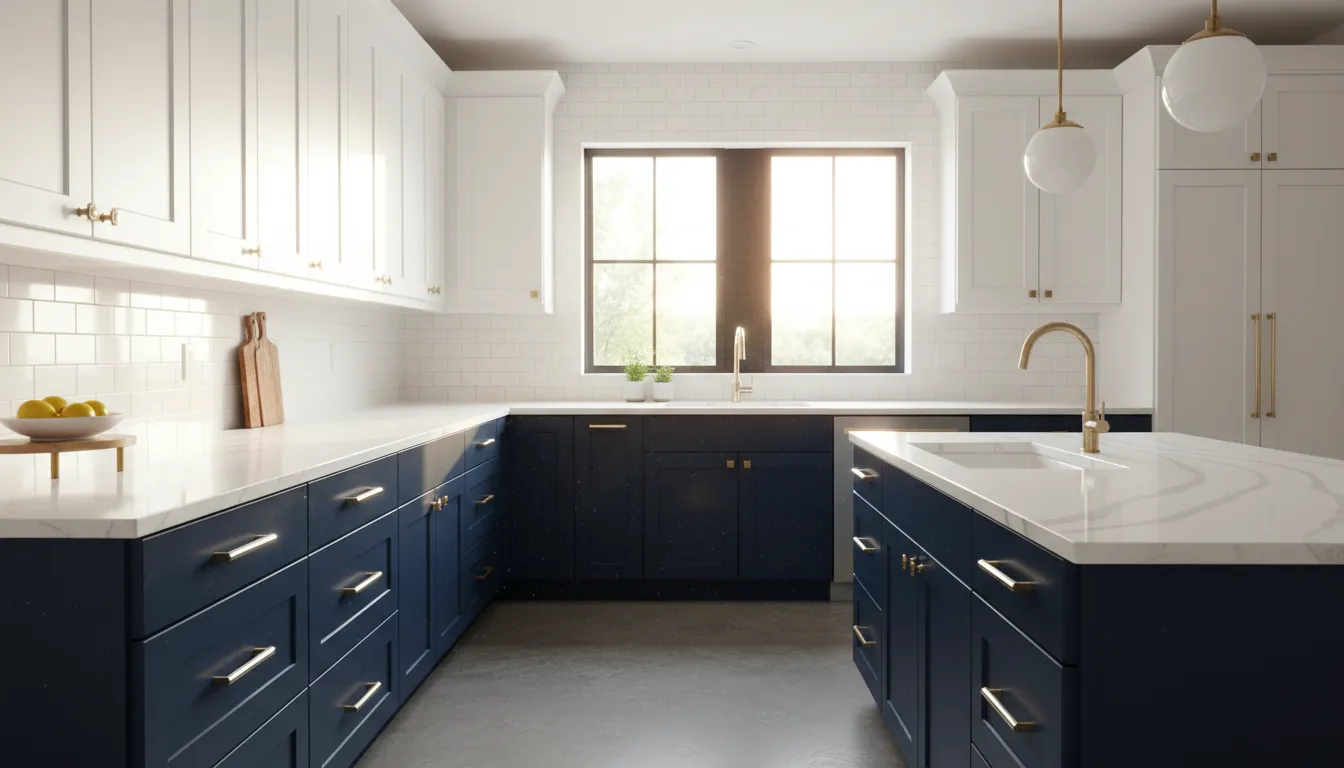
Two-Tone Kitchen Cabinets: Color Combinations That Actually Work
Two tone kitchen cabinets have moved well past trend status. Walk through any San Diego neighborhood where remodels are happening, and you will find homeowners pairing white uppers with navy lowers, mixing warm wood tones against painted bases, or playing off bold black island cabinets against crisp white perimeter runs. The look works because it breaks the monotony of a single-color kitchen without creating visual chaos—if you choose the right combination.
After completing over 2,000 kitchen remodels across San Diego County, including full custom cabinet replacement projects, our team at King Remodeling has seen which two-color pairings hold up over time and which ones homeowners regret. This guide from our San Diego kitchen remodeling team covers the color combinations that consistently deliver beautiful results, the logic behind upper-versus-lower color assignment, and how to coordinate your cabinet pairing with countertops and backsplash for a cohesive finished space. If storage is part of your cabinet plan, review these walk-in kitchen pantry ideas while choosing colors and finishes.
Why Two-Tone Kitchen Cabinets Work So Well
A single cabinet color flattens a kitchen visually. Two tones add depth by directing the eye—lighter uppers push the ceiling up while darker lowers anchor the space and ground the room. This optical trick is especially useful in San Diego’s mix of ranch homes and two-story builds, where ceiling heights vary widely.
Beyond aesthetics, two color kitchen cabinets solve a practical problem: cabinet doors at eye level get handled less than base cabinet doors, so they stay cleaner longer. Putting a lighter, more delicate color up top and a durable, stain-hiding darker shade on the bottom cabinets is not just a design choice—it is a maintenance decision that pays off.
The Best Two-Tone Kitchen Cabinet Color Combinations
White Upper Cabinets with Navy Blue Lowers
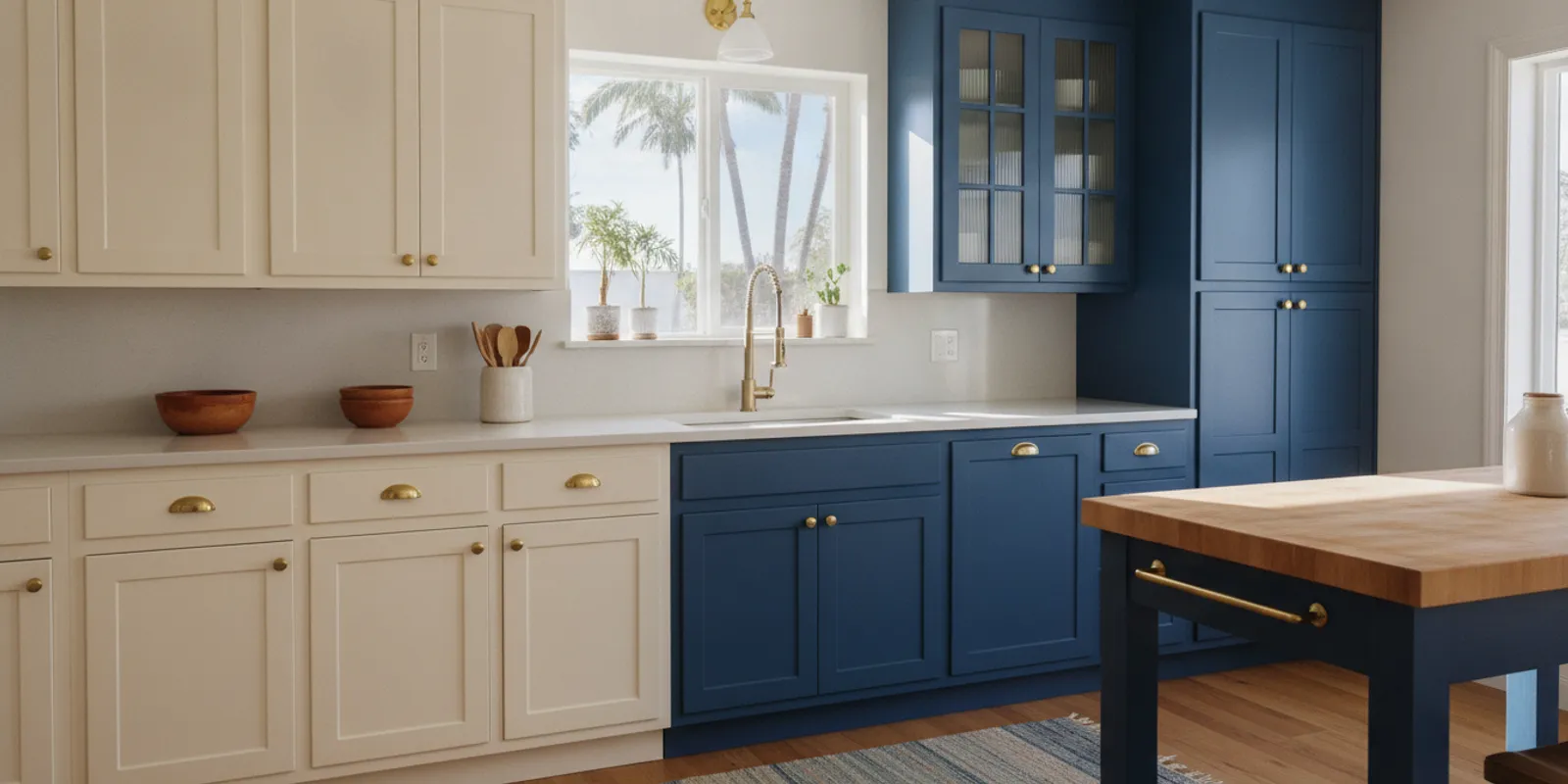
This is the most requested two-tone combination we install. White uppers keep the kitchen feeling open and airy, a priority for San Diego homeowners who want to preserve natural light. Navy lowers bring the drama and make the space feel designed rather than default.
The pairing works across a wide range of countertop materials. Bright white quartz makes it feel crisp and contemporary. A warm-veined marble or quartzite softens the contrast. Even butcher block counters work if you want a coastal cottage feel. The one thing to avoid: a very cold gray countertop with cool-toned white uppers and navy lowers. That combination can feel sterile and difficult to warm up with lighting or decor.
Best for: Transitional and coastal kitchens, homes with 9-foot or higher ceilings, spaces with substantial natural light.
Gray Upper Cabinets with Natural Wood Lowers
Gray and wood is the combination that looks most current in 2026 and has the staying power to look just as good in 2031. Gray keeps things sophisticated without being cold. Natural wood—whether it is a light oak, a warm walnut stain, or a cerused finish—introduces texture and warmth that prevents the space from feeling too designed or showroom-sterile.
This pairing skews warmer or cooler based on which gray you choose. A gray with green or blue undertones reads contemporary and works beautifully with concrete-look countertops or a white waterfall island. A gray with brown or taupe undertones feels more transitional and pairs naturally with quartz in creamy or greige tones.
Best for: Modern Craftsman homes, open-plan kitchens, homeowners who want a less traditional look without going fully contemporary.
Crisp White Uppers with Black or Charcoal Lowers
Black base cabinets are having a strong moment, and for good reason. White and black kitchen cabinet color combinations are high-contrast, graphic, and timeless in the way that any classic pairing is—they will not look dated in five years. The challenge is in the execution.
All-matte black can feel heavy in a small kitchen. A satin or semi-gloss black reflects enough light to keep the space from closing in. Pair with a bright white countertop for maximum contrast, or step back slightly with an off-white or warm stone to soften the edge. Hardware matters more here than in any other two-tone scheme: unlacquered brass pulls on black lowers read warm and elegant; polished chrome keeps it graphic and modern.
Best for: Larger kitchens with ample natural light, homeowners who want a bold, editorial look, spaces with open layouts.
Soft White Uppers with Warm Greige or Taupe Lowers
Not every homeowner wants high contrast. For those who prefer a more subtle two-tone effect, pairing soft white uppers with a warm greige or taupe lower cabinet delivers a layered look that reads as intentional without being aggressive. This is the pairing we most often recommend when the goal is resale value, because it appeals to the widest range of buyers without being bland.
This combination shines in kitchens that get warm afternoon light—the kind of light that turns cool whites slightly golden. Warm quartz countertops in cream, sand, or champagne tones complete the picture. A subway tile backsplash in a matching warm white ties it all together.
Best for: Traditional or transitional kitchens, homeowners focused on resale, rooms with warm evening light.
Sage Green Lowers with White or Off-White Uppers
Sage green has moved from trending to established. It sits in the same family as the muted earth tones that have dominated interior design for the past several years, and it works in the kitchen because it feels organic without trying too hard. Paired with white or off-white uppers, sage green lowers bring color into the space while remaining calm enough to live with every day.
The key is getting the green right. A sage that leans yellow becomes olive and can make the kitchen feel dated quickly. A sage that leans blue-green reads more timeless. We recommend sampling on the actual cabinet door before committing—the color will shift significantly depending on whether your kitchen faces north, south, east, or west.
Best for: Farmhouse and transitional kitchens, homeowners who want color without full commitment, spaces with abundant natural light.
If you are pairing two-tone cabinets with apron-front sinks, warm wood details, or shiplap, compare these choices with our modern farmhouse kitchen ideas before finalizing finishes.
Which Color Goes on Top and Which Goes on the Bottom?
The standard rule in two color kitchen cabinets is lighter on top, darker on bottom. There is a practical and visual reason for this. Lighter uppers keep the kitchen from feeling like the ceiling is pressing down, while darker lowers create visual weight at the base of the room, which is where mass belongs structurally and aesthetically.
That said, the rule is not absolute. Here are the specific considerations:
- Ceiling height: If you have 8-foot ceilings, stick with light or white uppers. Darker uppers make low ceilings feel suffocating. If you have 10-foot ceilings or more, you have room to experiment.
- Island cabinets: Islands are a great place to introduce a third element or to flip the formula. A dark island against light perimeter cabinets works even when the upper-to-lower color logic is consistent everywhere else.
- Natural light: North-facing kitchens need lighter uppers. South-facing kitchens with flooding afternoon light can handle darker uppers if that is the look you want.
- Kitchen size: Smaller kitchens benefit most from the standard lighter-upper formula. Larger kitchens have more flexibility.
How to Coordinate with Countertops and Backsplash
Two tone kitchen cabinets already introduce two colors into the room. Adding a countertop and backsplash means you are managing four or more distinct surfaces. The goal is not to match everything—matching reads as dated. The goal is to have each surface respond to the others in a way that feels considered.
Countertop Coordination
Your countertop should pick up a tone from one of your cabinet colors without exactly replicating it. If you have white uppers and navy lowers, a white countertop with subtle gray veining acknowledges the uppers without being identical. A warm quartz in cream or sand acts as a neutral connector between the two cabinet tones, which is why creamy and greige countertops are so popular in two-tone kitchens—they bridge the gap.
What to avoid: choosing a countertop color that competes with both cabinet tones for attention. A bold dark green countertop in a white-and-navy kitchen turns what should be a supporting player into a third lead. Countertops are workhorses that should complement, not compete.
Backsplash Coordination
The backsplash is the element that ties the room together. In two-tone cabinet kitchens, the backsplash typically works best when it reads as a lighter neutral—white, cream, soft gray, or a textured material in a muted tone. A large-format slab backsplash in the same material as the countertop is an elegant solution that reduces visual noise and lets the two-tone cabinet combination carry the room.
Pattern and texture are fine, but scale matters. A small mosaic tile in a kitchen with bold two-tone cabinets adds more visual activity than the room needs. A larger-scale tile in a geometric pattern at the right scale can complement the scheme without competing with it. When in doubt, keep the backsplash simple and let the cabinets do the talking.
Hardware as the Binding Element
Hardware is the one element that touches every cabinet in the kitchen. In two-tone schemes, choosing a single hardware finish—rather than trying to match hardware to each cabinet color—is the more successful approach. Matte black hardware works across most two-tone combinations. Brushed brass or unlacquered brass adds warmth. Brushed nickel is the safe choice when in doubt, because it is neutral enough to work with everything.
Two-Tone Kitchen Cabinets: Frequently Asked Questions
Are two-tone kitchen cabinets still in style in 2026?
Yes. Two tone kitchen cabinets have moved beyond trend status into an established design approach. The specific color combinations that feel most current change year to year—sage green had its moment, warm wood tones are surging—but the two-tone technique itself is here to stay because it solves real design problems around visual depth, balance, and maintenance.
What is the best two-tone color for kitchen cabinets?
The best combination depends on your kitchen’s size, natural light, and your personal style. For a timeless result with the widest appeal, white uppers with a warm-toned lower (navy, taupe, greige, or sage green) consistently performs well. For a bolder, more contemporary look, white uppers with black lowers is a strong choice in larger kitchens with good light.
Should upper and lower kitchen cabinets match?
They do not have to, and in many cases two color kitchen cabinets look more intentional and interesting than an all-one-color scheme. The key is choosing colors that relate to each other—either contrasting (white and navy) or harmonious (light gray and medium gray)—rather than two colors that clash or have no visual relationship.
How do I choose between one-tone and two-tone cabinets?
If your kitchen is small or low-ceilinged, start with a one-tone scheme in a light color to maximize the sense of space. If you have a larger kitchen, good natural light, or high ceilings, a two-tone approach will add visual interest that a single color cannot. When in doubt, our design team can help you visualize both options in 3D before you commit to anything.
Thinking About Two-Tone Cabinets for Your San Diego Kitchen?
Choosing the right two-tone kitchen cabinet color combination is one of the most consequential decisions in any kitchen remodel. Get it right and the kitchen feels designed, cohesive, and personal. Get it wrong and the colors that seemed exciting in a showroom catalog feel jarring in your actual space.
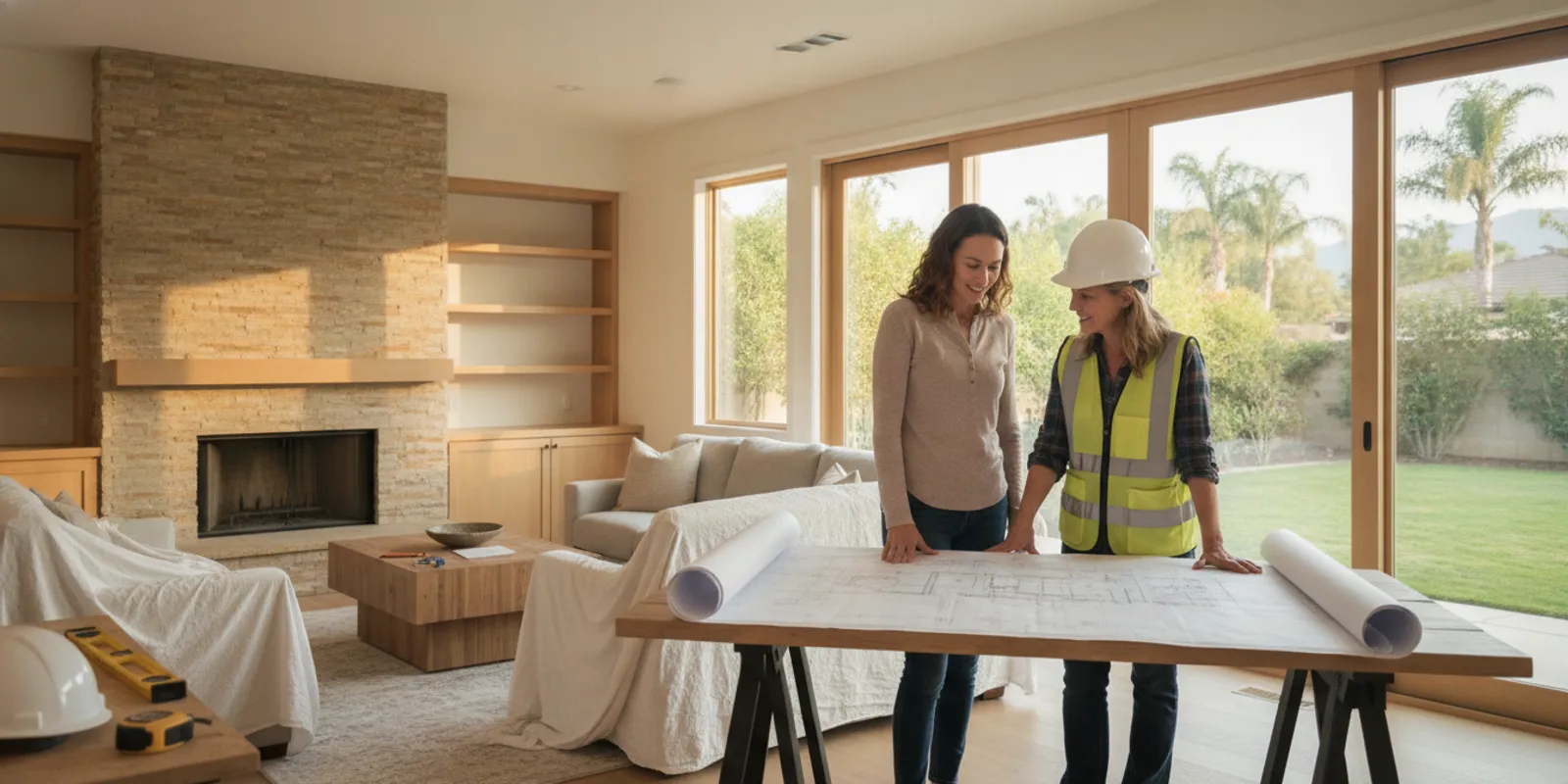
At King Remodeling, our design team has guided thousands of San Diego homeowners through this exact decision. We start with your kitchen’s specific light conditions, existing materials, and your personal style, then help you land on a combination you will love—not just at installation, but five years from now. Our kitchen remodeling services include a complimentary design consultation where we build 3D renderings so you can see your two-tone cabinet scheme before demolition ever begins.
Our Design Center and Showroom in Scripps Ranch carries an extensive selection of cabinet finishes, hardware, countertops, and backsplash materials. Seeing and touching the actual materials in person—rather than making decisions from a screen—eliminates most of the uncertainty that makes remodeling stressful. Visit us to see which cabinet combinations look right in natural San Diego light, or request a free quote and we will bring the conversation to your home.
King Remodeling has completed over 2,000 kitchen remodels across San Diego County, and we back every project with a 3-year labor warranty. California Contractor License #1039019.