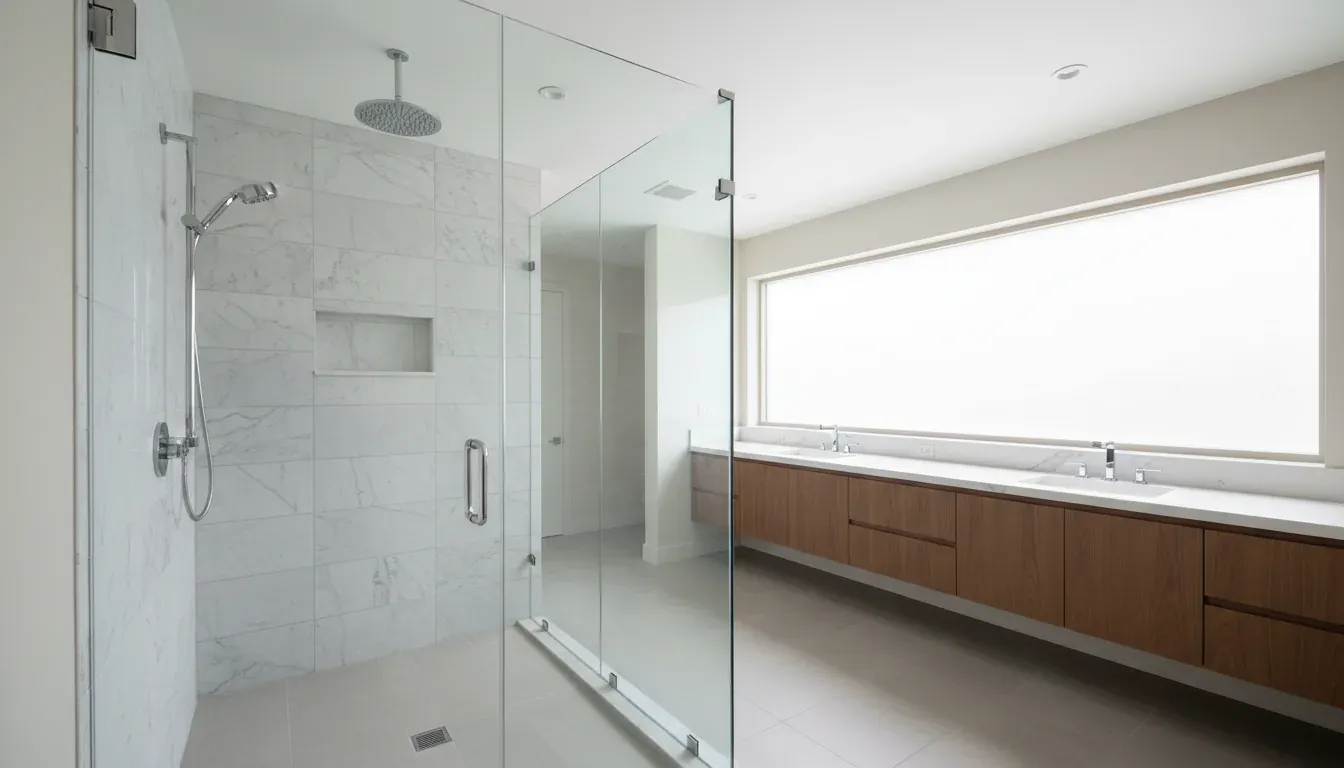
Choosing the right shower glass door can feel overwhelming. Between frameless panels, semi-frameless enclosures, and traditional framed doors, each option comes with its own look, price point, and maintenance needs. Your floor finish matters too, so review bathroom floor tile ideas before finalizing the shower enclosure. The decision you make will shape how your bathroom looks, how easy it is to keep clean, and how well it holds up over the years. Whether you are upgrading a small guest bath or building out a spa-worthy master shower, understanding what each type of door offers is the first step toward making a confident choice.
Contact King Remodeling for a free bathroom remodel estimate
Key Takeaways
- Frameless shower doors use thick tempered glass with minimal hardware for a sleek, modern look, but they come at a higher price point and require precise installation.
- Semi-frameless doors offer a balanced middle ground with partial metal framing, combining a clean appearance with better water containment.
- Framed shower doors are the most budget-friendly option and provide excellent structural support and water sealing, making them ideal for standard bathrooms.
- Glass type matters: clear, frosted, and textured glass each serve different purposes for privacy, light, and design.
- A professional installation is critical for all three types to prevent leaks, ensure safety, and get the longest lifespan from your door.
What Are the Three Main Types of Shower Glass Doors?
Before comparing costs or maintenance, it helps to understand how each category of shower door is built. The framing (or lack of it) defines the door’s structural design, hardware requirements, glass thickness, and overall aesthetic. Here is a clear breakdown of each type.
Frameless Shower Doors
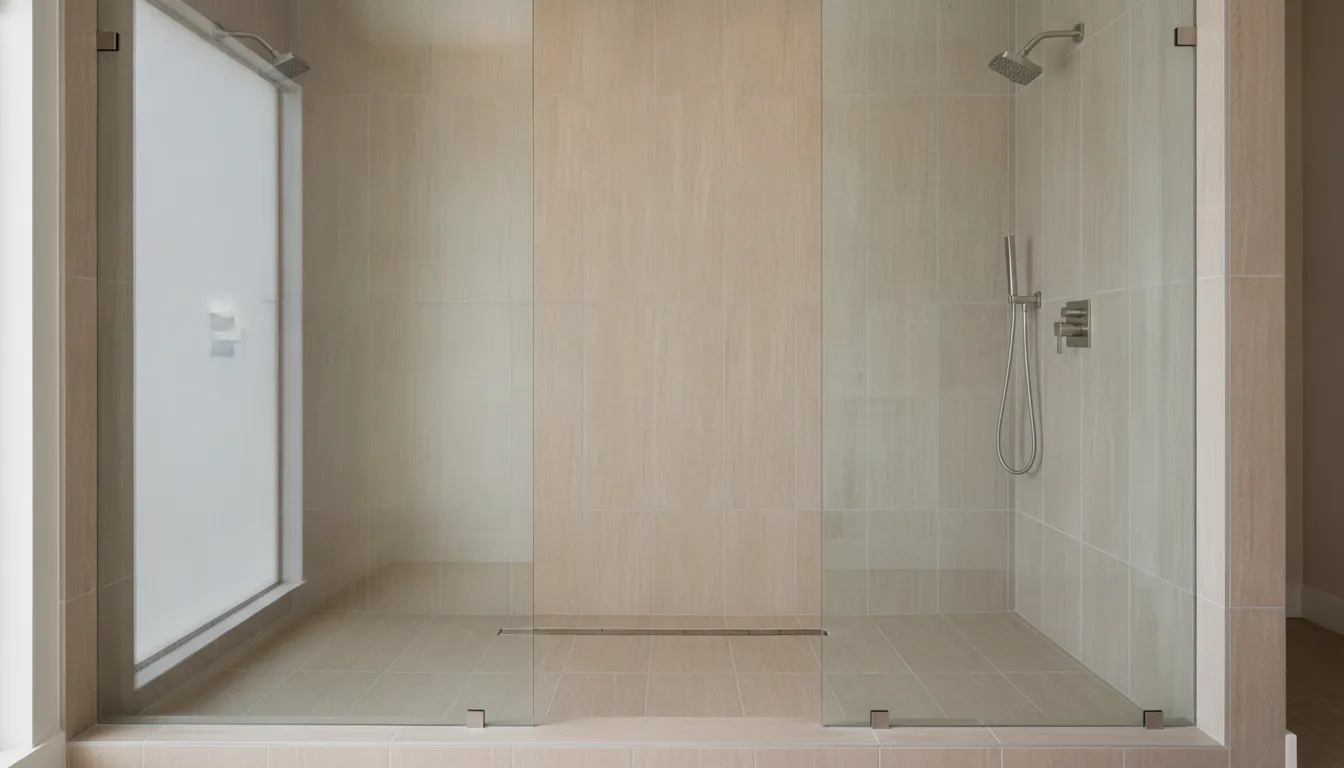
Frameless shower doors are made from thick tempered glass, typically 3/8-inch to 1/2-inch panels. Without a surrounding metal frame, the glass is the structure itself. Minimal hardware, usually just hinges and small clips, holds the panels in place. This produces a clean, open aesthetic that makes bathrooms feel larger and more modern. The tradeoff is that thicker glass, precise custom measurements, and specialized installation drive the cost higher than other options.
Semi-Frameless Shower Doors
Semi-frameless doors use a partial metal frame, usually along the top or outer edges, while leaving the door panel itself unframed. This hybrid design offers a cleaner look than a fully framed door without the full cost of going frameless. The glass is generally 1/4-inch to 3/8-inch thick, and the partial frame adds structural stability while improving water containment around the edges. This type works well in bathrooms where you want a modern feel on a more moderate budget.
Framed Shower Doors
Framed shower doors have a complete metal frame, typically made of aluminum, that surrounds the glass panel on all sides. The frame provides the primary structural support, which allows the glass to be thinner (usually 3/16-inch to 1/4-inch). Framed doors are available in a wide variety of finishes, from brushed nickel to matte black, and they tend to be the most affordable option. The metal channels also create a tight seal that contains water effectively, which is a practical advantage for families and high-traffic bathrooms.
Frameless vs Framed Shower Doors: A Side-by-Side Comparison
The table below puts the most important decision factors in one place so you can compare at a glance.
| Feature | Frameless | Semi-Frameless | Framed |
|---|---|---|---|
| Glass thickness | 3/8″ to 1/2″ | 1/4″ to 3/8″ | 3/16″ to 1/4″ |
| Typical installed cost | $900 to $2,500+ | $600 to $1,500 | $400 to $1,200 |
| Aesthetic | Minimal, modern, open | Clean with subtle framing | Traditional, structured |
| Water containment | Good with proper seals | Very good | Excellent |
| Ease of cleaning | Easiest (fewer crevices) | Moderate | More effort (frame tracks) |
| Installation complexity | High (custom fit required) | Moderate | Straightforward |
| Durability | 20 to 30+ years | 20 to 30 years | 20 to 30 years |
| Best for | Master baths, modern designs | Budget-friendly upgrades | Guest baths, family bathrooms |
For whole-room budgeting beyond the door itself, see our bathroom remodel cost in San Diego guide.
How Much Do Shower Glass Doors Cost?
Cost is one of the biggest factors homeowners weigh when choosing a shower door type. Prices vary depending on the size of the opening, the complexity of the enclosure, glass thickness, hardware finish, and whether the door is a stock size or custom-cut. Here is what you can generally expect in 2026.
Frameless Door Costs
Frameless shower doors typically range from $900 to $2,500 or more when professionally installed. The higher end of this range includes larger enclosures, thicker 1/2-inch glass, and premium hardware finishes like brushed gold or matte black. Custom configurations for corner showers or walk-in enclosures with multiple panels push costs further. Material costs alone account for $500 to $1,200, and professional installation adds $300 to $800 depending on the complexity of the project.
Semi-Frameless Door Costs
Semi-frameless doors generally fall between $600 and $1,500 installed. They use slightly thinner glass and less specialized hardware than their fully frameless counterparts, which helps keep costs more manageable. For homeowners who want a cleaner look without a major investment, this category often hits the sweet spot.
Framed Door Costs
Framed shower doors are the most affordable option, typically costing between $400 and $1,200 installed. Stock sizes that fit standard shower openings are widely available, which reduces both material and labor costs. Sliding framed doors for tub/shower combos are especially budget-friendly, often falling in the $400 to $800 range. If you are replacing a bathtub entirely, compare the door choice with a full tub-to-shower conversion.
Get a free, fixed-price quote on your shower remodel from King Remodeling
Which Type of Glass Should You Choose?
The framing style is only half the equation. The type of glass you select affects privacy, light flow, and how easy the door is to maintain. Here are the most common options you will find.
Clear Glass
Clear tempered glass is the most popular choice for frameless and semi-frameless doors. It lets the maximum amount of light into the shower, makes the bathroom feel more spacious, and shows off tilework and fixtures inside the enclosure. The downside is that water spots and soap residue are more visible, so regular squeegeeing after each use is recommended.
Frosted Glass
Frosted or acid-etched glass provides privacy while still letting light pass through. This is an excellent choice for shared bathrooms, guest baths, or showers that face the main bathroom entry. Frosted glass also does a good job of hiding water spots between cleanings.
Textured and Patterned Glass
Rain glass, reeded glass, and other textured options add visual interest and a decorative element to the shower. These patterns obscure visibility to varying degrees, making them a functional and stylish option for bathrooms where you want some privacy without going fully opaque.
Low-Iron Glass
Standard tempered glass has a slight green tint caused by iron content. Low-iron glass eliminates this, producing a crystal-clear look. This option is worth considering if your bathroom has white or light-colored tile where the green tint would be noticeable. Low-iron glass typically adds $50 to $150 to the total cost.
What Door Configuration Works Best for Your Bathroom?
Beyond the framing style and glass type, the way the door opens and closes matters for both daily use and the layout of your space. Here are the four most common configurations.
Pivot (Swinging) Doors
Pivot doors swing open on a hinge, similar to a standard room door. They require clearance space in front of the shower to open fully. This style is the most common choice for walk-in shower enclosures and pairs naturally with frameless glass for a seamless look.
Sliding (Bypass) Doors
Sliding doors run on a track and overlap in the center. They are the go-to option for tub/shower combos or narrow bathrooms where there is no room for a swinging door. Framed and semi-frameless versions are widely available. Sliding doors in a frameless style are also possible but tend to require heavier-duty track hardware due to the thicker glass.
Hinged Doors
Similar to pivot doors, hinged doors are attached at one side and swing outward. They are commonly used in corner shower enclosures with 90-degree glass panels. Hinged doors can be paired with any framing style and glass type.
Barn-Style Doors
Barn-style shower doors slide along an exposed track mounted above the shower opening. They are a distinctive design choice that works particularly well in smaller bathrooms because they do not require any swing clearance. The industrial hardware adds a modern, loft-inspired aesthetic.
How Do You Maintain and Clean Shower Glass Doors?
No matter which type of door you choose, proper maintenance extends its lifespan and keeps it looking new. Here are practical tips for each style.
Daily and Weekly Care
- Squeegee after every use. This single habit prevents the majority of water spot and soap scum buildup.
- Spray with a vinegar-water solution once a week. Mix equal parts white vinegar and water in a spray bottle. Apply, wait 5 minutes, and wipe down with a microfiber cloth.
- Avoid abrasive cleaners. Scouring pads and harsh chemicals can scratch glass and damage hardware finishes.
Maintaining Frameless Doors
Frameless doors are the easiest to clean because there are no metal tracks or channels where mildew can accumulate. Focus on the hinges and any rubber seals along the edges. Check the sweep (the rubber strip at the bottom of the door) every few months and replace it if it starts to crack or peel. Well-maintained frameless doors can last 20 to 30 years or longer.
Maintaining Framed and Semi-Frameless Doors
The metal tracks on framed and semi-frameless doors can trap moisture, which promotes mold and mildew if left unchecked. Use a small brush or old toothbrush to clean inside the tracks during your weekly cleaning. Inspect the rubber gaskets along the frame for signs of wear, and replace them promptly if you notice water leaking past the seal.
Protective Coatings
Many glass manufacturers offer a factory-applied coating that repels water and reduces mineral deposits. Products like EnduroShield and Diamon Fusion create a hydrophobic surface that makes daily maintenance easier. If your glass did not come with a coating, aftermarket options are available and can be applied by a professional during installation.
Schedule a free design consultation with King Remodeling
Which Shower Door Is Best for Small Bathrooms?
Space-constrained bathrooms require careful planning to avoid a door that blocks traffic flow or makes the room feel cramped. Here is how each type performs in smaller spaces.
Frameless glass is often the best visual choice for small bathrooms because the lack of framing lets the eye travel through the enclosure, creating an open, airy feel. Pair a frameless panel with a walk-in shower design that eliminates the door entirely, and the effect is even more dramatic.
Sliding doors are the most practical choice for tight layouts because they do not need any swing clearance. A bypass door on a tub/shower combo or a barn-style slider on a standalone shower keeps the functional footprint minimal.
Framed doors in standard sizes are readily available for common shower openings, making them a cost-effective option when the bathroom dimensions are straightforward.
The right answer depends on your bathroom’s layout, your aesthetic goals, and your budget. Working with an experienced design-build team helps you evaluate all three factors together so nothing gets overlooked.
How to Choose the Right Shower Door for Your Remodel
With all the options laid out, here is a practical checklist to guide your decision.
- Measure your opening carefully. Width, height, and any out-of-plumb walls determine whether a stock door will work or if you need a custom-cut panel.
- Define your priority. Is it budget? Aesthetics? Easy maintenance? Knowing your top priority simplifies the decision.
- Consider who uses the shower. A family bathroom with kids benefits from a framed door’s better water containment. A master suite built for two adults might be the perfect place for a frameless enclosure.
- Match the hardware to your fixtures. Coordinating the finish of your shower door hardware (chrome, brushed nickel, matte black) with your faucets and showerhead creates a cohesive look.
- Hire a professional installer. Shower glass is heavy, tempered for safety, and unforgiving of measurement errors. Professional installation prevents leaks, ensures the door hangs level, and protects your warranty.
Why Professional Installation Matters
A shower door is only as good as its installation. Even the highest-quality frameless panel will leak, sag, or crack if the measurements are off or the hardware is not anchored properly. Here is what a professional installation typically includes:
- Precise laser measurements of the opening, accounting for walls that may not be perfectly plumb or level
- Custom glass cutting and edge polishing
- Proper anchoring of hinges and clips into wall studs or reinforced tile backer board
- Sealing and shimming to prevent water from escaping the enclosure
- A final walkthrough to verify the door swings, slides, or pivots smoothly
At King Remodeling, our design-build process includes everything from the initial measurement through the final walkthrough. Our in-house crews handle every aspect of your bathroom remodel, so there is one team, one timeline, and one point of contact from start to finish.
Frequently Asked Questions
Are frameless shower doors worth the extra cost?
For many homeowners, yes. Frameless doors create a modern, open look that can make a bathroom feel significantly larger. They are also easier to clean because there are no metal tracks that trap mildew. If your renovation prioritizes aesthetics and low maintenance, the higher upfront cost often pays off in the long run through increased home value and daily satisfaction.
Do frameless shower doors leak?
When installed correctly with high-quality seals and sweeps, frameless doors contain water effectively. Leaks are almost always the result of improper installation, a worn-out bottom sweep, or a missing threshold. Professional installation and periodic seal checks prevent this issue.
How long do shower glass doors last?
All three types of shower glass doors, frameless, semi-frameless, and framed, are built to last 20 to 30 years or more with proper care. Tempered glass itself is extremely durable. The components that typically need attention over time are the rubber seals, sweeps, and hardware, which are inexpensive to replace.
Can I install a frameless shower door on an existing shower?
In most cases, yes. A frameless door can be retrofitted to an existing shower as long as the walls are structurally sound and the opening can be measured precisely. A professional will assess whether the existing tile and backer board can support the weight of thicker glass and new hardware.
What is the best shower door for resale value?
Frameless shower doors are widely regarded as the most desirable option for resale. They photograph well for listings, appeal to a broad range of buyers, and signal a modern, updated bathroom. If you are remodeling with resale in mind, frameless glass is a strong investment.
How do I prevent hard water stains on shower glass?
Use a squeegee after every shower to remove water before it dries. A weekly spray of vinegar-water solution dissolves mineral deposits before they bond to the glass. Applying a hydrophobic coating like EnduroShield creates a protective barrier that makes water bead up and roll off instead of sitting on the surface.
Ready to upgrade your shower? Contact King Remodeling at (858) 299-7700 for a free quote.