.
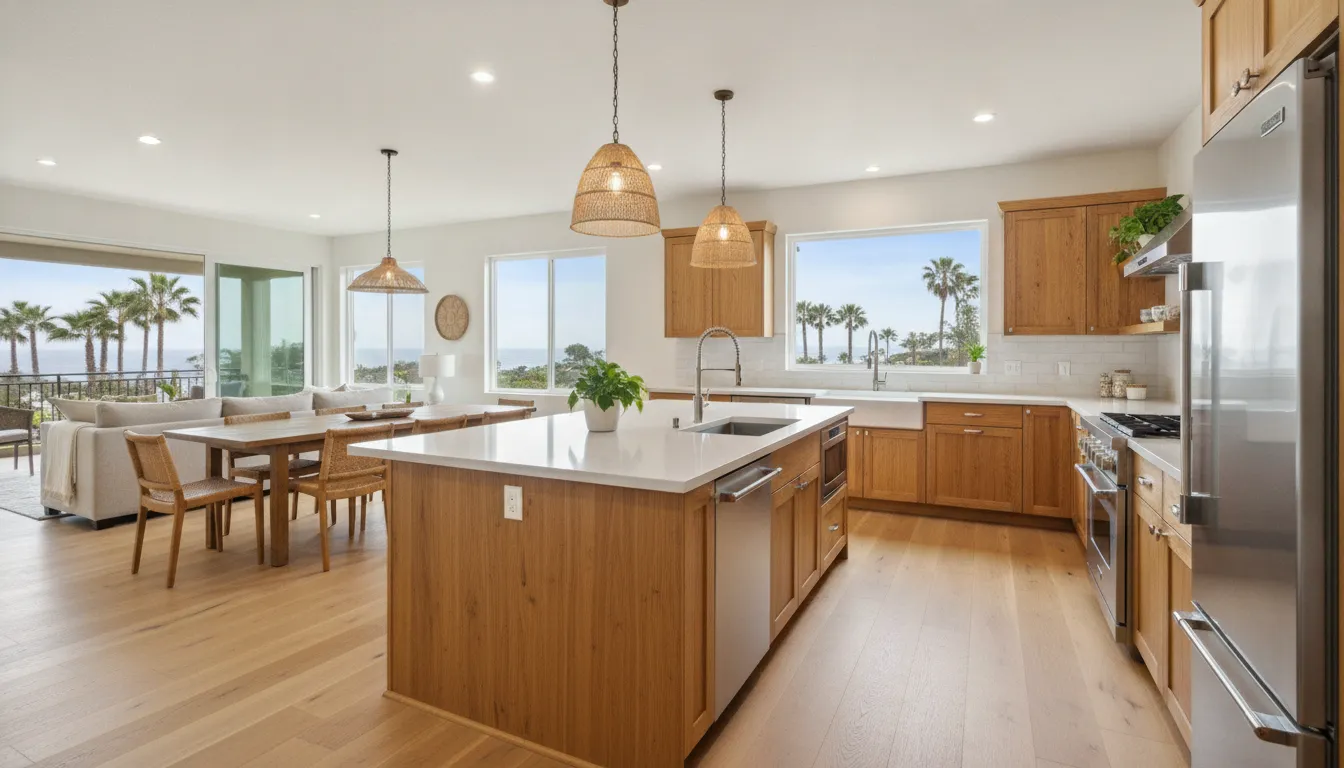
Trading narrow hallways and separated rooms for an open concept kitchen can change how you use your San Diego home. A thoughtful plan improves movement, daylight, conversation, and access without making the main living area feel undefined.
Schedule your design-build consultation with King Remodeling
An open concept kitchen shares space with a dining room, living room, or both. The best layouts balance connection with practical cooking zones, clear walkways, useful storage, strong ventilation, and coordinated finishes. Before removing a wall, a qualified team must also evaluate the structure and any utilities hidden inside it.
Open does not have to mean one empty room. Islands, peninsulas, furniture, lighting, and ceiling details can give every zone a clear purpose. The right combination depends on your home’s structure, the way your household lives, and the features you want to prioritize.
What makes an open concept kitchen work?
An open concept kitchen removes some or all full-height barriers between cooking and nearby living areas. This creates longer sightlines and helps daylight reach more of the interior. It also lets the cook join conversations instead of working alone behind a wall. Well-planned open kitchen design features turn the room into a comfortable hub rather than a simple passage.
The layout still needs boundaries. Without them, a large room can feel busy and inefficient. A successful design gives cooking, dining, relaxing, and circulation their own space. It also preserves enough storage and counter area for everyday routines. These practical details matter more than removing the maximum number of walls.
Balance connection and separation
Start by deciding which rooms should connect visually and which activities need a buffer. A family that entertains often may want the kitchen open to both dining and living areas. Someone who works from the sofa may prefer a partial opening that limits distractions. A wide cased opening, peninsula, or short return wall can deliver connection without exposing every surface.
Furniture and lighting can define areas without interrupting the view. Place a dining table between the kitchen and lounge to create a natural transition. Use pendant lights above an island and a separate fixture above the table. An area rug can anchor the living zone. These choices give each activity a home while keeping movement easy.
Plan ventilation, sound, and storage once
Cooking odors and sounds travel farther when walls disappear, so address them early in the plan. Choose a range hood that vents outdoors and suits the cooktop. The Environmental Protection Agency recommends using the hood during cooking and for 10 to 20 minutes afterward. Quiet appliances also help protect nearby conversations and television time.
Storage should support a clear daily reset. Deep drawers, a pantry, and an appliance garage keep frequently used items accessible without crowding the counters. A raised island ledge can screen meal prep from the living area. When reviewing modern open concept kitchen layouts, map a specific home for dishes, food, small appliances, recycling, and cleaning supplies.
Use durable, connected finishes
Materials should relate across the full space, but they do not need to match exactly. Repeat a cabinet color in a media console, or carry one metal finish into nearby light fixtures. A limited palette makes the room feel calm. You can still vary texture through wood, stone, tile, upholstery, and rugs.
Durability matters because an open kitchen is visible and used throughout the day. Select flooring that handles spills and traffic while working with the adjoining room. Choose counters that suit your maintenance preferences. Reviewing current open concept kitchen trends can spark ideas, but lasting materials and a functional layout should lead the decision.
Can you remove a wall to open the kitchen?
Many closed kitchens can become more open, but the project must begin with an inspection. The team needs to determine whether the wall carries structural loads. They also need to locate plumbing, electrical wiring, gas lines, ducts, and vents. These findings shape the design, schedule, permit needs, and cost of the work.
Sometimes the smartest option is not complete removal. A wider opening may deliver better light and circulation while preserving cabinets or reducing structural work. Experienced teams compare these alternatives before finalizing modern open concept kitchen layouts. That process helps align the desired look with realistic construction requirements.
Confirm whether the wall is load bearing
A load-bearing wall transfers weight from the roof, ceiling, or upper floor to the foundation. Removing it without replacement support can damage the house. Framing direction and the location of walls above or below offer clues, but they are not a final answer. A qualified professional should inspect the structure before demolition begins.
Structural planning also protects workers during construction. Temporary support may be required before the existing wall comes out. Following California building safety standards helps crews manage this phase responsibly. The finished support must then match the approved plans and pass the required inspections.
Choose a support strategy
If a wall carries weight, an engineer can specify a replacement beam and its supports. A flush beam fits within the ceiling framing and creates a smooth overhead plane. A drop beam sits below the ceiling and can become an intentional architectural feature. The right choice depends on the span, framing, utilities, budget, and design goals.
Long openings may also require posts. A post can sometimes align with an island end or cabinet panel so it feels integrated. Other homes need new footings or foundation work beneath the supports. These conditions are not always visible at the first walk-through, which is why planning should include reasonable allowances.
Coordinate permits and utilities
Wall removal may affect more than framing. Electric outlets, switches, water lines, gas lines, or HVAC ducts may need new routes. Relocating these systems can influence cabinet placement and appliance locations. A coordinated design resolves those questions before crews open the wall, reducing delays and costly changes in the field.
Permits and inspections verify that the structural and utility work follows applicable rules. They also create a record of the improvement. That documentation can matter during a future sale. A design-build approach keeps engineering, permits, construction, and open kitchen design features aligned under one plan.
- Complete a site visit. Review the kitchen, adjoining rooms, access, and visible construction conditions.
- Find the utilities. Locate pipes, gas lines, wiring, ducts, outlets, and switches inside the proposed work area.
- Hire an engineer. Confirm structural loads and specify the beam, posts, connections, and any required footings.
- Get city permits. Submit the required drawings and supporting documents before construction starts.
- Build temporary walls. Support the structure safely before removing load-bearing framing.
- Install the new beam. Complete the approved structural work and coordinate inspections.
- Finish the space. Repair surfaces, install finishes, and confirm that each system works as intended.
Open concept kitchen layout ideas for San Diego homes
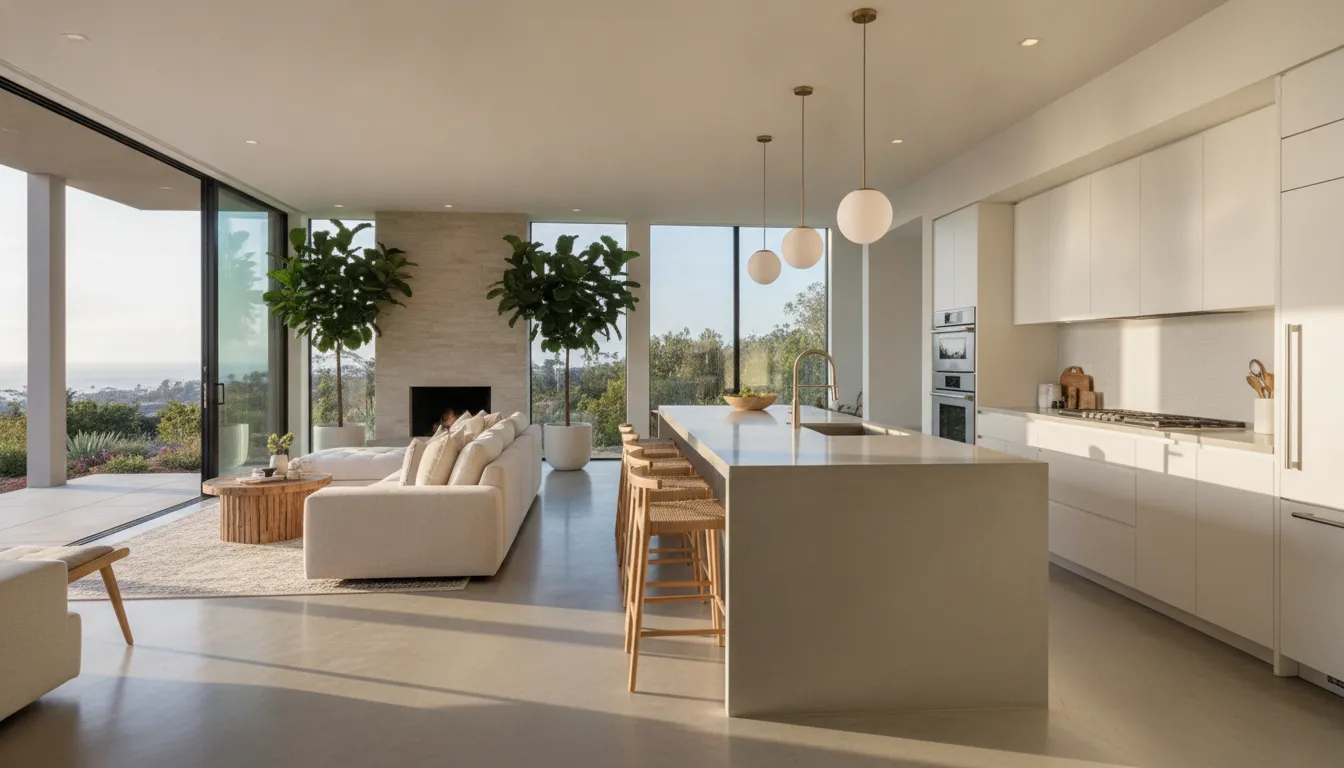
San Diego homes range from compact bungalows and coastal cottages to larger suburban houses. Each type calls for a different open concept kitchen strategy. The best plan responds to the existing footprint instead of forcing a standard arrangement. It should make the home feel more generous while preserving comfortable paths, storage, and useful work surfaces.
Begin with daily habits. Note how many people cook, where groceries enter, where children do homework, and how guests gather. Then test several modern open concept kitchen layouts against those routines. A beautiful concept only succeeds when it also makes ordinary mornings and busy dinners easier.
Great room and kitchen-dining plans
A great room combines the kitchen, dining area, and main living area. It supports large gatherings and long views across the house. An island usually becomes the transition between cooking and social space. This arrangement works best when furniture placement creates a clear route around the room instead of sending traffic through the work zone.
A kitchen-dining plan offers a more measured change. It opens food preparation to the table while leaving the living room more private. Serving and cleanup become simple because the table is close to the counters. This option can suit households that want connection at meals without bringing every kitchen sound into the primary lounge.
Peninsulas and partial openings
A peninsula extends from a wall or cabinet run, so it needs less open floor area than an island. It can add seating, prep space, and storage while defining the edge of the kitchen. Peninsulas are especially useful in narrow homes where a freestanding island would pinch an important walkway.
A partial opening can keep upper cabinets, conceal cleanup, or preserve structural elements. It may use a wide opening, interior window, low wall, or cased portal. These options provide many open kitchen design features without turning the entire floor into one room. They can also simplify furniture placement in the adjoining area.
One-wall and galley solutions
A one-wall kitchen places cabinets and appliances along a single side of the room. It leaves the remaining floor open for dining or living space. Tall pantry cabinets can recover storage, while a mobile worktable adds flexible prep area. Careful appliance spacing is important because all kitchen tasks share one compact run.
A galley can also feel open when one side ends in a peninsula or low cabinet run. This keeps an efficient cooking corridor while connecting it to the room beyond. Wide, direct paths improve access for many ages and abilities. The National Institute on Aging recommends clear passageways as part of safer aging at home.
| Layout Type. | Best For. | Main Benefit. |
|---|---|---|
| Great Room. | Large gatherings. | Maximum light and social connection. |
| Kitchen and Dining. | Family routines. | Easy meal service and cleanup. |
| Partial Open. | Storage and privacy. | Connection with a visual buffer. |
| One-Wall. | Narrow homes. | Saves floor area for other uses. |
| Peninsula. | Compact footprints. | Adds seating and prep space. |
.
These layouts are starting points rather than fixed templates. A site review can show which approach fits the existing rooms, structure, and daily routines. It can also reveal opportunities that are difficult to see on a floor plan alone.
Compare each idea against the same practical checklist. Confirm that doors open fully, work areas do not overlap, and people can reach the yard or dining table without crossing the cooking zone. Check where natural light enters and whether tall cabinets would block it. Finally, inventory the items you use most often. This process helps the final plan improve daily life instead of only making the room look larger.
How should you place an island in an open floor plan?
An island can organize an open concept kitchen, but only when its size and position support movement. It should connect the kitchen to nearby rooms without becoming an obstacle. Before choosing a large island, test door swings, appliance access, seating, and routes through the room. A smaller island with comfortable clearances often works better than an oversized centerpiece.
Protect traffic flow
Separate through-traffic from the main cooking zone whenever possible. Someone walking from the entry to the patio should not need to pass between the sink and stove. Leave enough space around the island for open appliance doors and people working together. The exact clearance depends on the layout, household, and accessibility needs.
Clear routes reduce collisions and make carrying hot pans or groceries safer. They also support fall safety by limiting tight turns and crowded passages. Mock up the proposed island with tape or boxes. Then walk through common routines before approving its final dimensions.
Connect work and social zones
Place the working side of the island near the sink, refrigerator, and cooking area. Store prep tools and everyday dishes close to where they are used. Face seating toward the dining or living room so guests can talk without entering the work zone. This arrangement makes the island a true bridge between kitchen tasks and social life.
Seating needs its own space. Allow room for knees, stools, and people walking behind occupied seats. Consider whether the island will host quick breakfasts, homework, or full meals. Those uses affect counter height, overhang, lighting, and outlet placement. Good planning turns seating into a comfortable feature rather than a crowded afterthought.
Use sightlines and storage strategically
Think about what is visible from the front door, sofa, and dining table. A sink on the island can support conversation, but it also puts dishes in view. A tiered ledge or carefully located cleanup zone can provide screening. If a clear counter matters most, keep the sink and cooktop on perimeter runs.
Put drawers, waste bins, and cabinets where they support the island’s main role. Prep islands benefit from utensil drawers and nearby waste. Serving islands need dish and linen storage. These decisions make open kitchen design features easier to use and keep supplies from spreading across the room.
Plan lighting and power early
An island needs task lighting that illuminates the full work surface without glare. Pendant lights can also mark the kitchen zone and add character. Their scale, spacing, and hanging height should relate to the island and ceiling. Coordinate fixture locations before framing and electrical work are complete.
Power needs depend on planned uses and applicable codes. Discuss outlets, charging, appliances, and any plumbing with the project team. Early coordination helps keep visible surfaces clean and prevents awkward changes later. It also ensures the island can support daily routines from food preparation to laptop use.
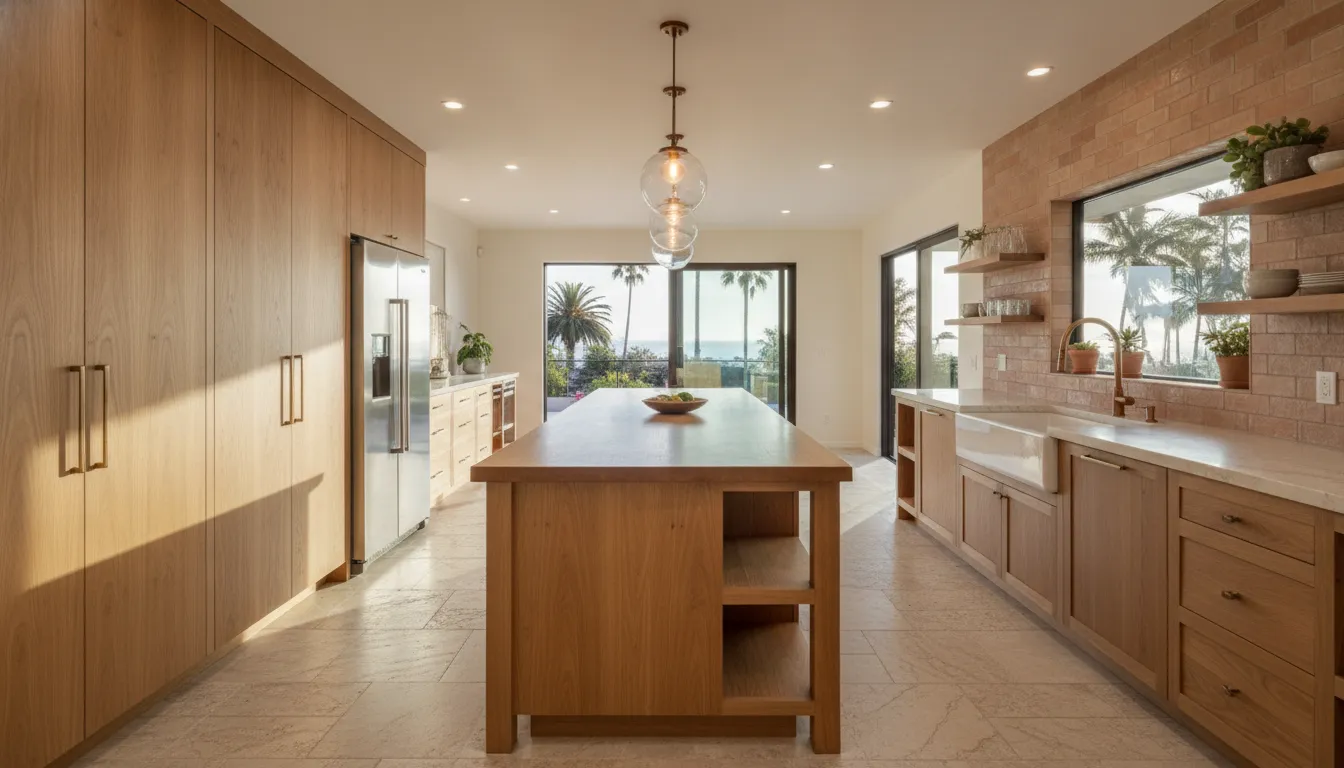
Create cohesive lighting and finishes across each zone
Because open rooms are viewed together, lighting and materials need a shared visual direction. Cohesion does not require identical products in every area. It comes from repeating a few colors, forms, and finishes with intention. The result should feel connected while allowing each zone to keep its own character.
Layer lighting by activity
Use ambient lighting for general brightness, task lighting for focused work, and accent lighting for depth. The Department of Energy explains how layered lighting supports different needs while using energy effectively. In the kitchen, combine ceiling light with under-cabinet fixtures and focused island lighting.
Give the dining and living areas their own controls so the mood can change after cooking. A dining fixture creates intimacy at the table. Lamps and accent lights make the lounge comfortable at night. Dimmers can help one open room move from bright meal preparation to relaxed entertaining without changing its physical layout.
Repeat finishes without overmatching
Select a small family of finishes and distribute them across the room. Cabinet hardware might relate to nearby lighting, while wood tones repeat in shelves or furniture. Avoid introducing a different statement material in every zone. Too many competing finishes can make an open room feel fragmented.
Use contrast where it clarifies function. An island in a deeper cabinet color can define the kitchen while surrounding finishes remain light. A textured backsplash can add interest without competing with the living room. These choices create visual rhythm and support timeless open kitchen design features.
Coordinate floors and colors
Continuous flooring creates the strongest visual connection between zones. It also avoids awkward transitions in the middle of an open room. If one material cannot meet every need, place transitions at logical boundaries. Choose products that suit kitchen spills, regular traffic, cleaning expectations, and the home’s existing style.
Wall colors can shift subtly while staying within one palette. A deeper tone may define dining, while a lighter shade keeps the kitchen bright. Test samples in morning and evening light before deciding. Natural light changes throughout the day, especially in spaces with windows facing several directions.
What affects the cost of an open concept kitchen remodel?
The cost depends on much more than room size. Structural changes, utility relocation, cabinet scope, appliance choices, finish levels, permits, and existing conditions all influence the total. Two kitchens with similar square footage can require very different investments. A detailed site review and defined design are needed before a reliable proposal can be prepared.
Structural and layout changes
Removing a non-load-bearing partition is usually simpler than replacing a structural wall with a beam. Longer spans, concealed beams, new posts, or foundation support add engineering and construction work. Utility lines inside the wall can also increase scope. A partial opening may preserve the desired connection while reducing some of these changes.
Moving the sink, range, or refrigerator can improve the layout, but it may require new plumbing, electrical, gas, or ventilation routes. Slab foundations and limited attic access can make relocation more involved. Compare the value of each move with a design that uses existing service locations more efficiently.
Cabinetry, appliances, and finishes
Cabinet quantity, construction, inserts, and door style have a major impact on cost. Open plans sometimes lose a cabinet wall, so the remaining storage must work harder. A pantry wall or storage-focused island may restore capacity. Counter material, backsplash tile, flooring, fixtures, and hardware also shape both appearance and budget.
Appliances vary widely in price and installation requirements. Confirm sizes and specifications before final cabinet drawings. A powerful cooking appliance may need upgraded ventilation or utilities. Select products as a coordinated system rather than separate purchases. This reduces late changes and keeps the final kitchen practical.
Labor, permits, and planning
Skilled labor turns the design into a safe, durable room. Demolition, framing, mechanical work, cabinetry, surfaces, and finish work must happen in the right sequence. Permit and inspection requirements vary by project and location. The City of San Diego provides information about local development services and permitting.
A complete plan helps control uncertainty before construction starts. It should document the layout, materials, structural approach, utilities, and key details. Include a reasonable contingency for hidden conditions, especially in older homes. Clear decisions also help the team order long-lead products and build a realistic schedule.
Is a fully open or partially open plan right for you?
A fully open plan supports shared activity, broad views, and flexible entertaining. A partial plan provides more privacy, storage, or acoustic separation. Neither is universally better. The right answer comes from matching the design to your routines, the home’s architecture, and the amount of change the project can reasonably support.
Think about daily life
List what happens in the main living area on a typical weekday and during gatherings. Consider cooking styles, remote work, homework, television, pets, and guests. If several activities happen at once, some separation may improve comfort. If conversation and shared time are the priority, a wider opening may serve the household well.
Also consider how the home may need to work later. Wide routes and fewer doors can improve access. Flexible dining or seating areas can adapt as routines change. Let those needs guide the plan instead of choosing a layout only because it appears in current open concept kitchen trends.
Decide how much visual connection you want
Some homeowners want a direct view from the kitchen to the yard or living room. Others prefer to screen the sink and food preparation area. A peninsula, tall cabinet, pocket door, or wider framed opening can create a middle ground. Test sightlines from the home’s main entrances and seating positions.
Partial openness can also preserve useful walls for art, storage, or furniture. That matters in compact homes where every surface has a job. Compare fully open and partial modern open concept kitchen layouts before committing to demolition. The best solution may combine open views with one carefully retained wall.
Set priorities before design begins
Rank your goals in order. More daylight, seating, storage, entertaining space, and accessibility may compete for the same floor area. A clear priority list helps the design team evaluate trade-offs. It also prevents a dramatic wall removal from overshadowing essential open kitchen design features.
Indoor air quality should remain part of the discussion, particularly when cooking shares air with living areas. The CDC explains common indoor environmental pollutants and the role of ventilation. Pair an appropriate vented hood with a layout that supports safe, comfortable use.
Talk with King Remodeling about your open concept kitchen plan
Frequently asked questions about open concept kitchens
What is an open concept kitchen?
An open concept kitchen shares visual space with the dining room, living room, or both. Most or all full-height walls between these areas are removed, while cabinets, an island, lighting, and furniture help define each zone.
Can I convert a closed kitchen to an open concept layout?
Many closed kitchens can be opened, but the right approach depends on the home’s structure and existing plumbing, electrical, and HVAC systems. A design-build team should inspect the space before proposing wall removal, a wider opening, or a partial open plan.
What are the main drawbacks of an open kitchen?
Cooking sounds, odors, and visible clutter can reach the adjoining room. Strong ventilation, planned storage, quiet appliances, and a small visual buffer can reduce these issues without closing the kitchen back in.
How do you define zones without walls?
Use an island, peninsula, dining table, area rug, ceiling detail, or layered lighting to give each area a clear role. Repeating a few colors and materials keeps the full space connected.
Are open concept kitchens still a good choice?
They can be a strong choice for households that value shared space, daylight, and easy entertaining. A partial open plan may work better when privacy, noise control, or hidden prep space matters more.
.
.
Plan your San Diego open concept kitchen
A successful remodel begins with clear priorities and a careful look at the existing home. Decide how open the rooms should feel, which functions matter most, and what constraints the structure creates. Then develop the layout, storage, lighting, materials, ventilation, and utilities as one coordinated design.
King Remodeling can help you evaluate options and build an open concept kitchen that fits your home and routines. Talk with King Remodeling about your open concept kitchen plan to begin a design-build conversation. You can also schedule your design-build consultation when you are ready to explore the next step.