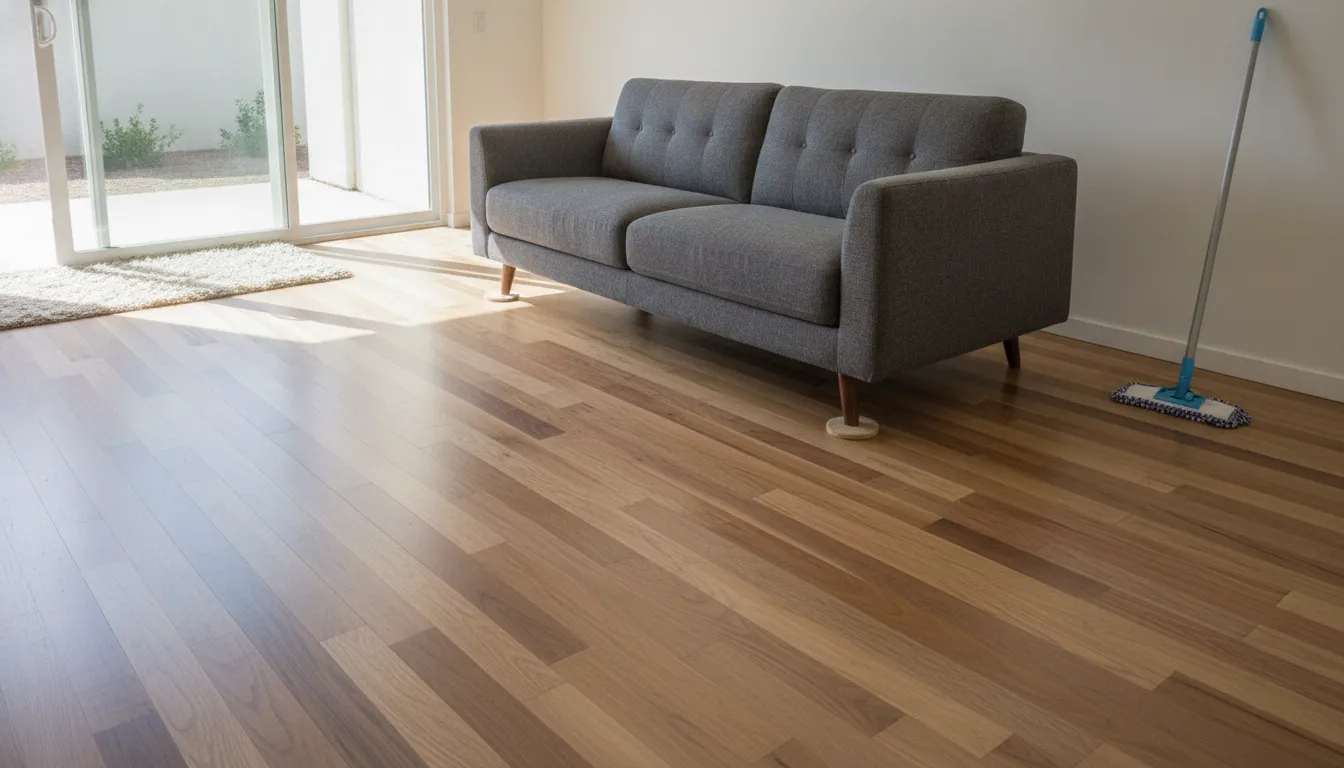
Flooring maintenance after installation starts before the first mop bucket comes out. The finish, adhesive, or grout may still be settling, and the wrong cleaner or a rug put down too soon can mark a floor that otherwise looks finished. Hardwood, luxury vinyl, laminate, and tile do not share one waiting period. The useful plan is the one written for the specific product that was just installed.
Call (858) 299-7700 to plan flooring care
King Remodeling handles professional flooring installation for San Diego homes. The crew installs hardwood, luxury vinyl, laminate, and tile after materials are chosen at the San Diego Design Center. That sequence matters here, because the care card you should keep is the one for the finish or grout that was actually used, not a generic cleaner from the store. If a seam, hollow spot, or lippage shows up in the first week, that is an install question for the crew, not a cleaning problem.
What should you do in the first hours after the floor goes in?
Walk the room once the installer says it is open, then leave the surface alone. Pick up scraps, spacers, and grit before anyone drags a box across the surface. A new floor scratches easily while the house is still a job site. Grit trapped under a drop cloth works like sandpaper.
Ask three questions before the crew leaves:
- When can socks-only foot traffic start, and when can shoes come back?
- When can furniture, appliances, and area rugs return?
- Which cleaner matches this finish, wear layer, or grout, and which ones should stay out?
Write those answers on the product box or the invoice so the next cleaner is not a guess. A site-finished hardwood floor needs drying time you can see and smell. Factory-finished wood is different. The National Wood Flooring Association homeowner handbook notes that factory-finished floors can be walked on right after installation. A finish applied in the room cannot. Luxury vinyl and laminate depend on whether the floor was glued or floated, and tile depends on the grout rather than the tile face.
If other trades still need the room, cover the floor only after it has been swept. Use a breathable cover such as heavy paper or a panel made for floor protection. Tarkett post-install guidance for luxury vinyl and laminate warns against plastic and other non-porous covers on glued floors, because trapped moisture can keep adhesive from drying. Do not tape that protection to the new surface. Tape pulls finish and leaves a visible stripe.
How long should flooring maintenance after installation wait before normal use?
There is no single cure clock that fits every assembly. Use the table as a planning range, then follow the label on the finish, adhesive, or grout that was installed. If those product instructions are stricter, they override the planning ranges below.
| Floor | Socks-only traffic | Furniture and rugs | First wet cleaning | Stay away from |
|---|---|---|---|---|
| Site-finished hardwood. | After the finisher clears the room. Often about a day. | Commonly several days. Rugs often wait a week or more. | After the finish cure window on the can. | Steam mops, wet mops, and wax on a modern finish. |
| Factory-finished hardwood. | Usually the same day. | Soon, with pads and sliders. | A damp cloth once dust is gone. | Steam, standing water, and beater-bar vacuums. |
| Glued luxury vinyl. | Often 24 hours on a full-spread bond. | Often 72 hours for heavy pieces. | Often 48 hours before liquids. | Plastic covers, solvent cleaners, and steam. |
| Floating vinyl or laminate. | Often the same day. | Same day if you lift. Do not drag. | A light damp mop after dust is gone. | Soaking the seams, steam, and oil soaps. |
| Ceramic or porcelain tile. | Commonly the next day for light steps. | After the grout cure on the bag. | Plain water for haze. Then a neutral cleaner. | Acid on grout, ammonia, and sealing too early. |
Tarkett’s residential guide is a clear example of why the install method matters. On a full-spread permanent bond, it restricts traffic for at least 24 hours. Heavy furniture and appliances wait at least 72 hours. Liquids and cleaners wait at least 48 hours. On releasable glue and floating luxury vinyl or laminate, it allows foot traffic and furniture the same day, as long as heavy pieces move on a protective board. Your specific product may use a different window. The practical point is to match the clock to the assembly, not to the room name alone.
Tile has its own clock. American Olean ceramic tile care guidance says a new tile floor should be covered with paper, not plastic, while other work continues. Cement grout joints are often damp-cured for several days so the color locks in. Grout haze can usually come off with plain water after at least 24 hours. Acid haze removers and sealers wait until the grout manufacturer says the joint is ready. Sealing a damp grout joint traps moisture and can leave a blotchy line along the tile.
How do you clean a new floor the first time?
The first cleaning is dust control, not a full wash. Sweep or vacuum with the beater bar off. A hard-floor vacuum setting keeps the brush from beating the finish or clicking across tile edges. Then decide whether any water is allowed on that product yet.
Hardwood
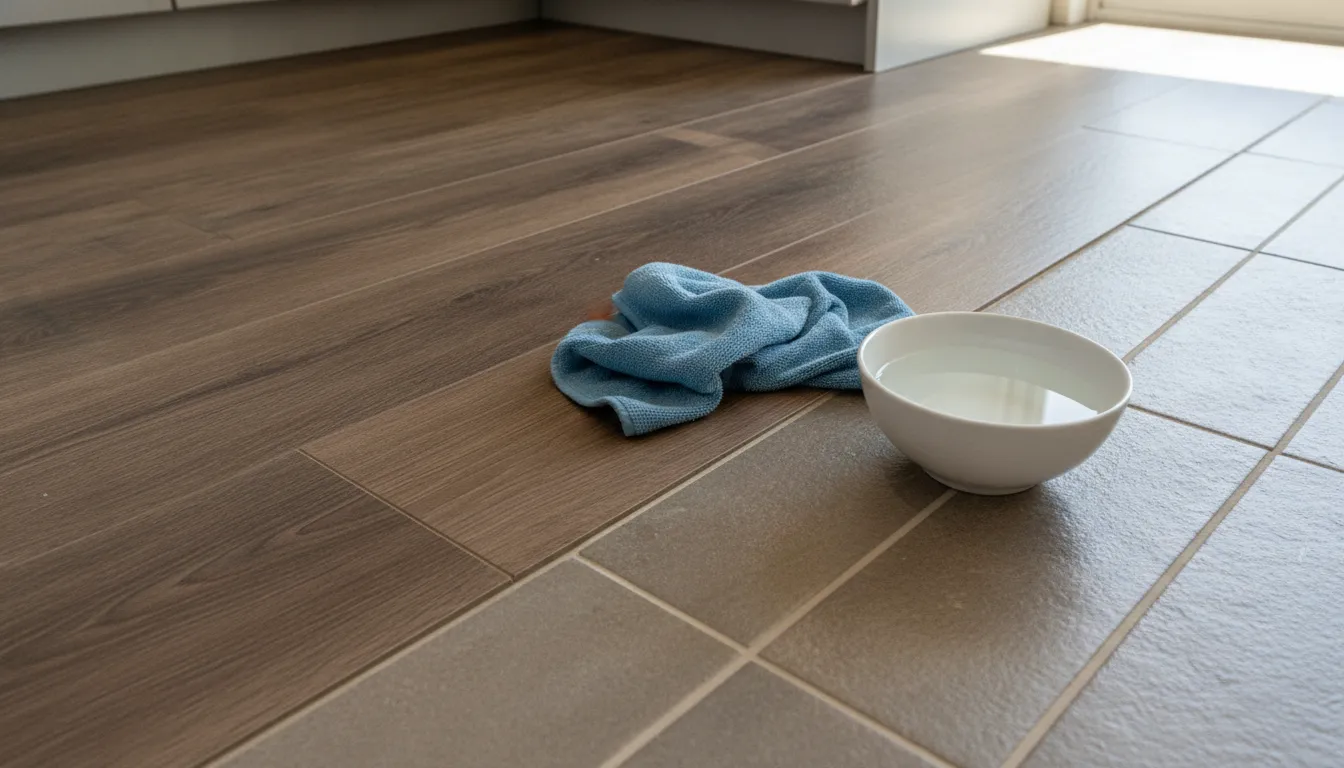
The National Wood Flooring Association maintenance page tells owners to sweep, dust-mop, or vacuum, then wipe spills with a dry or slightly damp cloth. Wet mops and steam mops damage both the finish and the wood over time. Use the cleaner made for the finish on your floor. A flooring professional can name that cleaner at the end of the job. Skip oil soap, vinegar mixes, and steam on a cured hardwood finish. Oil soap leaves a film that makes the next recoating harder, which matters later if the floor is solid hardwood that can be sanded. If the floor ever needs that work, the hardwood floor refinishing cost and process is a separate decision from week-one care.
Luxury vinyl
Once liquids are allowed, damp-mop with a microfiber head and a neutral-pH cleaner. Do not flood the floor or leave cleaner sitting in the joints. Tarkett specifically says not to use dishwashing liquid, because it films the wear layer. Bleach, ammonia, abrasive pads, and steam stay off the floor. The wear layer is a thin factory coating. Scrubbing it does not “deep clean” it. Scrubbing shortens the wear layer instead. If you are still comparing products before a remodel, the best luxury vinyl plank options page covers wear layers and wet rooms. This article assumes the new floor is already installed.
Laminate
Treat laminate like a finished surface with seams that should not hold water. Sweep, then use a well-wrung microfiber mop and a cleaner labeled for laminate. Wipe wet shoes and pet bowls the same day. Standing water at a seam is how a laminate core swells, and a swollen edge does not sand flat. The install steps that prevent that, including acclimation and moisture checks in San Diego homes, live in the laminate flooring installation guide. Careful aftercare is what keeps those laminate seams closed.
Tile and grout
Glazed ceramic and porcelain want a neutral cleaner, a rinse, and a dry pass. American Olean warns that acids can etch grout and glaze, and that ammonia can discolor grout. Dust first so wet cleaning does not turn grit into a gray film. Cement grout is the part that stains. Seal it only after the cure window, then plan to clean the joints on a schedule anyway. A grout sealer is not a permanent shield against stains. Epoxy grout still needs ordinary cleaning, though it resists stains better than cement grout.
For a bathroom that is still in the planning stage, how to choose bathroom flooring is the comparison. Once the tile is set, the job becomes haze removal, cure time, and a cleaner that will not damage the joint.
When can furniture, rugs, and appliances come back?
Move heavy pieces only after the traffic limit for that specific floor has passed. Lift sofas, tables, and appliances. Dragging a leg across a new finish cuts a line you will notice every day. Slide appliances on a hard panel, not on a towel, and keep the path clear of grit.
A few return rules cover most San Diego homes:
- Put felt pads on chair and table legs before the furniture touches the floor. Check the pads after the first month, because grit sticks to the felt.
- Keep area rugs off site-finished hardwood until the finisher’s cure window is over. A rug can trap solvent and leave a dull rectangle.
- Use a breathable mat at exterior doors. A rubber-backed mat can discolor some vinyl and finishes if it sits in a sunny room, so flip it and check the back after the first week.
- Leave a small gap where a floating floor meets a heavy bookcase or island. Those floors need room to move. Pinning the edge with a tight rug pad or a fixed cabinet is an install problem, not a cleaning one.
Rolling office chairs need a hard mat even on luxury vinyl. Casters concentrate weight on a tiny point, and the wear shows up as a dull path long before the rest of the room looks used. In a kitchen, return the refrigerator only when the adhesive or grout clock allows it, and confirm that the feet are not sitting on a seam.
What does weekly care look like after the floor has cured?
Once the cure window is over, the routine is short. Grit is the main threat on every hard surface, and San Diego homes track in plenty of it from patios, pet doors, and street dust.
- Sweep or vacuum hard-floor mode a few times a week, more often at entries and in kitchens.
- Wipe spills the same day. Waterproof vinyl still looks better when juice and mud do not sit in the joints.
- Damp-mop weekly with the cleaner matched to the surface. The mop should feel almost dry in your hand.
- Skip steam, wax on factory finishes, oil soap, and any powder that needs scrubbing.
- Trim pet nails and keep water bowls on a tray. Repeated splashing is a seam problem, not a “waterproof” test.
Recoating is a later hardwood decision, not a month-one chore. The National Wood Flooring Association describes recoating as a new coat of finish once the floor looks dull from use. Recoating is not the same job as sanding the wood back to bare boards. Vinyl, laminate, and glazed tile do not take a recoat the way hardwood can. When the wear layer or glaze is gone, the plank or tile is replaced. That is why furniture pads and entry mats protect those floors more than any cleaner will.
If you are planning floors across a kitchen and a hallway, material choice still belongs elsewhere. See kitchen flooring ideas and the tile versus luxury vinyl comparison. The weekly care routine changes with that material choice. A tile kitchen wants grout attention. A vinyl kitchen wants seam and wear-layer attention. Mixing those floors in one house is normal, but cleaning them with one bottle is not.
Which marks are care issues, and which ones need the installer?
Most early complaints are either a cleaning mistake or a condition the crew should see before furniture hides it. Sort the marks before anyone scrubs the new surface.
- Haze on tile. A light film after grouting is usually haze. Plain water and a white pad, used after the first day, handle many cement grouts. Stop if the tile is natural stone or the grout bag calls for a specific remover.
- Sticky or soft hardwood finish. That is cure, not dirt. Keep traffic off that area and call the finisher, and do not mop the soft finish.
- A cloudy streak on vinyl. Often leftover adhesive or a film from the wrong soap. Ask the installer before using a solvent, because the wrong one clouds the wear layer.
- A raised laminate edge. Water got in, or the floor was wet-mopped too hard. Dry the spot and have the plank checked, because more water will not flatten a swollen edge.
- Hollow tile or a lip you can feel. That is installation, not maintenance. Note hollow spots or lippage during the walkthrough rather than treating them as dirt.
- A dull path only under a chair. Pads were missing or grit was trapped. Replace the pad, and do not coat the whole room to hide one dull track.
King Remodeling’s flooring work includes removal of the old surface, prep, and installation, then a final walkthrough. Use that walkthrough to point out lippage, open joints, and finish misses while the room is still empty. Routine care starts after that punch list is closed. License #1039019 covers the contracting work. The license does not change the cure time printed on a finish can.
If a new floor is still in planning, professional flooring installation is the point where material, adhesive, and the first-week rules get set together. Bring the rooms, the pets, and the sun exposure to the San Diego Design Center so the care plan matches the floor you pick.
Frequently Asked Questions
Can you mop a floor the day it is installed?
Usually no. Dust-mop or vacuum first. Glued luxury vinyl often needs about 48 hours before any cleaner or water, and a site-finished wood floor stays dry until the finish can says it has cured. Factory-finished wood and floating floors can take a barely damp cloth sooner. Read the product sheet before anyone fills a mop bucket.
Are steam mops safe on new hardwood, vinyl, laminate, or tile?
No for hardwood, luxury vinyl, and laminate. The National Wood Flooring Association says steam and wet mopping damage wood finish over time, and vinyl makers warn that heat and standing water stress wear layers and seams. Glazed tile can handle more water, but steam is still a poor way to clean fresh grout. Use a neutral cleaner and a damp mop only after the cure window has passed.
When can area rugs go back on a new floor?
Wait until the finish, adhesive, or grout has cured. On site-finished hardwood that often means several days to a week or more, because a rug can trap solvents and leave a dull patch. Factory-finished wood, floating vinyl, and laminate can take a breathable rug sooner. Check rubber backs in sunny rooms so the backing does not discolor the surface.
What cleaner should you buy for a brand-new floor?
Buy the cleaner named for that finish, wear layer, or grout, at a neutral pH. Skip vinegar, oil soap, bleach, ammonia, and dish soap. Dish soap films vinyl. Acids and ammonia stain or etch grout. If the installer did not leave a name, ask before the first wet cleaning. A wrong cleaning product is harder to remove than ordinary dust.
Who do you call if the new floor looks wrong after a week?
Call the installer for hollow tile, open seams, finish that is still soft, or planks that peaked after a spill. Clean only the issues that are clearly residue, such as light grout haze after the first day or dust left from the job. King Remodeling homeowners can use the contact page or call (858) 299-7700 and describe the room, the product, and the day the floor was finished.