Best Luxury Vinyl Plank Flooring for Kitchens and Bathrooms in 2026
King Remodeling has installed luxury vinyl plank (LVP) flooring in hundreds of San Diego kitchens and bathrooms over the past 25 years. This updated guide shares the specific brands, specs, and price ranges we recommend in 2026, so you can choose a waterproof floor that looks stunning and holds up to daily life.
Call (858) 299-7700 to schedule a free flooring consultation at our San Diego Design Center, or request a quote online.
Key Takeaways
- Choose SPC rigid core with a 20+ mil wear layer for any kitchen or bathroom installation. This combination provides 100% waterproof protection, superior dent resistance, and a floor that lasts 20+ years.
- Top 2026 picks by budget: COREtec Premium ($5-$8/sq ft), Shaw Floorte Pro ($4-$6/sq ft), Mohawk SolidTech ($3-$5/sq ft), and Lifeproof ($2-$4/sq ft).
- Professional glue-down installation is the gold standard for kitchens and bathrooms. It creates a sealed, stable surface that protects your subfloor from water damage, unlike click-lock systems where seams can allow moisture through.
Why Is LVP the Best Flooring Choice for Kitchens and Bathrooms?
Luxury vinyl plank flooring has become the top choice for high-moisture rooms because it solves the core problem homeowners face: getting the look of real hardwood without the risk of water damage. Unlike hardwood that warps, laminate that swells, or tile that cracks when you drop a pan, LVP is engineered specifically for wet, high-traffic spaces.
The 2026 generation of LVP is a significant upgrade from even five years ago. Advances in printing technology and core construction mean today’s planks are often indistinguishable from real wood or stone. Embossed-in-register (EIR) texturing aligns the surface feel with the visual grain pattern, creating a floor that looks and feels authentic underfoot.
For San Diego homeowners, LVP offers practical advantages beyond moisture resistance:
- Warmer underfoot than tile: No cold shock on morning walks to the kitchen.
- No grout lines to scrub: A quick sweep and damp mop keep floors looking new.
- Impact resilient: Dropped pans and heavy appliances won’t chip or crack the surface.
- Cost-effective: LVP costs 50-70% less than hardwood with similar visual appeal.
King Remodeling’s San Diego Design Center has curated LVP samples from every brand in this guide, so you can see and feel each option next to your cabinet and countertop selections before making a decision.
What Are the Best LVP Brands for 2026?
After installing thousands of floors across San Diego, King Remodeling has identified the brands that consistently deliver on durability, waterproof performance, and realistic design. The 2026 market has matured significantly, and the gap between premium and budget options is wider than ever. Here is our ranked breakdown.
COREtec Premium: Best Overall for Design and Comfort ($5-$8/sq ft)
COREtec remains the gold standard for luxury LVP in 2026. Their patented core technology is 100% waterproof, and the attached cork underlayment adds genuine comfort underfoot, reducing noise and creating a warmer feel than competing brands. The cork backing also allows installation over slightly imperfect subfloors, which saves on prep costs.
Best for: Primary kitchens and bathrooms where design and comfort matter most. Condos and multi-unit settings where sound reduction is critical.
| Specification | COREtec Premium Detail |
|---|---|
| Wear Layer | 20 mil (commercial-grade) |
| Core Type | SPC rigid core with cork backing |
| Waterproof | 100% waterproof |
| Warranty | Lifetime residential |
| Price Range | $5-$8 per square foot (materials only) |
Shaw Floorte Pro: Best for Heavy-Duty Performance ($4-$6/sq ft)
Shaw’s Floorte Pro series is built for punishment. The high-density SPC core and commercial-grade wear layer make it the top choice for households with large pets, kids, and heavy foot traffic. Shaw’s pet-specific testing is not marketing; we have seen Floorte Pro hold up in homes with two large dogs for 5+ years without visible wear layer damage.
Best for: High-traffic kitchens, homes with large pets, basement installations, and busy family bathrooms.
| Specification | Shaw Floorte Pro Detail |
|---|---|
| Wear Layer | 20 mil (commercial-grade) |
| Core Type | High-density SPC rigid core |
| Waterproof | 100% waterproof |
| Warranty | Lifetime residential, 10-year commercial |
| Price Range | $4-$6 per square foot (materials only) |
Mohawk SolidTech: Best Value for Large Projects ($3-$5/sq ft)
Mohawk’s SolidTech line hits the sweet spot between premium performance and accessible pricing. The UniClic locking system is one of the best in the industry for installation efficiency, especially around irregular obstacles like kitchen islands and doorframes. The 100% waterproof construction prevents planks from curling or buckling due to moisture.
Best for: Whole-home flooring installations, large kitchen renovations, and projects where cost-per-square-foot matters without sacrificing quality.
| Specification | Mohawk SolidTech Detail |
|---|---|
| Wear Layer | 12-20 mil (residential to commercial) |
| Core Type | SPC rigid core |
| Waterproof | 100% waterproof |
| Warranty | Lifetime residential |
| Price Range | $3-$5 per square foot (materials only) |
Karndean Design Flooring: Best for Custom Design ($5-$9/sq ft)
Karndean is the choice for homeowners who prioritize sophisticated, design-forward aesthetics. Their LVP features some of the most realistic textures in the industry, with detailed grain patterns and hand-scraped finishes that convincingly mimic reclaimed wood and natural stone. Every Karndean floor is waterproof, durable, and easy to maintain.
Best for: Design-driven kitchen remodeling projects and primary bathroom renovations where aesthetics are the top priority.
Lifeproof: Best Budget Waterproof Option ($2-$4/sq ft)
Available exclusively at The Home Depot, Lifeproof delivers solid waterproof performance at an accessible price point. It is 100% waterproof with good scratch resistance and a pre-attached underlayment that simplifies installation. While it lacks the ultra-realistic textures of premium brands, it is a practical choice for secondary bathrooms, laundry rooms, and budget-conscious renovations.
Best for: Guest bathrooms, laundry rooms, basements, and homeowners who need reliable waterproof LVP on a tighter budget.
2026 LVP Brand Comparison Table
| Brand | Wear Layer | Core Type | Price/sq ft | Best For |
|---|---|---|---|---|
| COREtec Premium | 20 mil | SPC + cork | $5-$8 | Design and comfort |
| Shaw Floorte Pro | 20 mil | SPC high-density | $4-$6 | Heavy-duty, pets |
| Mohawk SolidTech | 12-20 mil | SPC rigid | $3-$5 | Value, large projects |
| Karndean | 20 mil | SPC rigid | $5-$9 | Custom design |
| Lifeproof | 12 mil | SPC rigid | $2-$4 | Budget waterproof |
What Features Should You Look for in Waterproof LVP?
Not all luxury vinyl plank is created equal. The specifications that matter most for kitchens and bathrooms are the ones that determine whether your floor can handle real-world moisture, temperature swings, and daily wear. Here are the four features to evaluate before buying.
100% Waterproof vs. Water-Resistant
This is the most critical distinction for any kitchen or bathroom floor. “Water-resistant” flooring can handle small spills if wiped up quickly, but moisture can seep into seams and the core over time, causing swelling and damage. “100% waterproof” means the planks themselves will not swell, buckle, or degrade even with prolonged water exposure. For kitchens and bathrooms, only consider products labeled 100% waterproof with an SPC or WPC core.
Wear Layer Thickness
The wear layer is the transparent top coating that protects your floor’s design from scratches, scuffs, and stains. Thickness is measured in mils (thousandths of an inch):
- 6-8 mil: Light residential use only. Not recommended for kitchens.
- 12 mil: Standard residential. Adequate for low-traffic bathrooms.
- 20+ mil: Commercial-grade. Our recommendation for all kitchens and primary bathrooms.
A thicker wear layer protects against dropped utensils, sliding chairs, and pet claws, keeping your kitchen remodel looking fresh for 15-25 years.
SPC vs. WPC Core Construction
The core determines your floor’s stability, dent resistance, and feel underfoot:
- SPC (Stone Plastic Composite): Dense, rigid, and ultra-stable. Superior dent resistance from heavy appliances. Less affected by temperature changes. Our recommendation for kitchens and bathrooms.
- WPC (Wood Plastic Composite): Slightly softer and warmer underfoot due to a foaming agent. Better sound absorption. Good for bedrooms and living areas but less ideal for high-moisture zones.
Texture and Slip Resistance
For wet areas, look for LVP with embossed-in-register (EIR) texturing, where the surface texture aligns with the visual grain pattern. This creates a realistic look while providing better grip than smooth, glossy finishes. Visit our Design Center to feel different textures and find one that is both safe and beautiful underfoot.
How Much Does LVP Flooring Cost in San Diego?
LVP flooring costs in San Diego range from $2 to $12 per square foot installed, depending on the brand, wear layer thickness, and installation method. Here is a realistic breakdown for 2026 pricing.
| Tier | Materials/sq ft | Installation/sq ft | Total Installed/sq ft | 200 sq ft Room |
|---|---|---|---|---|
| Budget (Lifeproof, TrafficMaster) | $2-$3 | $2-$3 | $4-$6 | $800-$1,200 |
| Mid-Range (Mohawk SolidTech) | $3-$5 | $3-$4 | $6-$9 | $1,200-$1,800 |
| Premium (COREtec, Shaw Floorte Pro) | $5-$8 | $3-$5 | $8-$13 | $1,600-$2,600 |
These prices include materials only for the first column and professional installation for the total. Additional costs may include subfloor preparation ($1-$2/sq ft if needed), removal of existing flooring ($1-$2/sq ft), and trim/transition strips ($2-$5 per linear foot).
Request a free quote from King Remodeling to get an accurate estimate for your specific project. We provide fixed-bid pricing with no hidden costs.
What Is the Best LVP for Kitchen Floors?
Kitchens demand the most from flooring: heavy appliances, dropped pans, constant foot traffic, cooking spills, and temperature changes from ovens. The best LVP for kitchen floors needs a 20+ mil wear layer and an SPC rigid core to handle these demands without showing wear.
Our top kitchen recommendation is Shaw Floorte Pro for its combination of commercial-grade durability and wide design range. For homeowners who prioritize aesthetics and comfort, COREtec Premium with its cork underlayment provides a warmer, quieter kitchen floor.
Key considerations for kitchen LVP selection:
- Dent resistance: Choose SPC core over WPC. Heavy refrigerators and dishwashers can dent softer cores over time.
- Wide plank format (7″+): Fewer seams mean fewer potential entry points for moisture. Wide planks also create a cleaner, more modern look.
- Warm neutral tones: In 2026, the trend has shifted from cool grays to warm whites, soft walnuts, and natural oak tones that pair well with contemporary cabinetry.
What Is the Best LVP for Bathroom Floors?
Bathrooms present a unique challenge: standing water near tubs and showers, high humidity from steam, and potential plumbing leaks beneath the surface. The best LVP for bathroom remodeling projects needs 100% waterproof construction at the core and seam level.
Our top bathroom recommendation is COREtec Premium for its cork backing (warmer on bare feet) and tight seam construction. For budget bathroom renovations, Lifeproof provides reliable waterproof performance at a lower price point.
Key considerations for bathroom LVP selection:
- Slip resistance: Prioritize textured or EIR surfaces over smooth, glossy finishes. Wet bathroom floors need grip.
- Glue-down installation: The gold standard for bathrooms. Glue-down creates a fully sealed surface that prevents water from reaching the subfloor, even around toilet flanges and tub surrounds.
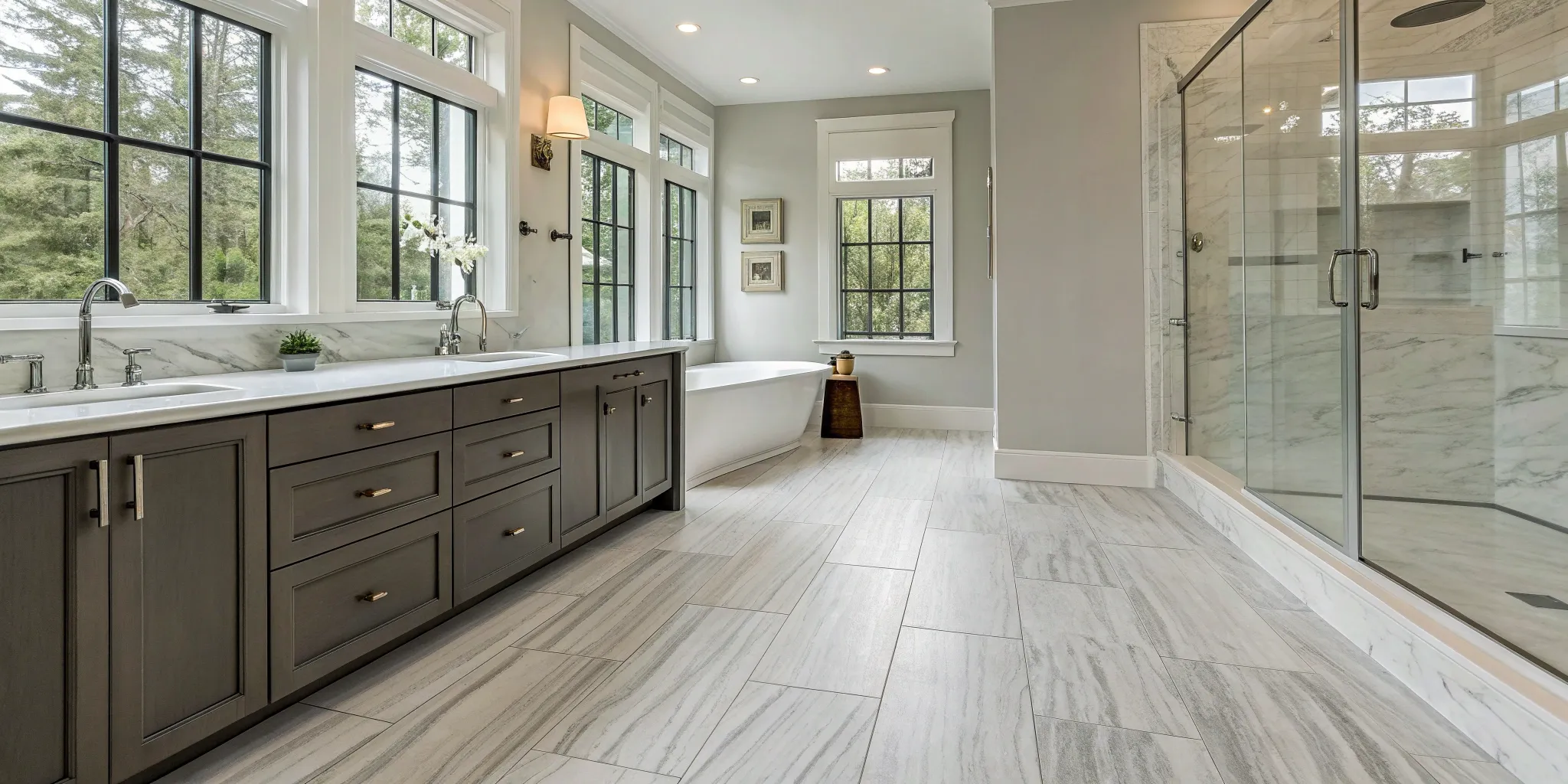
- Stone-look options: Marble and slate-look LVP are popular for bathrooms in 2026, offering a spa-like aesthetic without the cold feel of real stone.
LVP vs. Other Flooring: How Does It Compare?
Understanding how LVP stacks up against other popular flooring materials helps you make a confident decision. Here is an honest comparison for kitchen and bathroom use.
| Feature | LVP | Ceramic Tile | Hardwood | Laminate |
|---|---|---|---|---|
| Waterproof | Yes (SPC/WPC) | Yes | No | No |
| Comfort Underfoot | Warm, soft | Cold, hard | Warm, moderate | Cool, moderate |
| Scratch Resistance | High (20+ mil) | Very High | Low-Medium | Medium |
| Cost/sq ft Installed | $4-$13 | $8-$20 | $12-$25 | $4-$10 |
| Maintenance | Sweep + damp mop | Grout scrubbing | Refinishing needed | Careful cleaning |
| Lifespan | 15-25 years | 25-50 years | 25-100 years | 10-20 years |
| Kitchen/Bath Suitable | Excellent | Excellent | Poor | Poor |
LVP wins on cost, comfort, and ease of maintenance for kitchens and bathrooms. Tile wins on longevity, and hardwood wins on resale value in dry rooms. For a deeper comparison of vinyl and laminate specifically, read our guide on vinyl vs. laminate flooring.
How Should LVP Be Installed in Wet Areas?
The installation method directly impacts whether your LVP floor is truly waterproof or just water-resistant on the surface. For kitchens and bathrooms, the installation method matters as much as the product itself.
Click-Lock (Floating Floor)
Click-lock planks snap together without adhesive, creating a floating floor over the subfloor. This method is faster and less messy, making it popular for DIY projects. However, in wet areas, the seams between planks can allow water to penetrate over time if the click-lock mechanism loosens or if cuts around fixtures are imprecise.
Glue-Down (Recommended for Kitchens and Bathrooms)
Each plank is individually bonded to the subfloor with moisture-resistant adhesive. This creates a completely stable, sealed surface that eliminates the risk of water reaching the subfloor through seams. Glue-down requires more subfloor preparation and professional expertise, but the result is a floor that offers maximum durability and water protection.
Why Professional Installation Matters
An uneven subfloor, a small gap between planks, or an improper cut around a toilet flange can create a pathway for water damage, mold, and mildew. King Remodeling’s experienced crews ensure the subfloor is perfectly prepped and every plank is installed to manufacturer specifications. Learn more about why professional flooring installation protects your investment and your warranty.
What Are the Top LVP Design Trends for 2026?
The flooring design landscape has shifted noticeably in 2026. The cool gray farmhouse tones that dominated from 2016-2022 are giving way to warmer, more natural palettes that age better and work with a wider range of interior styles.
Warm Natural Tones
The top-selling colorways in 2026 are warm neutrals: soft walnut, beige-based greige, and natural white oak tones. These work with the current wave of matte black hardware, limewash walls, and warm wood furniture. For San Diego homes, these tones complement the coastal aesthetic while avoiding the dated look of golden oak.
Wide Plank Formats
Wider planks (7-9 inches) continue to gain popularity for their clean, contemporary look with fewer seams. This format is ideal for open-concept kitchens and creates a sense of spaciousness in smaller bathrooms.
Stone-Look LVP
Marble and slate-look LVP is a growing trend for bathrooms. It delivers the sophisticated look of natural stone without the cold feel, high cost, or maintenance demands. Stone-look options in warm tones are particularly popular for primary bathroom remodels.
How Do You Maintain LVP Floors?
One of LVP’s biggest advantages is its low maintenance. A few simple habits protect your investment and keep floors looking new for years.
- Daily: Sweep with a soft-bristle broom or vacuum on the hard floor setting to remove grit that acts like fine sandpaper over time.
- Weekly: Damp mop with a microfiber mop and pH-neutral cleaner. Avoid bleach, ammonia, or abrasive cleaners that can damage the wear layer.
- Ongoing: Place felt pads under furniture legs. Use doormats at entrances. Wipe up spills promptly, even on waterproof floors, to keep seams clean.
- Avoid: Steam mops (excessive heat can damage adhesive), steel wool, and harsh chemicals.
Ready to upgrade your kitchen or bathroom floors? Call King Remodeling at (858) 299-7700 or schedule a free consultation to explore LVP options in our San Diego Design Center.
Ready to plan your remodel? Request a quote from King Remodeling.
Frequently Asked Questions
What is the best luxury vinyl plank flooring brand in 2026?
COREtec Premium is the best overall LVP brand for 2026 based on our installation experience. It offers a 100% waterproof SPC core with attached cork underlayment, a 20 mil commercial-grade wear layer, and a lifetime residential warranty. For heavy-duty performance in homes with pets, Shaw Floorte Pro is our top recommendation. Mohawk SolidTech offers the best value for large-scale projects.
What is the best thickness for LVP in a kitchen?
For kitchen installations, choose LVP that is 5-7mm thick with an SPC rigid core and a minimum 20 mil wear layer. The wear layer thickness matters more than overall plank thickness for durability. A 5mm plank with a 20 mil wear layer outperforms a 7mm plank with only 12 mil protection in high-traffic kitchens.
Is LVP waterproof enough for bathrooms?
Yes, when you choose a product with 100% waterproof SPC or WPC core construction and install it using the glue-down method. The planks themselves will not swell, buckle, or warp from water exposure. Professional installation with moisture-resistant adhesive seals the seams and protects the subfloor from potential leaks around tubs, showers, and toilets.
How long does luxury vinyl plank flooring last?
High-quality LVP with a 20+ mil wear layer lasts 20-25 years in residential settings with normal maintenance. Budget options with 6-12 mil wear layers typically last 10-15 years. Professional installation, proper subfloor preparation, and routine cleaning extend the lifespan of any LVP floor.
Is LVP better than tile for kitchen floors?
LVP is better than tile for most kitchen applications because it is warmer underfoot, more comfortable for long periods of standing, easier to clean (no grout lines), more impact-resistant (dropped items won’t crack it), and significantly more affordable. Tile wins on longevity (25-50 years vs. 15-25 for LVP), but for comfort and value, LVP is the better kitchen floor.
Can you install LVP over existing tile?
Yes, if the existing tile is perfectly flat, stable, and free of cracks or loose tiles. Deep grout lines may need to be filled to create a smooth surface. King Remodeling always assesses existing subfloor conditions during our free in-home consultation to determine whether overlay installation is appropriate or if removal is needed for the best result.
What is the cost difference between SPC and WPC luxury vinyl?
SPC-core LVP typically costs $0.50-$1.50 more per square foot than WPC in the same brand tier. The premium is worth it for kitchens and bathrooms because SPC provides superior dent resistance, better dimensional stability in temperature swings, and a more rigid platform that maintains tight seams over time.
How does LVP compare to laminate flooring for wet areas?
LVP is significantly better than laminate for kitchens and bathrooms. Laminate flooring has a fiberboard core that swells and bubbles when exposed to moisture, while LVP’s vinyl and stone/plastic composite core is 100% waterproof. For any room with a risk of spills or humidity, LVP is the safer, more durable choice. Read our detailed vinyl vs. laminate comparison for more information.