Updating cabinet surfaces can change the feel of a kitchen. For San Diego County homeowners, the best starting point is understanding the work included, the selections that affect scope, and the condition of the existing cabinets.
Cabinet refacing cost depends on the kitchen’s size and layout and the condition of the cabinet boxes. It also depends on the chosen door and drawer-front materials, hardware, trim, and preparation labor. An accurate quote requires a project-specific assessment rather than a standard rate.
- Confirm the existing layout and cabinet condition.
- Choose the doors, finishes, veneer, trim, and hardware.
- Separate repairs and broader remodeling from the cabinet scope.
- Review the written scope before approving the quote.
Refacing generally keeps the existing cabinet boxes in place while updating visible surfaces such as doors, drawer fronts, veneer or skin, and related hardware. That makes the details of the estimate especially important. The first step is to separate the core refacing work from optional selections and any repairs or layout changes that may expand the project.
Request a consultation to discuss your kitchen update and confirm the right project scope.
What Does Cabinet Refacing Include in a Cost Estimate?
A useful cabinet refacing cost estimate should describe exactly what happens to the cabinets you already have. Refacing generally keeps the existing cabinet boxes in place. It updates their visible surfaces instead of treating the project as complete cabinet removal. The box condition, desired appearance, and finish scope all matter from the beginning.
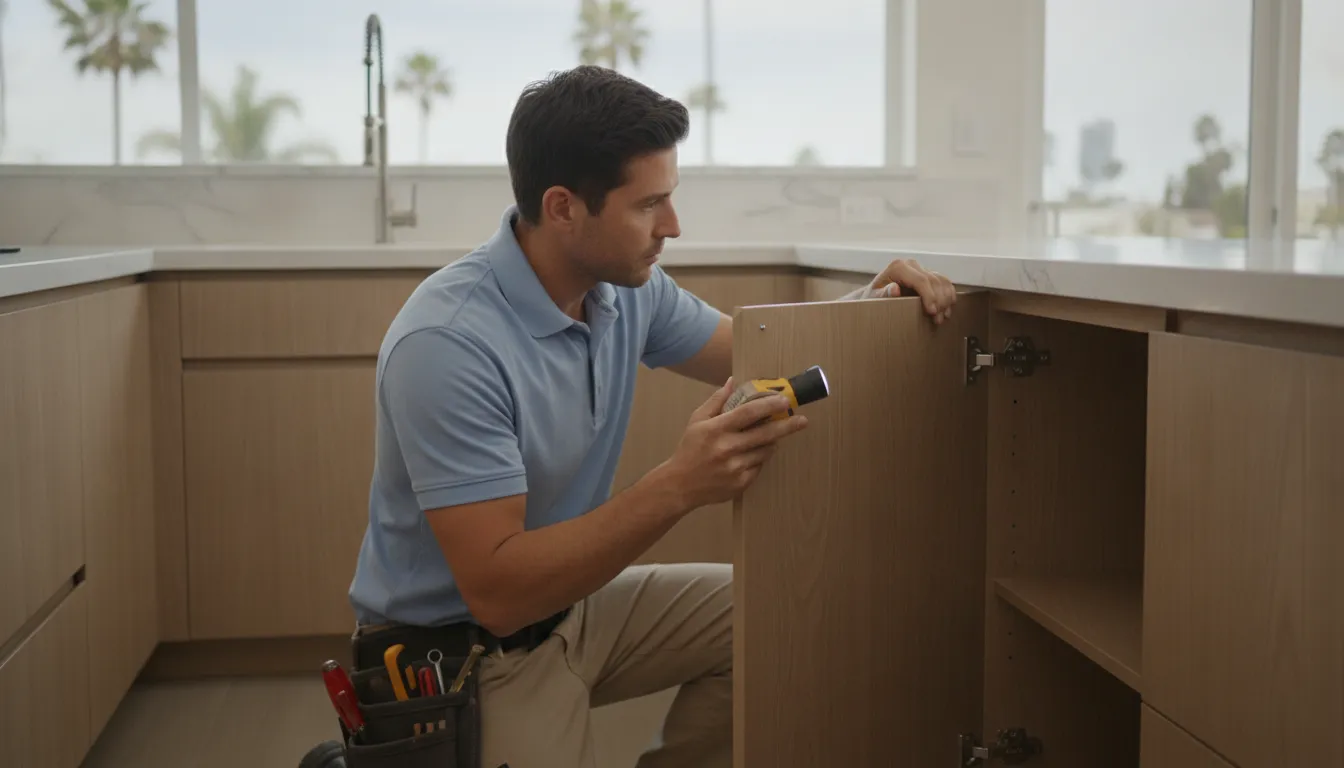
At a high level, the scope commonly includes new veneer or skin over exposed cabinet boxes. It can also include new doors and drawer fronts. A clear estimate should identify whether the boxes suit this treatment and which surfaces need preparation, covering, or refinishing. The exact work still depends on the kitchen’s existing conditions.
What happens to the cabinet boxes?
The cabinet boxes are the fixed structures that form the cabinet run. Their exposed sides, rails, and stiles may receive a new veneer, laminate, or other cabinet skin. The estimate should distinguish visible surfaces from areas that do not need the same treatment. It should also note preparation or minor repairs needed before the new covering is installed.
Box condition matters because refacing is intended for cabinets that can remain serviceable in their current positions. Water damage, swelling, loose components, or other defects may require additional work. If the layout or appliance and fixture placement also needs to change. That should be identified as a broader design or remodeling question rather than left unclear in a refacing allowance.
Which visible components are included?
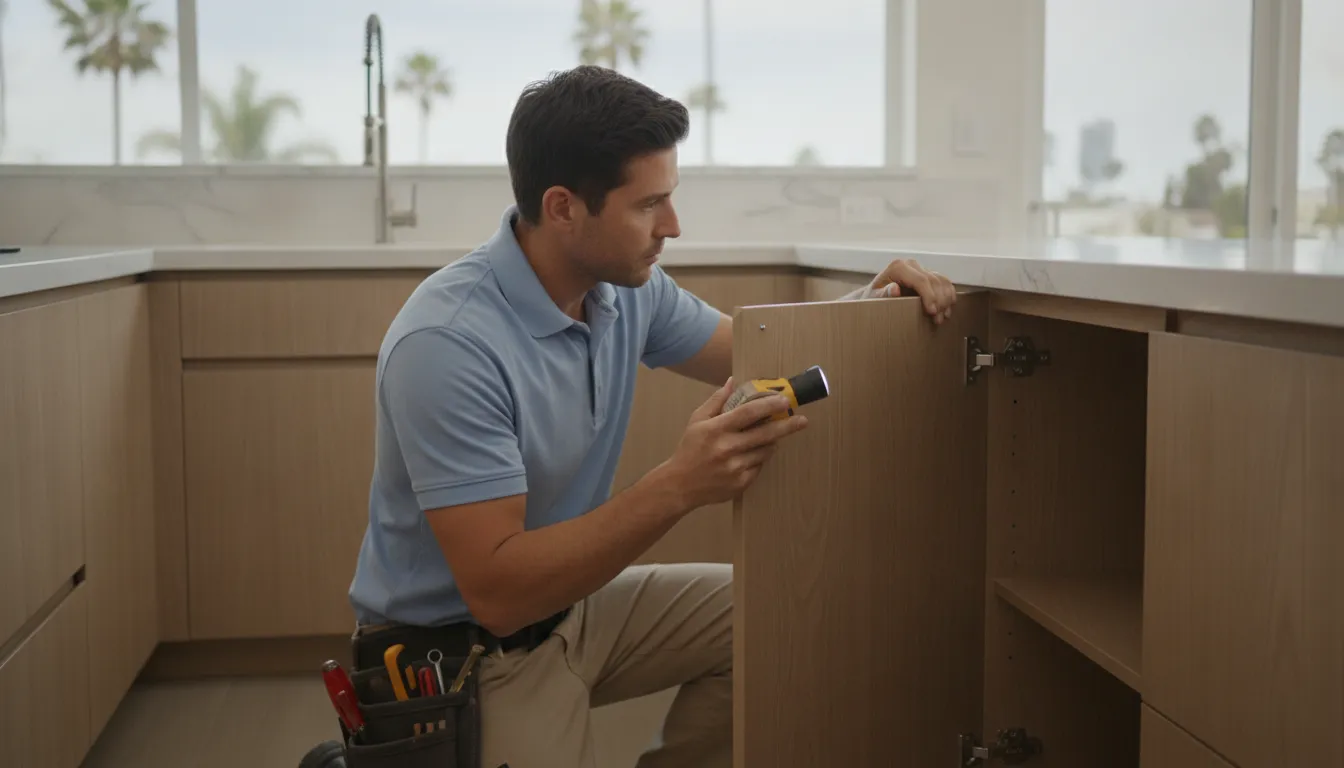
Doors and drawer fronts are usually selected as part of the new look. The estimate should state the number and type of each. It should also list the chosen profile, finish, and special features. The scope may include crown molding, new pulls and knobs, replacement hinges, or glass panels. Some projects may replace drawer boxes when the existing drawers do not support the desired function.
- Existing cabinet boxes and the veneer or skin applied to them
- New cabinet doors and drawer fronts
- Trim, molding, and finished end panels where needed
- Hardware such as pulls, knobs, and hinges
- Optional drawer, glass, or storage changes identified in the design
Before approving an estimate, ask for these inclusions in writing.
A transparent scope helps you separate the cabinet-face update from possible plumbing, electrical, wall, or layout changes. It gives you a more reliable basis for planning the rest of the kitchen.
Which Materials and Door Styles Change Cabinet Refacing Cost?
Material and design selections can change both the work involved and the questions that need to be answered before a quote is prepared. Cabinet boxes may be covered with wood veneer or plastic laminate, while new doors and drawer fronts can be selected to coordinate with that surface treatment. The existing box condition, the number of cabinets, and the installation complexity also remain part of the overall scope.
Veneer is not a single visual outcome. Wood veneer and laminate can create different appearances, maintenance expectations, edge details, and matching requirements. Composite panel materials are also widely used in cabinet and furniture manufacturing. So the substrate and its condition may affect how a new surface can be prepared and applied. A careful assessment helps distinguish a straightforward finish update from work that requires additional preparation.
How does the door profile affect the scope?
Use this simple planning guide when reviewing selections:
| Scope area. | What to confirm. |
|---|---|
| Cabinet boxes. | Condition, visible surfaces, preparation, and repairs. |
| Doors and drawers. | Quantity, profile, finish, fit, and hardware compatibility. |
| Layout and access. | Corners, fillers, appliances, clearances, and work-area protection. |
A simple, flat door profile generally involves fewer decorative details to reproduce. Routed edges, raised panels, glass, and other intricate elements need more detail. Crown molding and related trim add another layer of measurement, finishing, and installation coordination.
Consider door and drawer-front selections alongside the treatment for the cabinet boxes. Do not choose them as isolated samples.
Finish selection matters as well. A painted appearance, stained wood look, or laminate finish can call for different preparation and coordination between the visible box surfaces, doors, drawer fronts, and trim. The goal is a consistent result across components, with the final selection reflecting how the kitchen is used and maintained.
Which hardware and hinges should be included?
New pulls, knobs, and hinges can be part of the scope. Their style, quantity, placement, and compatibility with the doors affect both selection time and installation details. Hinges may also need attention when door thickness, overlay, or opening behavior changes. Confirming these details early makes the quote more complete and reduces surprises during installation.
- Box covering material, such as wood veneer or laminate
- Door and drawer-front profile, panel details, and finish
- Decorative trim, including crown molding where applicable
- Pulls, knobs, hinges, and placement requirements
- Existing cabinet condition and the preparation needed for a consistent finish
San Diego County homeowners can review door styles, finishes, and hardware in person at the King Remodeling showroom.
King Remodeling describes pricing as customized after consultation and scope review. Evaluate selections with the actual kitchen and project requirements in view.
How Do Layout, Measurements, Repairs, and Labor Affect the Quote?
The physical details of a kitchen can change the work involved even when the design looks straightforward. A useful quote starts with an accurate assessment of the existing cabinets, the room, and the finish you want. Cabinet projects are often sized by the amount of cabinetry involved, including total linear footage, cabinet quantity, and the number of doors and drawer fronts that need attention. That measurement provides a starting point, not a fixed price.
Why do measurements and clearances matter?
Detailed measurements help account for more than a straight run of standard boxes. Corners, narrow fillers, end panels, appliance openings, toe-kicks, and transitions between cabinet sections all affect the amount of preparation and installation required. The location of sinks, ranges, refrigerators, and other fixtures also matters. If the existing layout and appliance placement work for your goals, the scope may stay focused on the visible cabinet surfaces. If the plan requires moving plumbing, electrical work, or walls, it becomes a broader remodeling project rather than a simple cabinet update.
- Total cabinet quantity and linear footage
- Doors, drawer fronts, end panels, trim, and exposed sides
- Inside and outside corners, fillers, and appliance clearances
- Alignment with countertops, flooring, walls, and nearby fixtures
How can cabinet condition affect preparation?
Refacing work depends on the existing boxes being suitable for the planned treatment. During an assessment, the condition of the boxes, shelves, hinges, drawer components, and attachment points should be reviewed. Swelling, loose parts, water exposure, uneven surfaces, or previous repairs may require additional preparation before new surfaces can be installed. It is better to identify those conditions before the quote than to discover them after materials are ordered. Existing conditions such as mold, allergens, or other potentially hazardous materials should also be addressed early in a remodel, rather than concealed beneath new finishes.
Older homes deserve extra care during preparation and repair. Dust control, ventilation, work-area separation, and cleanup should be discussed before work begins. The EPA provides guidance on indoor air quality when remodeling. For homes built before modern lead-safe practices, review the EPA guidance on lead-safe renovation, repair, and painting with the appropriate professional.
What labor details should the quote explain?
Labor complexity includes careful removal and handling of doors and hardware, surface preparation, fitting, leveling, installation, trim work, adjustments, protection of nearby finishes, and final cleanup. A clear scope should identify what is included, what condition-based work may be separate, and how the work area will be protected. Because labor complexity, material selections, project scope, and current home conditions vary, an accurate quote requires an in-home assessment. A consultation can clarify the layout, measurements, repair needs, and practical fit before a project scope and quote are finalized.
What Project Scope Details Should San Diego Homeowners Confirm?
A clear scope helps you understand what a cabinet-focused update will and will not address before design choices are finalized. Start by deciding whether the existing kitchen layout works for your household. If the cabinet locations, appliance placement, and plumbing fixtures remain acceptable, the project discussion can stay focused on visible cabinet changes and related details. If you want to move a sink, add electrical capacity, remove a wall. Or significantly change the kitchen flow, those items should be identified separately because they may require a broader remodeling plan.
Confirm whether the existing countertop and flooring will remain in place. Keeping them may be part of the intended plan, but the condition, edges, clearances, and relationship to the cabinets still need to be assessed. Ask how the installer will protect adjacent surfaces and what happens if an existing condition prevents the planned work. A useful kitchen remodel checklist can help you organize these questions before the consultation.
Which additions belong in the cabinet scope?
Small additions can change the work involved even when the basic layout stays the same. Discuss whether the project includes new drawer fronts, trim, crown molding, end panels, glass features, pull-outs, organizers, soft-close hardware, knobs, or pulls. Also confirm whether accessories are being selected to coordinate with the new doors and finish. These choices affect materials, measurements, installation steps, and the final appearance, so they should be described rather than left as an assumption.
Be equally specific about exclusions. Plumbing, electrical changes, wall removal, structural repairs, and substantial layout revisions should not be treated as automatic parts of a cabinet refacing conversation. The current condition of the cabinet boxes and surrounding surfaces also matters. A consultation can clarify whether minor preparation is appropriate or whether the requested work calls for a different kitchen remodeling approach. King Remodeling documents custom pricing based on the project scope, material selections, labor complexity, and current home conditions, rather than publishing standard rates. Its kitchen remodeling services page explains the consultation and design process without promising a refacing-specific package.
What should the quote explain?
Before approving work, ask for the included materials, finish selections, hardware, preparation, installation, protection of nearby areas, cleanup, and disposal responsibilities. Confirm whether cleanup includes removing packaging and project debris, and ask who is responsible for restoring or touching up adjacent surfaces. A well-defined scope should also state which requested items are alternatives, allowances, or separate work. King Remodeling describes clarifying the scope through consultation and design before presenting a fixed-bid quote. The practical goal is not to force every kitchen into the same format. It is to make the assumptions visible so you can compare the proposed work with your actual goals.
How Can You Decide Whether a Refacing Quote Fits Your Kitchen?
A useful quote should match the kitchen you have, the update you want, and the condition of the existing cabinets. Before reviewing the scope, walk through these questions.
Is the current layout still working?
Start with the daily function of the room. Are the cabinet locations, appliance placements, work surfaces, and storage zones serving your household well?
If the basic arrangement works, a surface-focused update may align with your goals. Write down concerns about clearances, awkward corners, or missing storage. Address them during the consultation rather than after work begins. Layout and appliance placement are useful early criteria when evaluating whether a refacing scope fits.
Are the cabinet boxes suitable for the planned update?
Look beyond the doors and finish. The existing boxes need to be assessed for condition, stability, and areas that may require repair or additional preparation. Water damage, swelling, loose components, or other existing conditions can change the work needed. A thorough assessment should identify potential problems early, including moisture or other concerns that could affect the project scope.
Does the requested finish match the real scope?
List every selection you expect to make: door and drawer-front style, box covering, finish, pulls, knobs, hinges, trim, and any accessories. A quote is easier to evaluate when these choices are specific instead of described as simply “new cabinets.” Also note whether countertops and flooring are staying. And whether you want minor additions. Changes involving plumbing, electrical work, walls, or a substantially different configuration should be clearly separated from a surface update.
Does the quote explain what happens next?
Look for an itemized scope, stated assumptions, preparation and cleanup responsibilities, material selections, and exclusions. King Remodeling describes a process that begins with an in-home consultation covering the space, goals, layout, and budget. Scope is clarified before a fixed-bid quote is presented.
Use this kitchen remodel checklist to organize questions before meeting with a contractor. For more guidance, review how to hire a kitchen remodeling contractor.
Request a consultation to review your kitchen’s existing conditions, goals, and project scope.
Frequently Asked Questions
What is the average cabinet refacing cost for a 10×10 kitchen?
There is no dependable average for a 10×10 kitchen because room dimensions do not identify the number of cabinet doors, drawer fronts, corners, or finished panels. A project-specific estimate should account for the existing boxes, chosen materials, door style, hardware, repairs, preparation, labor complexity, and cleanup. Ask for a written scope rather than relying on a generic online figure.
What is the downside of cabinet refacing?
Refacing changes the visible surfaces but does not automatically correct damaged, poorly configured, or structurally weak cabinet boxes. It also may not solve storage or layout limitations. Before choosing this approach, inspect the boxes, confirm that the existing layout still works. And identify any plumbing, electrical, wall, or flooring work that falls outside the refacing scope.
Is it worth it to reface kitchen cabinets?
Refacing can be worth considering when the cabinet boxes are sound, the layout meets your needs, and you want to update the doors, finish, trim, or hardware. It is less suitable when the boxes need extensive repairs or the kitchen requires a major layout change. A careful site assessment can help you decide whether the planned scope matches your goals.
Is refacing cheaper than replacing cabinets?
Do not assume a fixed cost relationship. The final investment depends on the project’s materials, cabinet quantity, existing conditions, labor, repairs, accessories, and related work. Compare written scopes line by line, including what is included and excluded, so the decision reflects your kitchen’s actual needs rather than a broad rule.
Ready to Plan Your Kitchen Cabinet Update?
A project-specific conversation can help clarify whether your cabinet update fits your kitchen, goals, materials, and desired scope. King Remodeling can review the details with you and help identify the information needed for accurate quote planning. Request a consultation through the contact page to discuss your project and confirm the next steps.