The best kitchen lighting ideas do more than make a room bright. They place the right light where you prep food, gather with family, and enjoy the finishes you chose. A strong plan combines ambient, task, and accent light instead of relying on one fixture type.
That layered approach matters during a remodel because wiring, switches, cabinets, and ceiling openings must work together. Planning them early gives you cleaner results and fewer compromises later. This guide explains how to combine under-cabinet LEDs, pendants, recessed lights, and island lighting in a practical kitchen plan.
Think about how the room feels at breakfast, during busy meal prep, and after dinner. Each moment needs a different mix of light. When the plan supports those real routines, the kitchen feels easier to use and the design looks more polished.
Kitchen lighting ideas start with three useful layers
A balanced kitchen uses three lighting layers. Ambient light gives the room a comfortable base level. Task light makes counters, the sink, and the cooktop easier to use. Accent light adds depth and draws attention to stone, tile, open shelves, or display cabinets.
Build a comfortable ambient base
Ambient light should make it easy to move through the kitchen without creating harsh glare. Recessed fixtures, flush-mount ceiling lights, and indirect light can all serve this role. The best choice depends on the ceiling height, room size, and how much daylight enters the space.
Use dimmers so the same room can feel bright during meal prep and calm during dinner. Put lights with different jobs on separate controls. A single switch for every fixture limits flexibility and can make a new kitchen feel overlit.
Put task light where work happens
Task lighting should follow the work zones, not just a neat ceiling grid. Focus on the main prep counter, sink, range, pantry, and appliance areas. Under-cabinet lights are especially helpful because upper cabinets often block ceiling light from reaching the work surface.
Use accent light with restraint
Accent light gives the kitchen shape after dark. It can highlight a textured backsplash, glass cabinet, or open shelf. Toe-kick light can help with evening navigation, but it should remain subtle. One or two accent moments usually look more refined than lighting every detail.
How should you plan under-cabinet lighting?
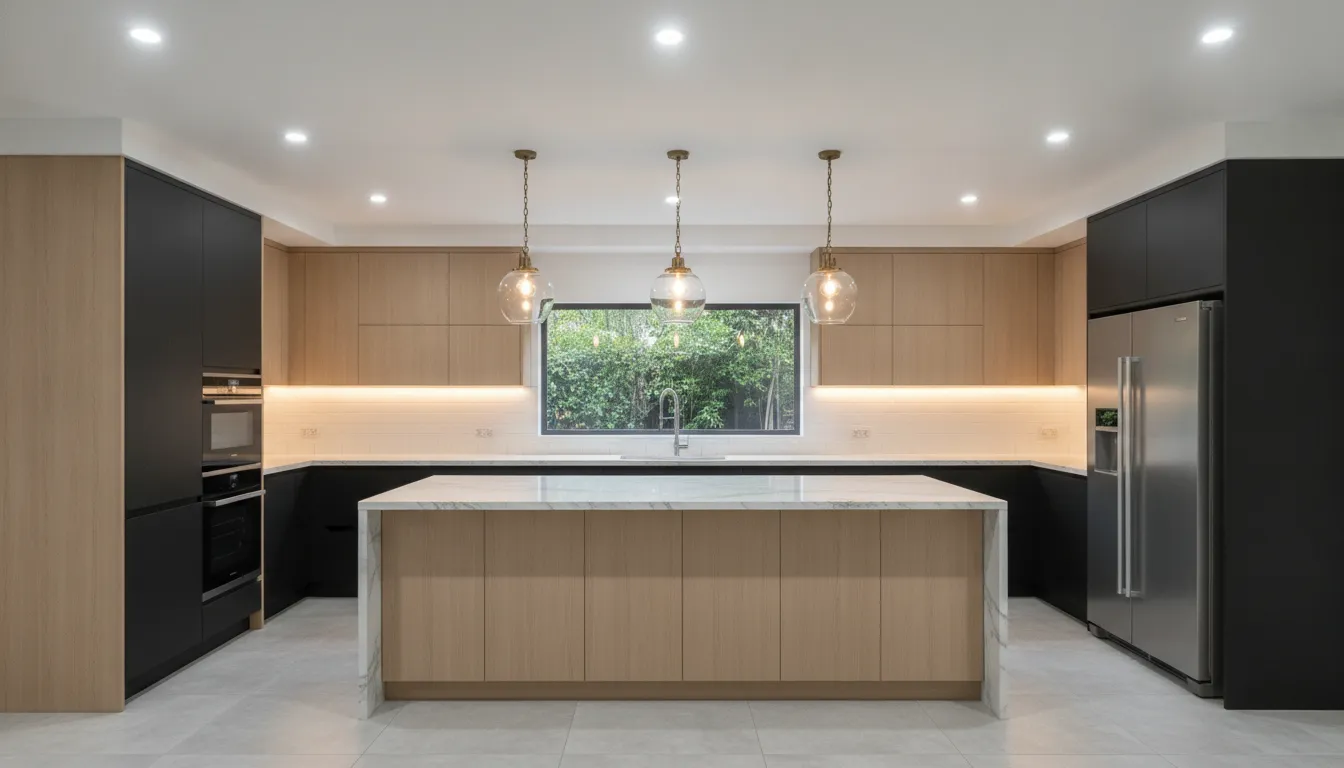
Under-cabinet lighting is one of the most useful upgrades in a kitchen remodel. It places light directly on the counter and reduces shadows from your body and the upper cabinets. A continuous LED strip usually creates a smoother result than isolated puck lights.
Hide the source and show the light
Place LED tape near the front edge of the upper cabinet rather than tight against the wall. This position spreads light across more of the counter. A shallow trim piece or aluminum channel can hide the diode dots and reduce glare from nearby seats.
Plan wire paths and driver locations before cabinets go in. Drivers should remain accessible for service without taking up prime storage space. Hardwired systems give a clean built-in appearance, while plug-in systems may suit smaller updates where walls and cabinets stay in place.
Match color and controls
Choose a color temperature that works with the other fixtures and finishes. Warm light can make wood and cream tones feel inviting. A more neutral white can help cool stone and crisp white cabinets read clearly. Avoid mixing noticeably different color temperatures in the same sightline.
Add a dimmer or low-voltage control that is compatible with the LED system. A bright setting supports detailed prep work, while a lower setting works well as evening ambient light. Good controls make this practical feature useful throughout the day.
Choose pendant lights that fit the kitchen island
Pendants bring focused light and visual character to an island. They also sit near eye level, so their size and placement have a strong effect on the room. Start with the island dimensions and ceiling height before selecting a fixture based on style alone.
Size the group as one composition
Two large pendants can look calmer than three small ones over a long island. Three smaller pendants may create an even rhythm when the island has several seats. Leave open space at both ends so the group does not feel crowded or block nearby cabinet doors.
View the fixtures from the kitchen entrance, dining area, and main seats. A fixture that looks light in a showroom may feel much larger once repeated over an island. King Remodeling’s Scripps Ranch Design Center gives homeowners a useful place to compare lighting with cabinet, counter, and flooring choices.
Protect views and work space
Pendants should light the surface without blocking conversation or sightlines. The right hanging height depends on fixture shape, ceiling height, and the height of the people using the kitchen. Open or clear fixtures preserve views, while solid shades direct more light downward.
If the island contains a sink or cooktop, coordinate each pendant with the work zone. Keep fixtures clear of tall faucets and ventilation equipment. A dimmer helps island lights shift from bright task lighting to a softer glow for meals and gatherings.
Plan recessed lighting around work zones
Recessed lights can provide clean ambient and task light without competing with decorative fixtures. The common mistake is installing a uniform grid that ignores cabinets and counters. A better layout starts with where light must land, then creates a ceiling pattern that still feels orderly.
- Map cabinets and work zones. Mark the counter edges, sink, range, pantry, island, and major walking paths on the lighting plan.
- Aim light at useful surfaces. Position fixtures so people do not cast a shadow over the counter while they work.
- Coordinate with the ceiling. Check beams, ducts, vents, speakers, and decorative lights before cutting openings.
- Group controls by purpose. Keep perimeter, island, and decorative lights on sensible switches and dimmers.
- Review the plan from every entrance. Confirm the layout looks calm and supports how the kitchen will be used.
Avoid the overlit ceiling
More recessed lights do not always produce a better kitchen. Too many can flatten the room and create an airport-runway effect. Use enough for the work zones and ambient base, then let pendants and under-cabinet lights perform their own jobs.
Fixture beam spread, ceiling height, cabinet color, and wall color all affect the result. Dark finishes absorb more light, while pale surfaces reflect it. Review these choices together during a full kitchen remodeling plan instead of treating lighting as a late add-on.
Compare kitchen lighting costs and uses
Lighting costs vary widely based on fixture quality, wiring access, controls, ceiling conditions, and the amount of repair work required. Decorative pendants may cost less to install when existing boxes are in the right place. Recessed and under-cabinet systems can require more labor when wiring must be added behind finished surfaces.
| Lighting type | Best use | Main cost drivers | Planning note |
|---|---|---|---|
| Under-cabinet LED | Counter task light | Linear length, drivers, channels, wiring access | Plan before cabinets and backsplash |
| Pendant light | Island task and decorative light | Fixture choice, ceiling boxes, hanging height | Size the full group, not one fixture |
| Recessed light | Ambient and targeted task light | Fixture count, ceiling access, dimmers | Place by work zones, not only a grid |
| Accent light | Shelves, glass cabinets, and toe kicks | Detail work, channels, drivers, controls | Use selectively for a refined effect |
Budget for the whole system
Fixture prices are only one part of the budget. Electrical labor, new circuits, compatible dimmers, drywall repair, and finish work can all affect the final amount. Ask for a plan that identifies these items so a low fixture allowance does not hide important installation costs.
King Remodeling uses an in-house design-build approach that coordinates design, materials, and construction. That creates one clear path for lighting decisions and helps reduce the stress of managing separate vendors. Fixed-bid pricing after the design phase also gives homeowners a clearer view of the project budget.
How can kitchen lighting use less energy?
Energy-efficient lighting begins with using the right fixture for each job. LEDs use less power and last longer than older lamp types, but good controls matter too. A well-zoned kitchen lets you turn on only the lights needed for cooking, cleaning, dining, or evening use.
Choose LEDs for long-term use
Look for quality LED fixtures with good color rendering, stable dimming, and replaceable or serviceable parts when possible. Cheap systems can flicker, shift color, or fail early. For integrated fixtures, ask how the light source or driver can be serviced in the future.
Create useful control zones
Separate under-cabinet lights, pendants, and recessed fixtures. Add dimmers where they support how the room changes through the day. Occupancy sensors may work well in a pantry, while simple wall controls are often easier for the main kitchen.
Energy-efficient fixtures are available as part of King Remodeling’s kitchen renovation options. During design, the team can also help align lighting with finish samples and the room layout. This coordinated process keeps efficiency from coming at the expense of comfort or style.
What should happen before installation begins?
A lighting plan should be complete before demolition and rough electrical work. Finalize the cabinet layout, appliance locations, island size, and ceiling details first. These choices determine where light belongs and where wires, switches, and fixture boxes can go.
Review a reflected ceiling and switch plan
Ask to see every ceiling fixture, pendant, switch, and control location on a plan. Then compare that drawing with the cabinet elevations. This review catches conflicts such as a recessed light hidden by a tall cabinet door or a pendant centered on the room instead of the island.
Test finish and light choices together
Lighting changes how cabinet colors, stone, tile, and flooring appear. Review samples under a light source similar to the planned kitchen lighting. The King Remodeling showroom makes it easier to compare these elements before construction begins.
Also confirm who will purchase each fixture and when it must arrive. Decorative lights can have long lead times. Early selections keep rough electrical work moving and reduce the chance of substitutions that weaken the design.
Frequently asked questions about kitchen lighting ideas
What is the best lighting layout for a kitchen?
The best layout combines ambient, task, and accent light around the actual work zones. It accounts for cabinets, counters, the island, appliances, and daylight. It also puts different fixture types on separate controls so the kitchen can adapt throughout the day.
Are pendant lights enough for a kitchen island?
Pendants can provide useful island light, but their performance depends on the shade and lamp. Many kitchens also benefit from nearby recessed lighting or other ambient light. The complete plan should prevent shadows while keeping the island visually comfortable.
Where should under-cabinet lights be placed?
Place them near the front edge of the upper cabinets so light reaches across the counter. Hide the source behind trim or in a channel to reduce glare. Plan wiring and accessible driver locations before cabinets and backsplash are installed.
Should all kitchen lights have the same color temperature?
They should at least look consistent when viewed together. Noticeably different colors can make a finished kitchen feel disconnected. Select fixtures and LED systems as a group, then test them with the planned cabinet, counter, and wall colors.
Plan your kitchen lighting with King Remodeling
Great kitchen lighting comes from a coordinated design, not a collection of fixtures chosen at the end. King Remodeling brings design, material selection, and construction together for San Diego homeowners. The team can help create layered lighting that supports daily work and makes the finished room feel welcoming.
Schedule a kitchen remodeling consultation to plan your lighting, layout, finishes, and construction with one experienced design-build team. Every project also includes a 3-year labor warranty for added peace of mind.