Learning how to compare kitchen remodeling estimates starts with the work behind each number, not the lowest total. A useful kitchen remodeling proposal names the same scope, materials, and assumptions as the others before you judge the price. A side-by-side review shows what is included, what could change, and which questions to settle before you sign.
Call to discuss your kitchen project
What does a kitchen remodeling estimate actually tell you?
An estimate is a proposed price for work under stated assumptions. It may describe a defined project in detail, or it may be an early planning figure based on limited information. The title at the top matters less than the contents: look for the specific tasks, products, quantities, and conditions behind the total.
Two proposals can use the same phrase, such as “kitchen remodel,” while describing different projects. One might include cabinet replacement, new flooring, and electrical work. Another might assume the existing cabinet layout stays in place and list electrical changes as an extra. Comparing only the final figures would hide that difference.
Start by making sure each contractor has the same basic picture of your goals. Share the room dimensions or plans if available, the features you want to keep, the changes you are considering, and your preferred material level. Explain whether you expect a layout change, new appliances, lighting changes, or work beyond the kitchen. If you are still defining the project, a planning guide such as how to plan a kitchen remodel can help organize decisions before you request detailed proposals.
When comparing estimates, keep an open question list. A missing detail is not automatically a problem, but you should understand it before treating the price as final or comparing it with another bid.
How can you make sure every contractor is estimating the same scope?
Scope is the first comparison to standardize. Make a checklist of the work you expect, then mark each line as included, excluded, or unclear in every proposal. Be specific about what is being removed, what is being installed, and what remains untouched.
- Demolition: Identify cabinets, countertops, flooring, backsplash, appliances, or walls to be removed. Ask whether debris hauling and disposal are part of the quoted work.
- Cabinetry and storage: Confirm whether cabinets are being replaced, refinished, or reused. Note any changes to cabinet layout, pantry storage, trim, hardware, or interior fittings.
- Countertops and backsplash: Clarify the material, approximate quantity, edge details, backsplash coverage, and whether removal of existing surfaces is included.
- Plumbing: List the sink, faucet, dishwasher, refrigerator water connection, and any planned fixture or pipe relocation. Moving a fixture can involve different work than reconnecting it in the same place.
- Electrical and lighting: Ask what happens to outlets, switches, task lighting, ceiling fixtures, and appliance connections. Note whether the proposal includes new locations or only reconnects existing items.
- Flooring, paint, and finish work: Confirm which surfaces are included, where work stops, and whether patching, transitions, trim, and final touch-ups are specified.
- Protection and cleanup: Check whether the estimate explains protection for adjacent areas, daily cleanup, and final removal of construction debris.
Use drawings, elevations, or a written room plan to reduce guesswork. A proposal that says “install new cabinets” is less useful for comparison than one that identifies the cabinets, the areas covered, and the layout being priced. If the room has an island, a peninsula, or unusual storage, make sure the proposal accounts for it.
Also separate kitchen work from adjacent work. If you want flooring to continue into a dining area, or you plan to repaint a connected space, ask each contractor to show that work as its own line or option. That makes it easier to compare the kitchen itself and understand the cost of adding the extra area.

Which material details should you compare?
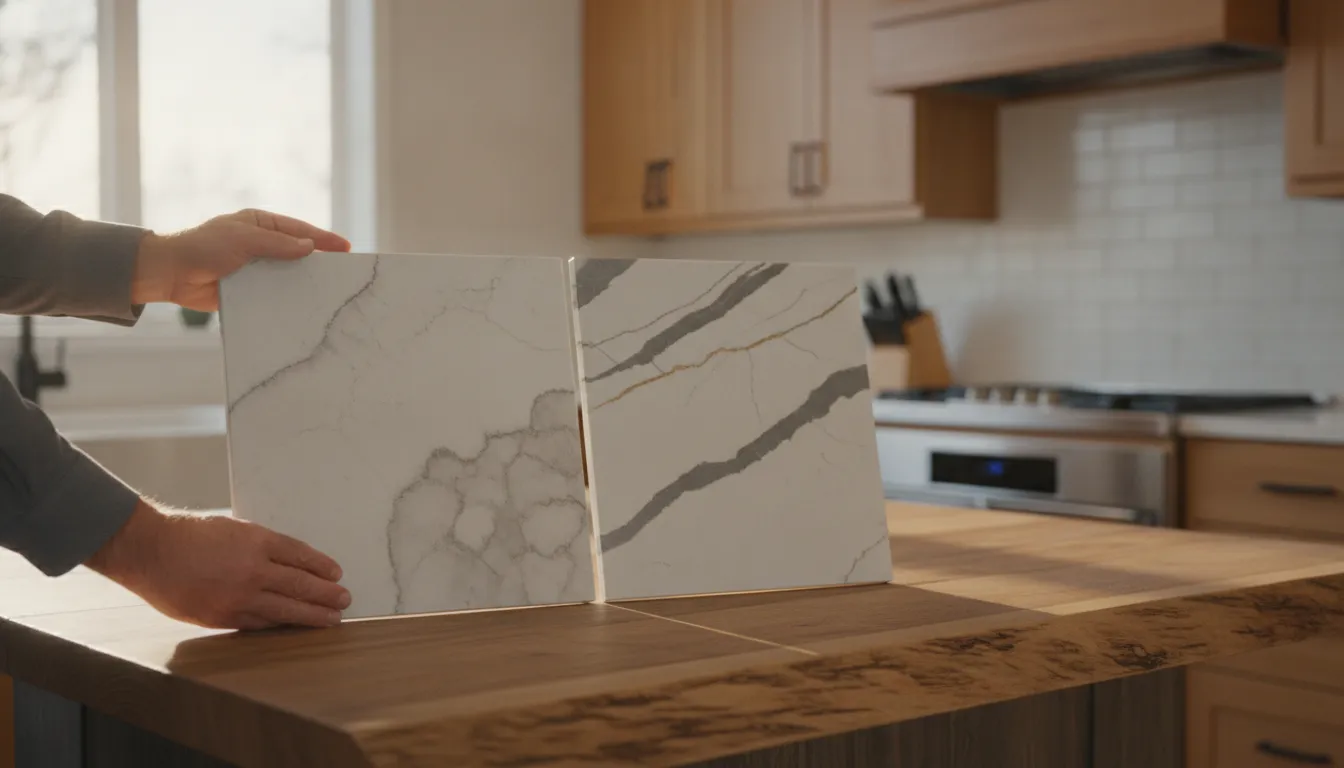
Material labels can sound similar while referring to different products or levels of finish. Record a brand and model when one is known. If selections are not final, ask for a written description of the assumed grade, size, finish, or price allowance, and learn how a later selection affects the total.
For cabinets, compare construction and finish details as well as door style. Check whether the price covers the full layout, fillers, panels, trim, hardware, and any interior accessories you expect. For countertops, compare the material type, thickness or profile where specified, edge treatment, and included area. For flooring and tile, check product type, coverage, underlayment or preparation assumptions, and transitions to adjoining rooms.
Appliances deserve their own line in your review. Is the estimate for purchasing appliances, installing owner-supplied appliances, or both? Which models or dimensions are assumed? Confirm whether delivery, removal of old appliances, and adjustments to surrounding cabinets or connections are included. Do not assume that an appliance shown in a concept image is included in a construction price.
A product allowance is a placeholder amount for a selection that has not been made. It is not necessarily the final price of the product plus all installation work. Ask what the allowance covers, whether tax or delivery is included, and what happens if your chosen item costs more or less. Compare the allowance against the products you are actually considering, not just against the other estimate’s allowance.
How should you compare allowances, exclusions, and uncertain conditions?
Read beyond the list of included work. The exclusions and assumptions often explain why one proposal is lower. One contractor may include removal and disposal, while another may expect you to arrange it. One may include a stated amount for a finish material, while another may price a specific product. These are not equivalent offers until you account for the difference.
Look for language about conditions that cannot be confirmed before work begins. Behind cabinets or under flooring, the contractor may not be able to see every existing condition during an initial visit. Ask how the proposal handles concealed damage, additional repairs, or work that falls outside the agreed scope. Find out how a change is documented, priced, and approved before the extra work proceeds.
Do not treat a broad contingency as a substitute for clear scope. Ask whether it is part of the contractor’s price, a separate amount held for unknowns, or simply a recommendation for your own budget planning. Understand who controls it and how unused funds or approved additions are handled. The written contract and the applicable local requirements govern the actual arrangement.
Make a list of every exclusion that could affect your decision. Common items to ask about include permit-related work, appliance purchase, plumbing or electrical changes, repairs to existing surfaces, temporary kitchen arrangements, and work in adjacent rooms. These are prompts for clarification, not assumptions that every project needs each item.
How to compare kitchen remodeling estimates once the scope matches
Build a comparison sheet with one row for each major part of the project. Copy the contractor’s wording where possible instead of summarizing it too loosely. Mark items “included,” “not included,” or “needs clarification.” Add a note for each allowance, product assumption, and potential extra.
| Comparison area | What to record | Question to resolve |
|---|---|---|
| Project scope | Demolition, installation, room areas, and tasks included | Are the proposals pricing the same finished project? |
| Products and allowances | Product names or assumed quality, quantities, and allowance amounts | What products fit each allowance, and what is not covered? |
| Labor and trades | Work tasks, trade responsibilities, and coordination assumptions | Who completes each listed task, and what work is excluded? |
| Preparation and repairs | Subfloor, wall, surface, or concealed-condition assumptions | How are unknown conditions and added work handled? |
| Schedule | Estimated start, duration, sequencing, and dependencies | What could shift the schedule, and how will updates be shared? |
| Price and payment | Base price, separate options, allowances, and payment schedule | What triggers a price change, and how is it approved? |
| Documents and protection | Plans, written terms, cleanup, and warranty information | What will be documented before work begins? |
Once you have filled in the rows, create an adjusted comparison. Add the known cost of an omitted item only when you have reliable pricing for it. If you do not know the cost, do not invent a number; mark it as unresolved and ask for clarification. The goal is not to force every proposal into a precise total prematurely. It is to identify whether the apparent price gap reflects different work, products, or risks.
Compare optional items separately. A bid with upgraded lighting or a larger backsplash may have a higher total but include more than another proposal. Ask for a base scope that matches your priorities and separate prices for upgrades you may or may not choose. This keeps decisions visible without burying them in a single total.
What should you examine about labor, schedule, and project management?
A kitchen estimate should make clear who is responsible for the work and how the phases fit together. Identify the contractor’s role, the trades involved, and the person you contact with questions. Ask who coordinates deliveries, site access, and sequencing, particularly if several types of work depend on one another.
Compare schedule information carefully. A start date may depend on final design decisions, product availability, approvals, or other project conditions. Ask whether the stated duration refers to construction days, calendar weeks, or an approximate window. Also ask what could change the schedule and how you will be told if it does. Avoid comparing one contractor’s firm commitment with another’s preliminary estimate as though they mean the same thing.
Consider how the work will affect daily routines. Ask about access to the kitchen, protection of adjacent areas, expected work hours, cleanup, and what needs to be moved before the project starts. A proposal may not include every household-planning detail, so request a clear conversation and document important agreements in writing.
King Remodeling describes its business as combining design, material selection, and construction under one roof for residential remodeling in San Diego County. If you want to understand how that company’s planning and construction stages are organized, review its remodeling process and compare the explanation with the process each bidder proposes for your specific project. Do not assume any contractor’s general process page replaces the scope and terms in your own proposal.
How do you evaluate the written terms and contractor information?
Before choosing, read the complete written proposal and any accompanying contract. Check that the parties, project address, scope, products or allowances, price, payment terms, and process for changes are understandable. Note any referenced plans or attachments and make sure you have the versions the proposal relies on. If a verbal explanation changes the meaning of a line, ask for the document to be updated.
Ask how a change order works. A useful process identifies the requested change, its price or pricing method, and any effect on timing, then records approval before the work is done. Clarify how progress payments are tied to the contract and applicable rules. If a term is unclear, seek an explanation before you sign rather than relying on a later interpretation.
In California, the Contractors State License Board is the state agency homeowners can consult for contractor licensing information and consumer resources. Visit the California Contractors State License Board and review the relevant guidance for your situation. Check the contractor’s identity and license information rather than relying only on a company name in a proposal; ask questions if the details do not match.
Also ask for information about insurance, warranty coverage, and how concerns are handled. Compare what is actually stated in writing. A warranty term should describe what it covers and any applicable conditions; the word “warranty” alone does not tell you how a future issue will be resolved.
What questions can you ask each remodeling contractor?
Use the same questions with every bidder so their answers are easier to compare. Keep notes and request written revisions when the answer changes an important scope or price assumption.
- Can you walk me through each section of the estimate and identify what is not included?
- Which materials, brands, models, or allowances are assumed, and what can I select within those amounts?
- What site conditions did you assume, and how would unexpected repairs be priced and approved?
- Who will coordinate the work and communicate schedule changes?
- What is the expected sequence, and which decisions or deliveries could affect timing?
- How are payment milestones and written changes handled?
- What cleanup, protection, appliance handling, and final walkthrough are included?
- Which plans and documents are part of the proposal, and can I have the final versions?
Listen for clear, consistent answers rather than just reassuring language. A contractor should be able to explain what the estimate covers, identify open decisions, and describe how differences are documented. If the answer depends on a product selection or an on-site condition, ask what needs to happen to resolve it.

How can you decide when one estimate is lower than another?
Start by finding the source of the gap. Compare scope, materials, allowances, excluded work, and repair assumptions first. Then ask each contractor to confirm that the written proposal reflects your current priorities. A substantial difference may become understandable once you learn that one proposal includes different products or tasks.
Be cautious of choosing from a headline total when important details remain open. A very low initial figure may omit items that appear elsewhere, but a higher price is not automatically more complete or better. Request clarification and comparable revisions before drawing a conclusion. If a contractor cannot or will not explain a material difference, that is information to consider alongside price.
Use a simple decision order: first confirm that the scope fits your needs; next confirm that the product assumptions are acceptable; then review qualifications, communication, schedule, written terms, and price. Your priorities may differ from another homeowner’s. For one household, storage and a changed layout may matter most; for another, keeping the existing layout and replacing worn finishes may be the right brief.
Review King Remodeling’s San Diego remodeling services when you want the next step. See examples in the kitchen and bath project gallery, or visit the San Diego design showroom. These pages can help you understand available next steps; evaluate any estimate on its own written scope and terms.
How can you make a practical estimate comparison plan?
- Write a one-page project brief. Describe your goals, what stays, what changes, must-have features, and any known constraints. Separate priorities from nice-to-have options.
- Share the same information. Give each contractor the same plans, measurements, appliance details, and finish expectations. Tell them when a decision is not final.
- Request itemized written proposals. Ask for work descriptions, material assumptions, allowances, exclusions, schedule assumptions, and payment terms to be clear.
- Fill out the comparison table. Mark what is included, excluded, or unresolved. Avoid treating a blank as included.
- Ask follow-up questions consistently. Send the same clarification request where possible and keep written answers with the proposal.
- Compare revised documents. Check that changes are reflected in the latest versions, not only in email or conversation.
- Review the agreement before signing. Read the complete contract and attachments, and seek qualified advice if you do not understand a legal or financial term.
This process takes more care than circling the smallest number, but it can expose mismatched assumptions while you still have time to discuss them. If you are early in planning, the kitchen remodel checklist and kitchen remodeling overview offer additional starting points for organizing the project.
Discuss your kitchen remodeling plans
A clear comparison is built on matching scope and documented assumptions, not on the total alone. Resolve the open questions so you can choose the proposal that fits the project you actually want.
Frequently Asked Questions
How many kitchen remodeling estimates should I compare?
There is no single number that suits every project. Compare proposals from contractors you are genuinely considering and give each the same clear scope. A smaller set of detailed, comparable estimates can be more useful than collecting many figures based on different assumptions.
Should I choose the lowest kitchen remodeling estimate?
Not based on price alone. First check that the scope, products, allowances, exclusions, schedule assumptions, and written terms are comparable. Ask about unresolved differences and consider the full proposal and your priorities before deciding.
What is the difference between an estimate and a final price?
The document’s wording and contract terms matter. An early estimate may rely on assumptions or selections that are not final, while a later proposal may define the work and price more specifically. Ask which parts can change, why they can change, and how any change will be documented and approved.
What if one contractor gives a lump-sum estimate?
Ask for enough detail to understand the work included, product assumptions, exclusions, and conditions behind the total. A lump sum can be difficult to compare if the scope is unclear. Request a written breakdown or clarification of the items that matter most to your decision.
Can I compare estimates if I have not chosen all my materials?
Yes, but note which selections are undecided and compare the allowances or product assumptions that each proposal uses. Ask what those amounts cover and how the price changes if you choose a different product. Finalize key selections and have important changes reflected in writing before construction terms are set.