. Schema. . Faq.
Elevate your kitchen’s style and function with thoughtful lighting. The right blend creates an inviting, practical space.
Ready to transform your kitchen with professional design and lighting? Schedule a free design-build kitchen remodeling consultation with King Remodeling today or call our team of experts at (858) 299-7700.
Modern kitchen lighting ideas hinge on three essential layers: ambient, task, and accent. Ambient lighting provides overall illumination, often through recessed cans or ceiling-mounted fixtures. Task lighting, crucial for food prep and cooking, focuses bright light on specific work areas, commonly achieved with under-cabinet LEDs or pendant lights over islands. Accent lighting adds visual interest and highlights features, using options like puck lights or strip lights inside glass cabinets. Combining these layers ensures both beauty and utility, making your kitchen a truly versatile space.
Understanding how to layer these lighting types is key to a well-designed kitchen. The path begins with a deeper dive into The Three Essential Pillars: Modern Kitchen Lighting Ideas for a Layered Plan.
The Three Essential Pillars: Modern Kitchen Lighting Ideas for a Layered Plan
Modern kitchen lighting goes beyond a single overhead fixture. A layered lighting plan uses different types of light to improve how your kitchen looks and functions. This approach ensures you have the right light for every task, from preparing food to entertaining guests. It also helps create a welcoming atmosphere in your home’s busiest room.
Ambient Lighting: The Foundation
Ambient lighting provides the main source of light for your kitchen. This general illumination creates a comfortable, overall brightness. Examples include recessed lights, ceiling-mounted fixtures, or pendant lights. Good ambient lighting makes the space feel open and inviting.
Research suggests that well-designed ambient light improves visual comfort and reduces eye strain. This foundational layer sets the tone for the entire kitchen.
Task Lighting: Practical Brilliance
Task lighting focuses bright light on specific work areas. This is crucial for activities like chopping vegetables, reading recipes, or washing dishes. Under-cabinet lights are a common example, illuminating countertops directly.
Other task lighting options include pendant lights over an island or strip lighting inside pantry shelves. Studies show that proper task lighting can significantly boost performance and safety in kitchen activities according to NCBI.
Accent Lighting: Adding Style and Depth
Accent lighting highlights specific features and adds a touch of elegance. It creates visual interest and depth within the kitchen space. Think about lights inside glass cabinets, toe-kick lighting, or small spotlights on artwork.
This type of lighting often uses dimmer switches to adjust the mood. Accent lights help define the kitchen’s character and make it a more dynamic area.
Ambient Illumination: How Recessed Cans Form Your Kitchen’s Lighting Base
Ambient lighting is the main base for your entire kitchen. It gives the main light you need to move safely in the room. While task and accent lights add focus, this base layer keeps away dark spots. Recessed cans are a top choice for comprehensive kitchen makeover ideas as they offer a clean and modern look. They sit in the ceiling to give the space a smooth feel that works well in any home.
The role of base light
Good design starts with a strong base of light. This layer helps set the mood and makes the room more useful. Experts note that layered lighting design improves both performance and comfort. By filling the room with even light, you lower the strain on your eyes. This makes the kitchen a better spot for both cooking and social time.
Recessed lights stay out of the way while giving wide light. When you use design-build kitchen remodeling services, pros can help you plan a map that fits your needs. Research shows that mixing base and task lights can improve performance while you work. This makes sure the lights are where you need them without making the ceiling look messy. Proper light plans help turn a standard kitchen into a useful space.
Spacing for a clean look
A common mistake is the “swiss-cheese ceiling.” This happens when there are too many lights or when they are spaced in a poor way. To avoid this, you must plan where they go with care. Lights should be far enough apart for even light but close enough to stop deep shadows. A good rule is to space them four to six feet apart. This keeps the layout neat while still giving you plenty of light.
The size of the lights also matters for the final look. Four-inch and six-inch trims are the most common sizes today. Small lights can look more modern in a small kitchen. You can see these styles and trims at the Scripps Ranch remodeling showroom. Seeing the lights in person helps you pick the right fit. Good spacing and size choice will stop glare and keep the light smooth.
Choosing the right tone
The color of the light can change how your kitchen feels. For a cozy and warm home, you should use warm light. It is best to use bulbs in the 2700K to 3000K range to keep the room soft. This range has the warm glow of old bulbs but uses new LED tech. These bulbs avoid too much light while keeping the room bright enough to see.
Modern LEDs use little power and last for years. They also work well with dimmer switches. Dimmers are a great tool for any home. They let you change the light levels based on what you are doing. You can turn them up to prep food or down for a quiet meal. This makes your kitchen a great space for any time of day.
What Type of Lighting Is Best for a Kitchen? Understanding the Three Layers
The best San Diego kitchen remodeling trends use a mix of many light types. You need more than just one bright lamp on the ceiling. To make your room both useful and pretty, you must use layers. This way of planning is called layered lighting. It uses three kinds of light: task, ambient, and accent. Each layer has a job to do. Research shows that layered lighting design makes your space safer and more cozy to live in. By mixing general and work lights, you can stay alert while you cook without tiring your eyes (Source).
Task lights for safe daily work
Task lighting shines right where you do your work. It helps you see well when you chop food, read a recipe, or clean up. Under-cabinet LEDs are the top pick for this role. They stop shadows that come from your main ceiling lights. This helps you work with ease and stay safe from cuts. Studies show that good task lights help you stay alert and focus on your tasks. You can also use pendant lights over your island to add more light for prep work.
When you plan your task lights, think about where you spend the most time. Most people need extra light near the sink and the stove. Our design-build kitchen remodeling services help you place these lights in the best spots. This way, you never have to work in your own shadow. These small lights make a big change in how much you enjoy your kitchen each day.
Ambient lights for a warm general glow
Ambient light is the main source of light in your kitchen. It fills the whole space and bounces off your walls and floors. Most homeowners in San Diego choose recessed cans for this role. They give a clean and modern look that stays out of the way. To keep your kitchen feeling warm, use bulbs in the 2700K to 3000K range. This range helps you avoid a look that is too blue or harsh. You can see many types of trims and bulbs at our Scripps Ranch remodeling showroom.
Adding a dimmer switch to your ambient lights is a great idea. It lets you change the mood of the room in seconds. You can have bright light for cleaning and soft light for a late dinner. This makes your kitchen a more flexible space for your family. A good set of main lights makes the whole room feel open and bright.
Accent lights for extra style and depth
Accent lights add a bit of style and flair to your kitchen. They point to parts of the room you love the most. You might use them to show off a nice tile wall or a set of glass cabinets. Small puck lights or toe-kick LEDs work very well here. These lights help the room feel high-end and add more depth. They make your space look like a great design from a magazine.
You can also use accent lights to create a path at night. Toe-kick lights under your base cabinets can help you find your way in the dark. This adds both style and safety to your home. These small details are what make an open-concept kitchen design in San Diego feel special. They add a soft glow that makes the room feel cozy even when the main lights are off.
| Layer | Role | Best Placement | Best Fixtures | Target Effect |
|---|---|---|---|---|
| Task | Work light | Under upper cabinets | LED strip lights | No shadows on counters. |
| Ambient | General glow | Main ceiling | Recessed cans | Open and bright feel. |
| Accent | Visual style | Inside glass cabinets | Mini puck lights | Extra depth and drama. |
Starting with a good plan is the key to finding the best kitchen lighting ideas for your home. You should first pick your task lights to stay safe. Then, add your main lights to fill the room. Last, add your style lights to make it your own. This three-step path makes your space both useful and pretty. Our team can help you pick the best fixtures for your home.
Kitchen Island Lighting: Elegant Pendant Options to Brighten Your Space
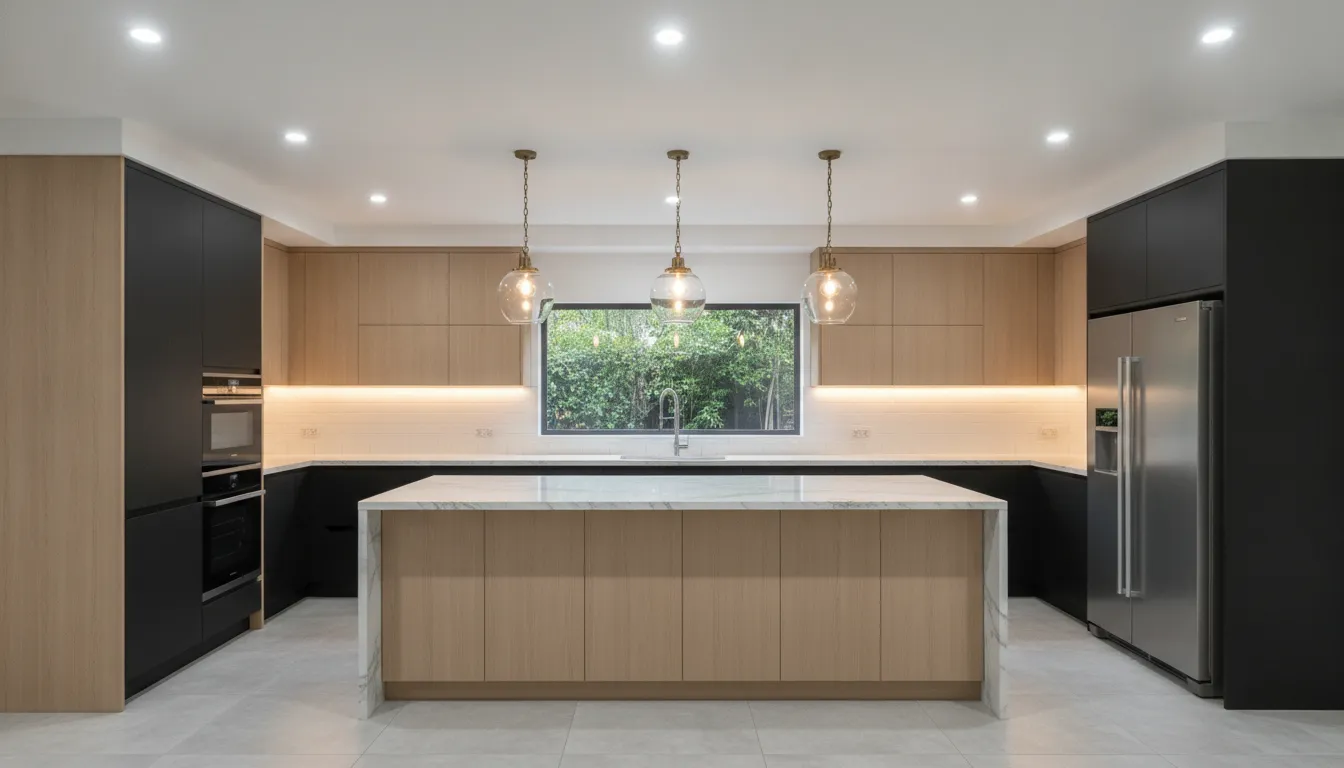
Kitchen islands are often the most used part of the home. They serve as a spot to prep meals, eat, and talk with friends. To make this space work well, you need the right lights. Pendant lights are a top choice for lighting for small kitchens and large islands alike in San Diego. They hang from the ceiling to bring light close to your work spot. These fixtures act as both task light and a bold design piece for your home.
Using layered lighting in your kitchen helps you see better and feel more relaxed. This method mixes main light with bright spots for tasks. Pendants help fill in the gaps that recessed lights might miss. They stop shadows from forming on your counters while you chop or cook. Adding these layers makes the room look full and rich. It also helps the space work well at all times of the day. High-grade lights are a smart pick for any home remodel.
Size and scale for your island
The size of your pendant lights must match the size of your island. If the lights are too small, they will not give off enough light. If they are too big, they can block your view across the room. A common rule is to leave at least six inches of space between the light and the island edge. This helps keep the spot open and avoids a messy look. Large globes or lanterns work well for long islands with high ceilings.
You should also think about the height of the lights. Most pros hang pendants 30 to 36 inches above the counter top. This height is high enough to stay out of your way. But it is low enough to give you the bright light you need for chores. You can test these heights at our Scripps Ranch remodeling showroom to see what feels best for you. Seeing the lights in person helps you judge their size and glow before you buy.
Perfect spacing and the rule of three
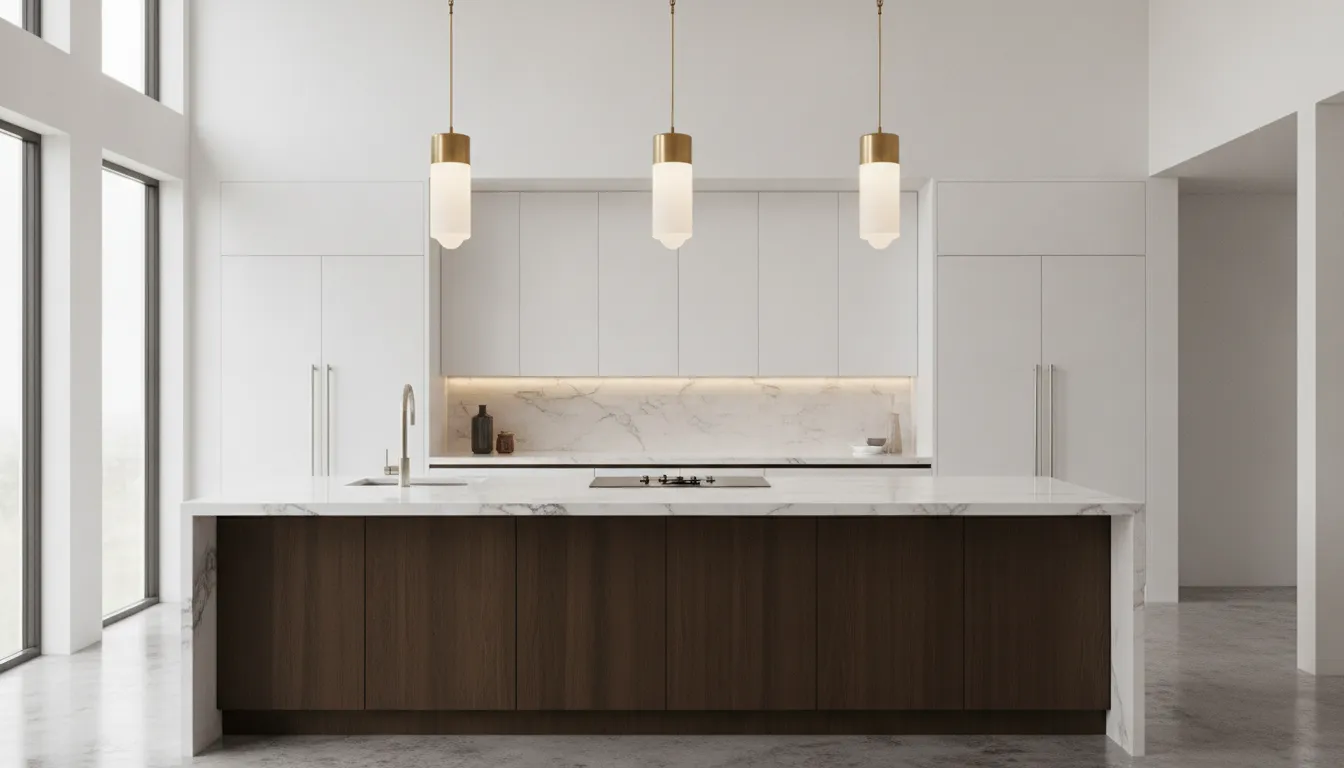
Spacing is key to a clean look. Many pros use the rule of three for kitchen lights. This means hanging three lights in a row to create a balanced view. If you have a small island, two large lights can also look great. The goal is to space them well so the light spreads across the whole surface. This avoids dark spots where you might be working or eating. It makes the island feel more useful for all.
When you space your lights, start from the middle of the island. Then, move out toward the ends. This ensures the light is right where you need it most. Proper light layout can help you stay alert and focused while you work. Using the right task lights helps your brain power during jobs. This makes your kitchen a better place for school work or meal prep. It turns the island into a busy hub for the whole family to use each day.
Choosing styles that match your theme
The style of your lights should blend with your kitchen theme. For a modern home, look for simple shapes and metal looks like black or gold. These clean lines keep the room looking fresh and new. If your style is more classic, try lights with glass or fabric shades. These softer looks can make a large kitchen feel warm and cozy. They add a touch of charm that fits well with wood cases.
Think about how the lights look when they are off, too. They should act like a piece of art that adds to the room. Picking a style that fits your theme keeps the design from feeling messy. You want every part of your kitchen to work well with your design theme. This creates a space that is both useful and pretty for your family to enjoy. A well-lit island becomes the best spot in the house for meeting and sharing meals. It brings the whole look of your home as one in a clean way.
Under-Cabinet LEDs: Bright Task Lighting and Ambiance in Every Prep Zone
Under-cabinet lighting is key for good kitchen design. These lights go under your wall cabinets and shine down onto your countertops. They get rid of shadows that you often make when working at the counter. This makes cooking and other tasks easier and safer to do.
There are two main types of under-cabinet lights: LED tape and hardwired fixtures. LED tape is flexible and easy to cut to size, making it simple to install yourself. Hardwired fixtures are more permanent and offer a very clean look, often with better light distribution. The choice depends on your installation skill and desired finish.
Choosing Your Lights
-
Measure Your Cabinets: First, measure the length of all the cabinet sections where you want to add lights. This helps you figure out how much LED tape or how many fixtures you will need. Think about spaces like above your sink or stove.
-
Decide on Power: Next, pick between plug-in or hardwired lights. Plug-in lights are easy to install, as they just plug into an outlet. Hardwired options connect directly to your home’s electrical system, offering a cleaner look without visible cords. Hardwired lights often need a professional electrician for safe setup, especially if new wiring is required.
-
Select Color Temperature: Choose the light color you want. Measured in Kelvins (K), common choices are warm white (2700K-3000K) for a cozy feel or cool white (4000K-5000K) for a brighter, task-focused light. Many LED systems now offer adjustable color temperatures, letting you switch between moods.
-
Consider Brightness: Look at the lumen output to ensure enough light. Task lighting needs to be bright enough to clearly see what you are doing. Dimmable options are also very useful for setting the right ambiance.
Installation Steps
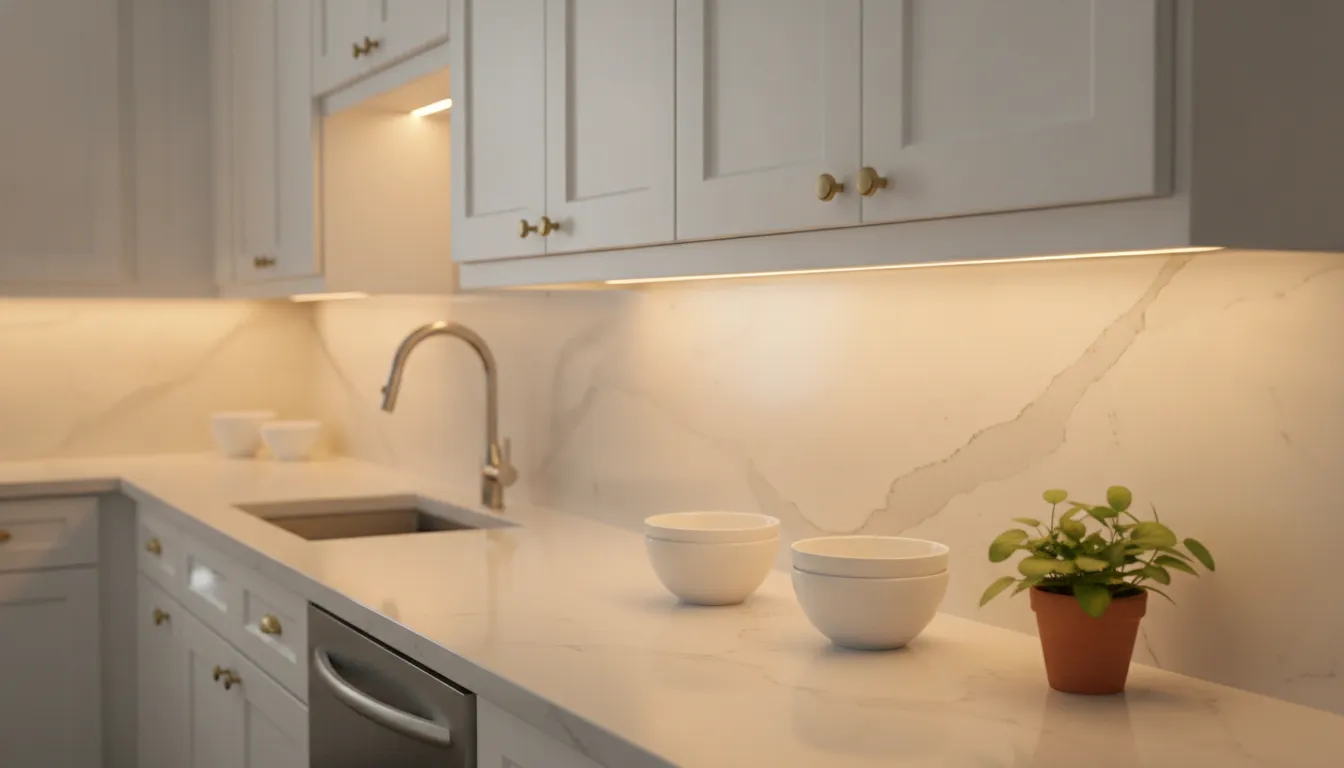
Installing under-cabinet LEDs improves both the look and function of your kitchen. For plug-in tape lights, installation is usually a simple peel-and-stick process. You can often complete it yourself in an afternoon. For hardwired systems, consider hiring a licensed electrician. This ensures the wiring is safe and meets local codes.
Proper placement is important for avoiding glare and making sure light spreads evenly. Position lights towards the front edge of the cabinet for the best countertop illumination. Some lights come with diffusers to soften the glow and reduce harsh shadows. LED lights use less energy and last longer than older bulb types, making them a good update for any kitchen. For more information on electrical safety, consult resources like the National Electrical Code guidelines.
What Is the Current Trend for Kitchen Lighting? Custom Controls and Warm Kelvins
Modern kitchen lighting goes beyond simple on/off switches. Today’s trend focuses on smart controls and warm color temperatures. Homeowners use customizable smart systems to adjust lighting levels. This helps create the right mood for cooking, dining, or entertaining guests. The aim is to make lighting both useful and pleasant.
Smart Controls for Every Mood
Smart lighting systems give you full control over your kitchen’s illumination. With apps or voice commands, you can dim lights, change brightness, and set schedules. This customization lets you shift from bright task lighting to a soft, ambient glow with ease. It makes your kitchen more adaptable to different needs.
Dimmer switches are a key part of this trend, even without a full smart system. They allow fine-tuning of light output, preventing harsh overlighting. Proper dimming extends bulb life and saves energy. This gives you flexibility to set the perfect light for any activity, from meal prep to a quiet morning coffee.
Choosing the Right Color Temperature
When picking kitchen lights, color temperature matters a lot. The current trend favors warm light, specifically in the 2700K to 3000K range. This Kelvin range produces a soft, inviting glow that mimics traditional incandescent bulbs. It helps make your kitchen feel cozy and welcoming, avoiding the starkness of cooler, bluer lights.
Warm lighting enhances the natural colors of food and surfaces, making the kitchen look more appealing. It creates a comfortable atmosphere for family and friends. Experts suggest this warmer range helps maintain a relaxed home environment. It is important to avoid lighting that is too bright or too cool. Research suggests that certain light spectrums can impact sleep patterns, highlighting the importance of thoughtful lighting design.
Focusing on these trends – smart, customizable controls and warm color temperatures – ensures your kitchen lighting is both stylish and functional. It creates a space that is enjoyable for every task and every moment.
Bringing Your Kitchen Lighting Ideas to Life: The King Remodeling Process
Planning and setting up a complete kitchen lighting system can feel overwhelming. Choosing the right fixtures, coordinating layout designs, and handling complex electrical wiring requires careful planning. Working with a dedicated team simplifies this process, turning your ideas into a beautifully lit reality.
King Remodeling operates as a full design-build contractor in San Diego, handling design, material procurement, and construction under one roof. Our integrated approach removes the hassle of managing separate designers, suppliers, and electricians. This streamlined coordination allows us to finish kitchen renovations in just 3 to 6 weeks. Which is twice as fast as the typical industry average of 6 to 12 weeks.
Explore Options at Our Scripps Ranch Showroom
Choosing the perfect fixtures is a highly tactile experience. Seeing how different lights look and cast their glow helps you make the best decision for your space. We invite you to visit our physical showroom and Design Center to view a wide range of kitchen materials and lighting setups in person.
Our showroom is located at 10035 Carroll Canyon Rd, Scripps Ranch, CA 92131. You can view full kitchen vignettes, compare pendant styles, examine under-cabinet LED tracks, and inspect recessed trims. Our in-house design experts are available to guide you through selecting materials that match your style, budget, and functional needs.
Guaranteed Quality and Peace of Mind
We are committed to delivering exceptional craftsmanship and reliable service on every project. Our employed, in-house crews handle all trades internally, ensuring strict quality control from start to finish. This high level of expertise is backed by an active California Contractor License #1039019.
To give you complete peace of mind, we back our work with a comprehensive 3-year labor warranty, which exceeds standard industry expectations. We also offer a 30-minute response guarantee to ensure your questions are answered quickly and professionally. By combining expert design, premium materials, and trusted construction, we help you create a bright, functional, and beautiful kitchen that you will love for years to come.
Frequently Asked Questions
What are the three main types of kitchen lighting?
Kitchen lighting typically includes three layers: ambient, task, and accent. Ambient lighting provides overall brightness, like ceiling fixtures. Task lighting focuses on work areas, such as under-cabinet lights. Accent lighting highlights features or creates mood, like small spotlights or decorative pendants. Combining these layers ensures a functional and inviting kitchen space.
Are under-cabinet lights good for kitchen task lighting?
Yes, under-cabinet lights are excellent for task lighting in the kitchen. They illuminate countertops directly, reducing shadows cast by overhead fixtures. This makes food preparation, cooking, and reading recipes much easier and safer. Both LED strips and puck lights are popular choices, offering energy efficiency and bright, focused illumination where you need it most.
How far apart should recessed lights be in a kitchen?
The spacing of recessed lights in a kitchen depends on ceiling height and light intensity. A common rule of thumb is to space them approximately 4-6 feet apart for general ambient lighting. For task areas, they might be closer. Consider the lumen output of the bulbs and use an online calculator or consult a lighting professional for optimal placement specific to your kitchen’s dimensions.
Can pendant lights be used as task lighting?
Pendant lights can serve as effective task lighting, especially when hung over islands, peninsulas, or sinks. They bring light closer to the work surface, providing focused illumination. To optimize them for task lighting, choose pendants with downward-facing shades and position them at an appropriate height. Usually 30-36 inches above the countertop, to avoid glare and maximize light spread.
Ready to Design Your Dream Kitchen Lighting?
Delaying an upgrade to your kitchen lighting can leave your space feeling dim, inefficient, and less inviting. Every day without proper task, ambient, and accent lighting is a missed opportunity for a more functional and beautiful home.
Starting now means you’ll enjoy a brighter, more productive kitchen sooner. Don’t wait for perfect light; create it!
Ready to schedule a free design-build consultation? Call (858) 299-7700 to schedule a free design-build consultation or visit our Scripps Ranch showroom.