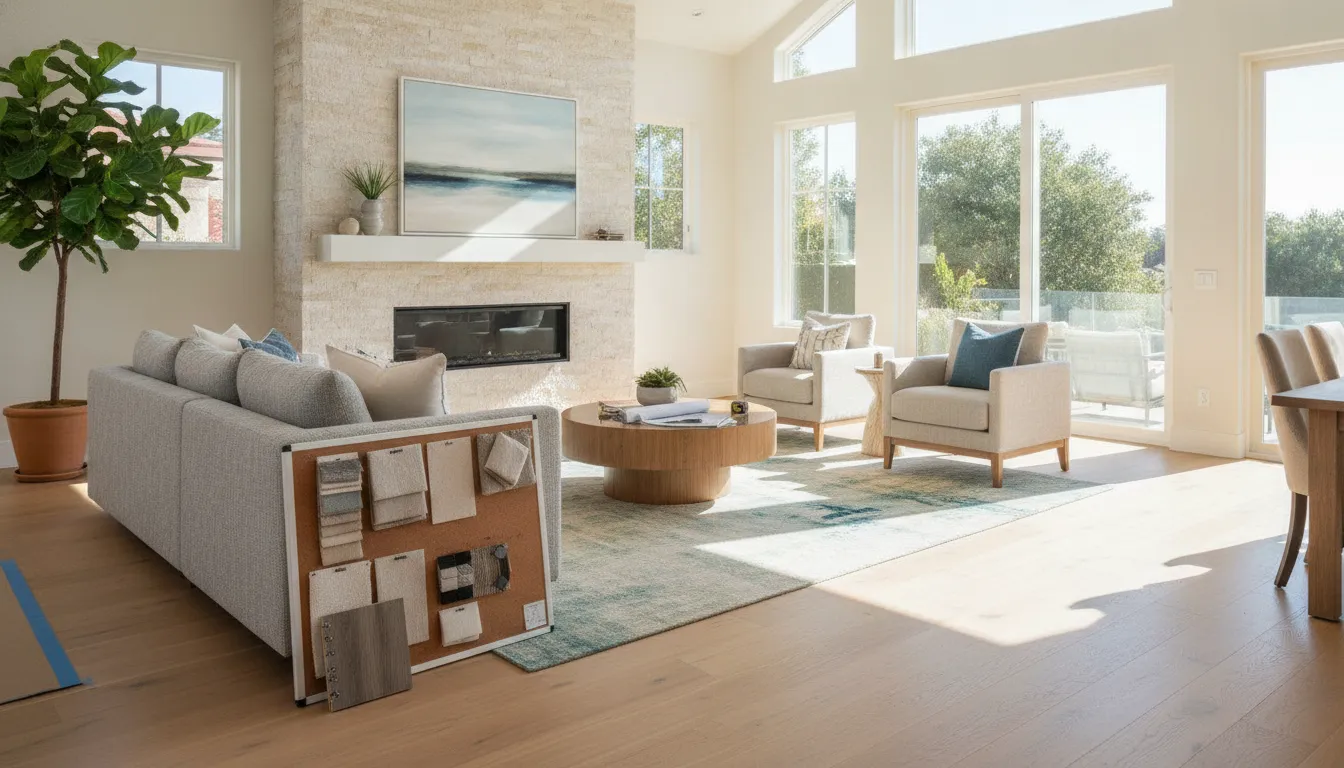
Flooring sets the rhythm for a high-end remodel. It connects cabinetry, paint, lighting, and furnishings, so the right choice must look refined while fitting the way your household actually lives. In San Diego County, homeowners may also weigh coastal moisture, busy entryways, pets, and the visual continuity of flooring across several rooms.
Luxury flooring materials San Diego homeowners compare most often include LVP and engineered hardwood, but neither is automatically the better choice. LVP can deliver a convincing wood look with practical everyday upkeep, while engineered hardwood brings a genuine wood surface. Natural variation, and a finish that may support a different long-term design goal. The best decision depends on room conditions, maintenance expectations, design priorities, and the complete remodeling plan.
Before comparing appearance, durability, and ownership considerations, it helps to understand what each material is actually made of and what makes it feel luxurious in a finished home.
Contact King Remodeling to compare flooring materials for your remodel.
What Makes LVP and Engineered Hardwood Luxury Flooring Materials San Diego Homeowners Consider?
Luxury does not mean choosing the most expensive-looking sample in a showroom. In a remodel, it usually means selecting a floor that supports the home’s design. Feels appropriate to the way each room is used, and works with the project’s installation and maintenance requirements. That is why both luxury vinyl plank and engineered hardwood can belong in a high-end San Diego home, depending on the priorities of the homeowner.
Luxury vinyl plank, often called LVP, is a manufactured flooring product built in layers. Its printed visual layer can reproduce the grain patterns and character associated with hardwood, while the plank format helps create the familiar look of a wood floor.
A San Diego flooring source describes LVP as having intricate grain details and characteristics of real hardwood. The finished appearance still depends on the selected collection, plank design, installation, lighting, and surrounding materials. See the source description of LVP’s hardwood-look details.
Engineered hardwood is a wood flooring product with a real hardwood veneer over a constructed core. That layered construction distinguishes it from a solid wood plank while preserving the visual presence and natural variation of a genuine wood surface. Engineered hardwood is still a material category rather than one uniform product, so species, finish, construction, and manufacturer instructions matter when evaluating it for a particular room.
For homeowners researching luxury flooring materials San Diego, the useful question is not which material wins in every situation. Instead, consider what luxury needs to deliver in the home:
- Visual fit: Does the floor coordinate with cabinetry, wall color, stone, tile, and the home’s architectural style?
- Daily practicality: Does the selected product suit the room’s traffic, cleaning routine, and exposure to moisture?
- Whole-home continuity: Can the flooring create a deliberate flow between connected spaces without making every room feel identical?
- Installation confidence: Has the subfloor, transition plan, and product guidance been reviewed before material is ordered?
LVP may appeal to homeowners who want a consistent wood-inspired design across several spaces while keeping the selection process focused on room use and care requirements. Engineered hardwood may appeal to those who place greater weight on the presence and natural character of a real wood veneer. Neither choice should be treated as automatically right for every room or every San Diego home.
King Remodeling’s Design Center brings hardwood samples in multiple species and finishes together with luxury vinyl plank collections, tile, and laminate selections. Comparing those materials alongside cabinetry and other finish samples can make the difference between liking a plank online and knowing it belongs in the finished remodel.
Contact King Remodeling to compare flooring materials for your remodel.
How Do LVP and Engineered Hardwood Compare on Appearance and Design Continuity?
Appearance is often the deciding factor when homeowners compare LVP with engineered hardwood. Both can support an upscale remodel, but they create different visual experiences. LVP collections can reproduce the grain detail and character associated with real hardwood, while engineered hardwood brings a genuine wood surface with natural variation from plank to plank. The right choice depends less on a broad label such as luxury and more on how the floor relates to your home’s architecture, lighting, cabinetry, and room-to-room plan.
Visual realism and variation
High-quality LVP can offer convincing wood-look detail, including tonal movement and printed grain patterns. That consistency can be an advantage when you want a controlled, cohesive appearance across several rooms. Review multiple planks together, however, rather than judging one sample in isolation. Repeated patterns may become more noticeable across a large open area.
Engineered hardwood has a real wood veneer, so its grain, knots, color shifts, and small variations are part of the material rather than a printed interpretation. Species and finish affect the mood substantially. A calmer grain and matte finish may complement streamlined cabinetry, while more visible character can suit a warmer, more traditional interior. Wood species are commonly selected to align with different design styles, but the sample still needs to be evaluated in the actual context of your home.
Plank scale, finish, and transitions
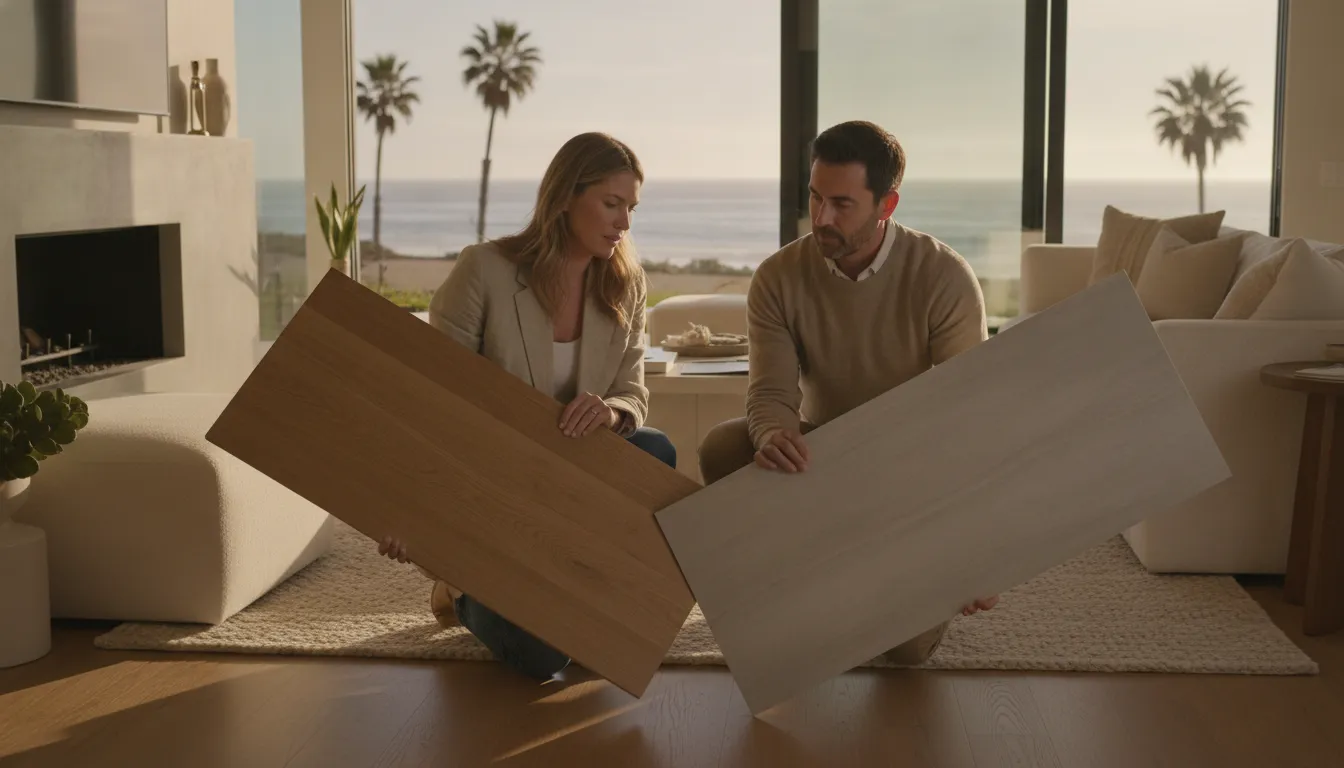
Plank width and length influence how expansive a room feels. Larger-format planks can support a clean, contemporary layout, while varied widths or stronger grain movement may add visual texture. Finish matters just as much. Sheen changes how daylight and artificial light reflect across the floor, so view samples near windows and beneath the lighting planned for the remodel.
Design continuity requires planning beyond the flooring itself. Compare each option against cabinet doors, counters, wall colors, stair details, and adjacent tile. A floor that looks excellent in a showroom can feel disconnected when it meets another material at a hallway or kitchen threshold. Consistent plank direction, carefully selected transition details, and a limited palette of related undertones help the home feel intentional without forcing every room to look identical.
Compare flooring samples in person at the San Diego flooring showroom.
For homeowners evaluating luxury flooring materials San Diego projects can support, an in-person review is especially useful. King Remodeling’s Design Center brings hardwood samples in multiple species and finishes together with LVP collections, allowing you to compare scale, texture, and undertones under one design plan. Bring cabinet or paint samples when possible, and judge the floor as part of the complete remodel rather than as a standalone product.
Which Flooring Handles San Diego Moisture and Daily Wear More Easily?
The better choice depends on where the floor will go, how your household uses the space, and how carefully the product is installed. In San Diego County, a home may combine a busy kitchen, a quiet bedroom, a pet-friendly hallway, and rooms influenced by coastal moisture. Those conditions call for more than choosing a material by appearance alone.
LVP can be a practical option when easy cleaning and resistance to everyday spills are priorities, but do not assume every luxury vinyl plank product is waterproof. Read the manufacturer’s specifications for the exact collection, including its waterproof or water-resistant rating, seam requirements, and approved installation areas. Waterproof flooring is commonly marketed for kitchens, bathrooms, and mudrooms, but the product, subfloor, edges, and installation details still determine how the finished floor performs. For a broader wet-room comparison, review these waterproof flooring options.
What should you consider for pets, traffic, and cleaning?
For households with dogs, children, frequent guests, or an open plan that receives constant foot traffic, LVP may simplify daily care. Its sealed surface can make routine sweeping and manufacturer-approved damp cleaning straightforward. That does not make it immune to scratches, dents, fading, or damage from standing water. Furniture pads, prompt spill cleanup, entry mats, and cleaning products approved for the specific floor remain important.
Engineered hardwood brings a genuine wood surface and can be a strong fit where warmth, texture, and a refined visual transition matter most. It also requires more disciplined moisture management. A spill left unattended, repeated wet mopping, or moisture rising from an inadequately prepared subfloor can create problems. A peer-reviewed PLOS One study examined deformation rates in engineered wood flooring, which reinforces why product selection and environmental conditions deserve attention rather than blanket assurances. Read the engineered wood flooring research for the technical context.
- Busy living areas: Compare the product’s wear layer, finish, expected traffic rating, and care instructions instead of relying on the category name alone.
- Pet areas: Consider claw marks, tracked-in grit, accidents, and whether individual planks can be repaired or replaced if damage occurs.
- Kitchen and bath transitions: Confirm moisture protection at seams, walls, cabinets, thresholds, and plumbing penetrations before installation begins.
- Coastal or humid conditions: Ask how the selected product should be acclimated, stored, and maintained in the home’s specific environment.
Does moisture resistance depend on the product or the installation?
It depends on both. Engineered hardwood is not automatically moisture-proof, although moisture-resistant engineered hardwood veneer panels have been described in a US patent record. That record applies to a specific patented design, not to every engineered wood product on the market. Likewise, LVP construction varies by manufacturer, and a waterproof claim may still require precise seam treatment and a suitable, level subfloor.
Before committing, ask for the technical data sheet, installation guide, warranty conditions, and cleaning instructions for the exact product. A qualified remodeling team should also inspect the subfloor, address unevenness or moisture concerns, and plan transitions so water and grit do not collect at vulnerable edges. The most durable result is usually the one that matches the material to the room and pairs it with careful preparation, not the one promoted as universally worry-free.
What Should You Know About Installation, Maintenance, and Long-Term Ownership?
The material decision is only part of the ownership experience. Installation conditions, cleaning habits, and the way a floor can be repaired or renewed often matter just as much as its appearance. Before selecting a luxury floor, ask how the existing subfloor will be evaluated, how transitions will be handled, and what maintenance the finish requires over time.
Subfloor preparation is important for both luxury vinyl plank and engineered hardwood. The installer should evaluate whether the surface is sufficiently sound, clean, dry, and level for the selected product and installation method. Uneven areas, moisture concerns, damaged sections, or poorly planned transitions can affect the finished result regardless of which material is chosen. A careful plan also accounts for baseboards, cabinet elevations, door clearances, and the relationship between flooring in adjoining rooms.
How do repair and refinishing differ?
LVP is generally selected as a finished, manufactured surface. If an individual plank is damaged, the practical repair may involve replacing that plank or a defined section. Provided matching material is available and the installation method permits access. Keeping a small amount of the original product can make future repairs easier, especially when a collection is discontinued.
Engineered hardwood has a real wood wear layer, so its long-term renewal potential depends on the product’s construction. Wear-layer thickness, finish, and the recommendation of a qualified flooring professional. Some products may be suitable for refinishing, while others are better treated as replaceable finished flooring. That distinction should be confirmed before purchase, rather than assumed from the word hardwood alone.
What does research add to the lifecycle conversation?
A US Forest Service life-cycle study modeled engineered wood flooring across raw-material extraction, transportation, manufacturing, installation, use, and end-of-life stages. Its model used a 75-year estimated building service life, which is a research assumption for comparison. Not a promise that every floor will last that long in a particular home. The study is useful because it shows why ownership decisions should include installation, care, renewal, and eventual replacement instead of focusing only on the initial product. Read the US Forest Service lifecycle study.
Research also continues to examine how engineered wood flooring responds to conditions that can contribute to deformation. A peer-reviewed PLOS One paper published in October 2023 studied deformation rates in engineered wood flooring. It does not guarantee the performance of any specific product. Instead, it reinforces the value of following the manufacturer’s installation requirements, controlling moisture where necessary. And asking how a proposed floor is suited to the conditions of the room. Review the PLOS One engineered-wood research.
- Confirm the subfloor assessment and moisture-preparation plan before installation.
- Ask which cleaning products, tools, and methods are approved for the exact finish.
- Clarify whether damaged material can be replaced and whether matching stock will be retained.
- Confirm refinishing potential from the product documentation, not from appearance alone.
- Plan transitions and future replacement with the full remodeling scope in view.
For a San Diego County remodel, long-term ownership also means matching the floor to the home’s daily conditions, from tracked-in sand to kitchen activity and changing moisture exposure. A design-build team can coordinate material selection with installation details and the rest of the remodel, helping you choose a floor that remains practical as well as polished.
Use this quick comparison as a starting point. Confirm the exact product documentation before ordering.
| Factor | LVP | Hardwood |
|---|---|---|
| Look | Consistent finish | Natural variation. |
| Moisture | Check rating. | Review site conditions. |
| Renewal | Replace planks. | Refinishing may vary. |
How Should You Choose Flooring for Each Room in a High-End Remodel?
The right floor should respond to room use, moisture exposure, and its relationship to cabinetry, walls, countertops, and natural light. In San Diego County, coastal conditions and indoor-outdoor living may also influence material selection.
- Living areas: Engineered hardwood can bring authentic grain, warmth, and a refined foundation to living rooms, dining areas, and formal spaces. LVP may be a practical alternative when everyday traffic, pets, or simplified maintenance carries more weight. Review samples in the actual light of the room, since a warm finish can look very different beside cool walls or bright windows.
- Bedrooms: Prioritize comfort, visual calm, and continuity with nearby hallways. A quieter grain and softer tone can make a bedroom feel restful. Consider furniture scale and daylight before choosing a highly varied plank pattern.
- Kitchens and bathrooms: Start with moisture exposure, cleaning habits, and transitions to adjacent rooms. Choose a material and installation approach that fit the conditions rather than assuming one product belongs everywhere. For a separate wet-room comparison, review these waterproof flooring options.
- Entries and open-plan spaces: Entries need a finish that works with outdoor traffic and establishes the home’s visual direction. In an open plan, use flooring to connect the kitchen, dining, and living zones, then define spaces with rugs, lighting, or cabinetry instead of abrupt material changes. Thoughtful planning helps you coordinate flooring across your home while keeping transitions intentional.
Cabinet color is especially important. Natural or light cabinetry may pair well with contrast, while darker cabinetry can benefit from a lighter surface. Check plank direction, thresholds, stair details, and adjoining tile early. A continuous material can make rooms feel larger, but a deliberate transition may better suit a space with different moisture or architectural needs.
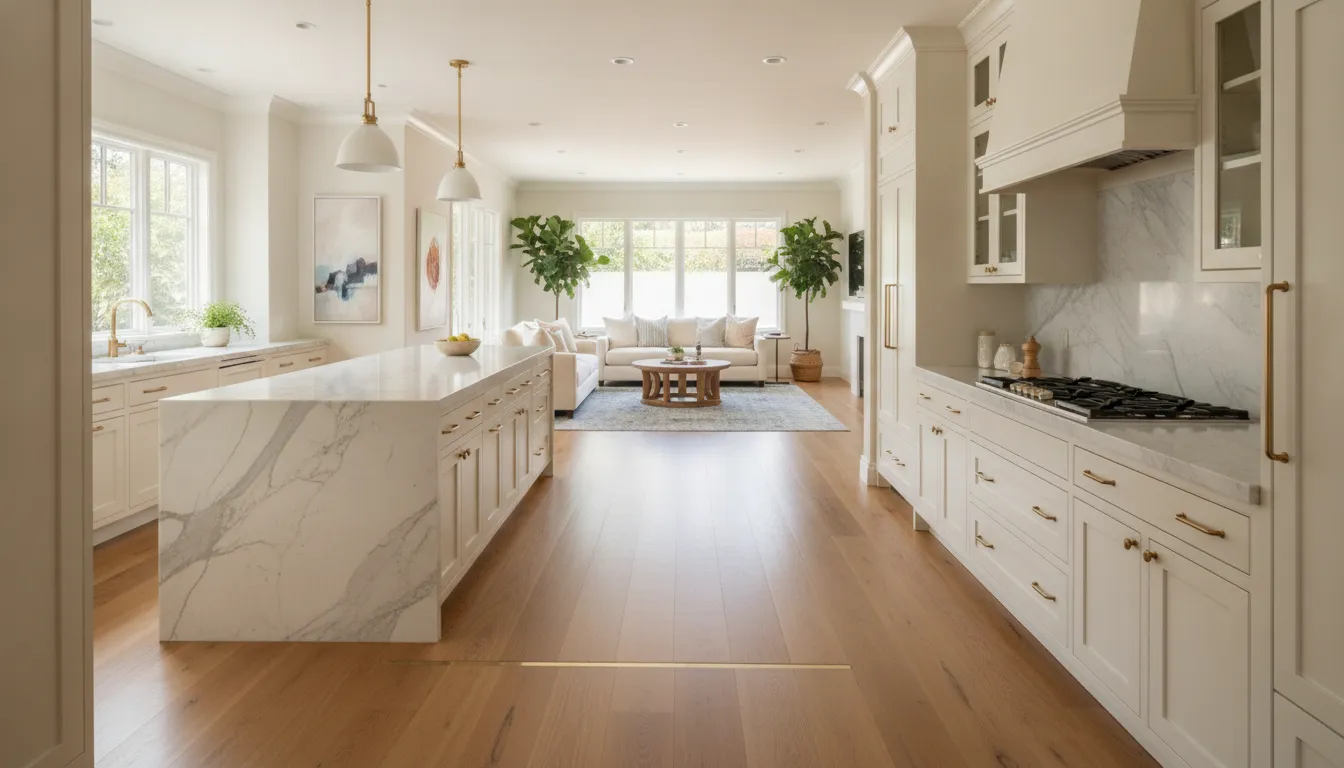
Bring large samples together at the Scripps Ranch Design Center to compare hardwood species and finishes, luxury vinyl plank collections, tile, and laminate. Seeing materials beside cabinet doors is more useful than judging a small sample online. The goal is a coordinated palette that fits your lifestyle and architecture, not simply the most expensive-looking plank.
Schedule a flooring conversation with King Remodeling.
Frequently Asked Questions
Which is better for a high-end San Diego remodel, LVP or engineered hardwood?
Neither is universally better. LVP can be a practical choice when easy care, consistent appearance, and moisture considerations are priorities. Engineered hardwood offers a genuine wood surface, natural variation, and a design presence many homeowners prefer in living areas. Choose based on the room, subfloor, desired finish, maintenance expectations, and how the flooring should coordinate with cabinetry and adjacent spaces.
Can LVP be used in kitchens and bathrooms?
Some LVP collections are marketed for moisture-prone rooms, but products differ, and installation details still matter. Confirm the manufacturer’s water-resistance instructions, prepare the subfloor correctly, and address leaks or standing water rather than treating any flooring as maintenance-free.
Can engineered hardwood handle San Diego’s coastal environment?
It can be considered for an appropriately designed and installed project, but the home’s moisture conditions, room use, product construction, and installation requirements should be reviewed first. Coastal exposure does not make every engineered hardwood product suitable for every room, so material selection and site preparation are important.
Is engineered hardwood easier to repair or refinish than LVP?
Engineered hardwood may offer future refinishing potential depending on the thickness of its real-wood wear layer and the manufacturer’s guidance. LVP typically calls for plank replacement when a damaged area cannot be repaired. Ask about the exact product before assuming how either floor can be restored.
How should I compare luxury flooring materials San Diego homeowners are considering?
View full-size samples in the rooms where they will be installed. Compare them beside cabinetry, paint, countertops, and natural and artificial light. A San Diego design professional can help coordinate the remodel before you select a product.
Ready to Compare Your Flooring Options?
Seeing LVP and engineered hardwood samples together can make differences in color, texture, finish, and room-to-room flow easier to evaluate. King Remodeling can help you connect those design details to your San Diego remodel plan.
Contact King Remodeling to compare samples and plan your flooring remodel.