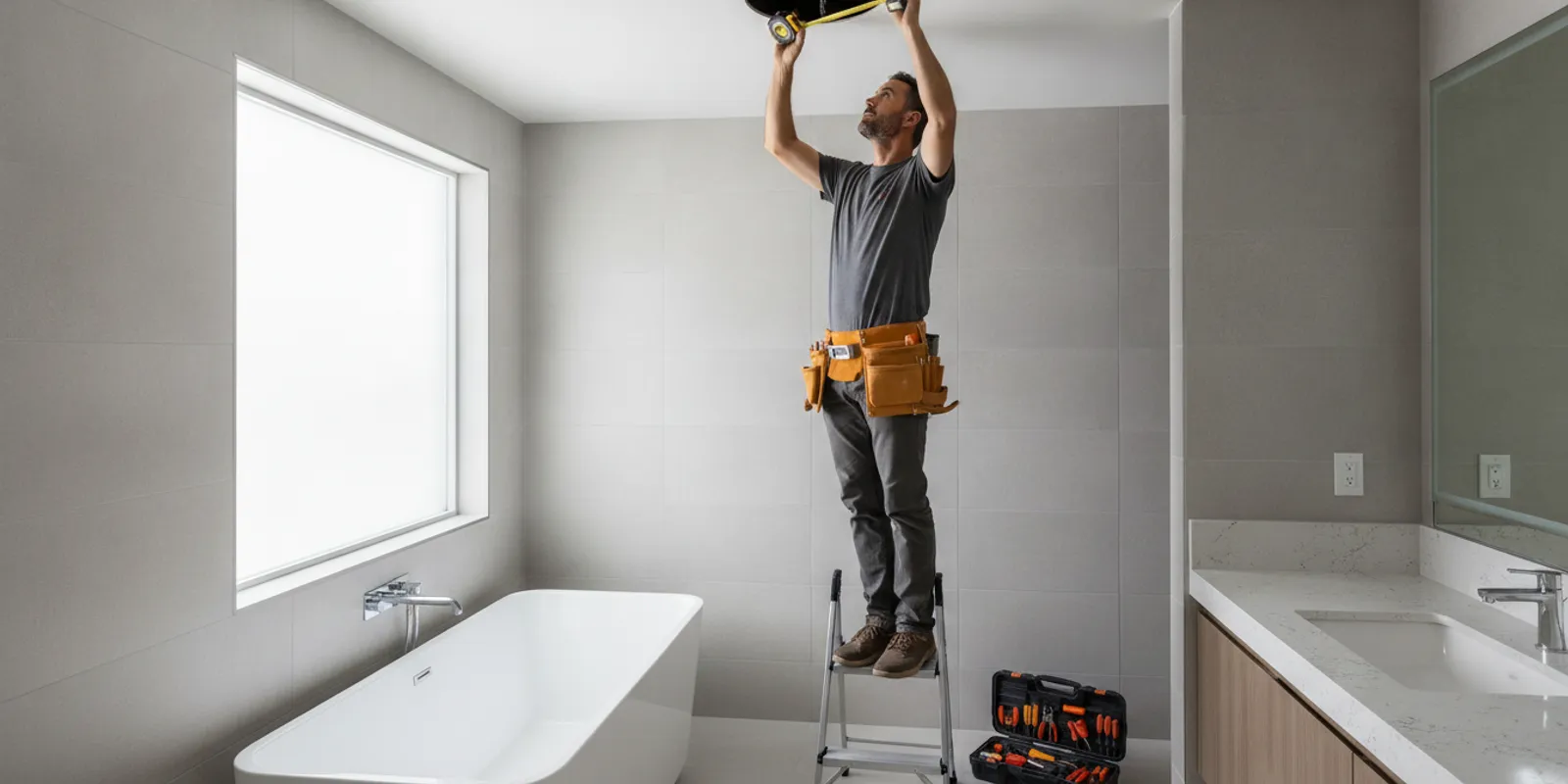
A bathroom exhaust fan that rattles, runs for a long time, or leaves mirrors fogged may be due for attention—but the right fix is not always a new unit. This guide to bathroom exhaust fan replacement explains how to tell cleaning and repair issues from signs of a failing fan, what affects a replacement project, and how to coordinate ventilation with a bathroom remodel in San Diego.
Discuss your bathroom remodeling plans
What does a bathroom exhaust fan do?
A bathroom fan moves indoor air out of the room through a duct that should discharge to an appropriate exterior location. During a shower, warm moisture enters the room air. If that damp air lingers, it can condense on cooler surfaces such as mirrors, windows, walls, and ceilings. A working fan helps reduce the buildup of moisture and odors by exhausting air while the room is in use and for a period afterward.
Ventilation is one part of moisture management, not a substitute for fixing leaks or maintaining the rest of the bathroom. A fan cannot dry water trapped behind a finish, correct a failed plumbing connection, or resolve every cause of persistent dampness. For general information about indoor environmental health and moisture, homeowners can start with the U.S. Environmental Protection Agency and its indoor air quality resources. If you see recurring water stains, peeling paint, or visible growth, identify the source instead of relying on a fan alone.
The fan also depends on its installation. A strong-sounding motor does not prove that air is reaching the outdoors. The grille, fan housing, duct route, duct connections, and termination all affect how the system performs. When the duct is disconnected, obstructed, poorly routed, or venting into an unintended space, replacing the motor by itself may not solve the problem.
How can you tell whether the fan needs replacement?
Start with what you can safely observe. Note how the fan sounds, how it starts, whether air seems to move at the grille, and whether moisture or odor issues persist. Compare its behavior with how it used to work, rather than judging it only by the age of the fixture. A qualified professional can inspect the unit and its duct path when the cause is not obvious.
It makes new or worsening noise
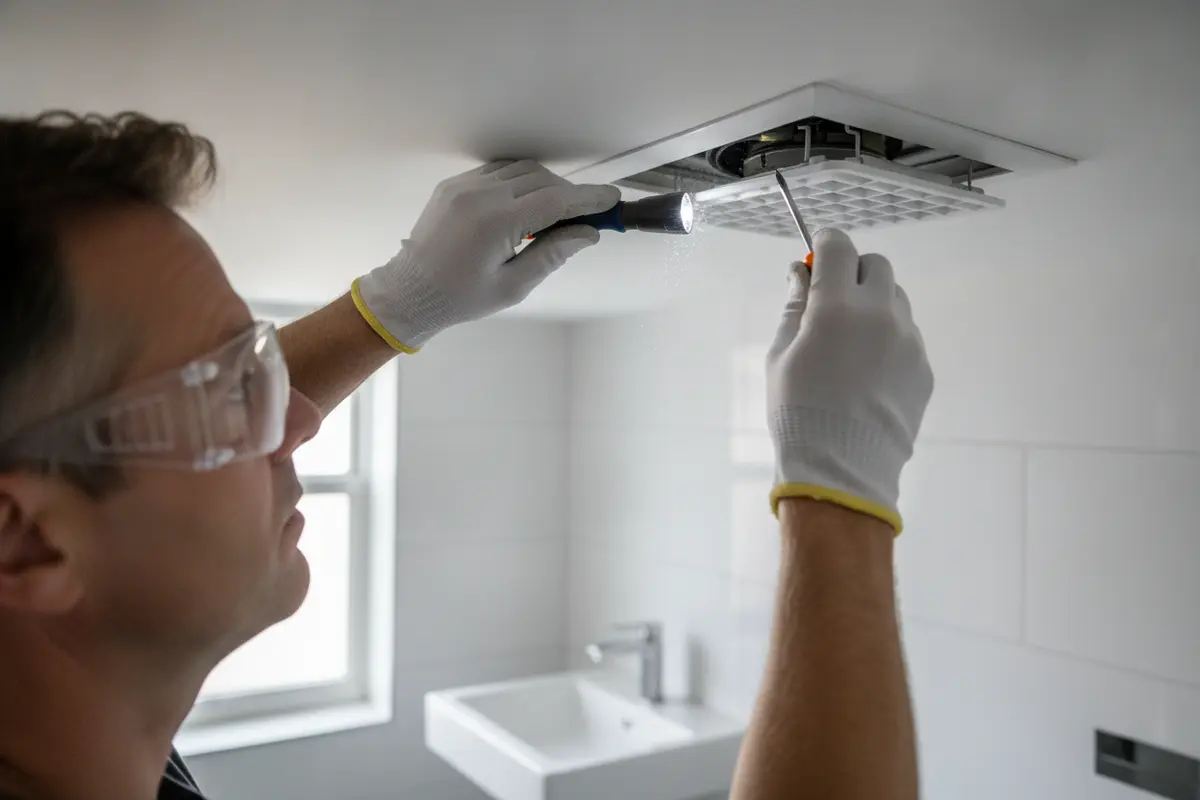
A fan that develops a grinding, scraping, buzzing, or persistent rattling sound may have a loose grille, dirt around the moving parts, a worn motor, or another mechanical issue. First, turn the fan off before checking whether the removable cover is visibly loose or dusty. Follow the product instructions for any cleaning. Do not put fingers or tools into the fan housing, and do not remove electrical components to investigate a sound.
If cleaning the accessible grille does not change the noise, or the fan has become louder over time, have the unit assessed. A loose cover or simple maintenance issue may be correctable. A motor that is failing, a damaged housing, or an unavailable replacement part can make replacing the fan assembly the more practical option.
It starts slowly, stops, or will not turn on
Intermittent operation can point to a worn fan, a control problem, or an electrical issue. Check only simple, safe items such as whether the wall control is set as expected. Do not open a switch or fan housing to diagnose wiring. If the fan is dead, trips a circuit, smells hot, or shows signs of heat damage, stop using it and contact a qualified electrician or contractor who can arrange the appropriate electrical evaluation.
Replacing the fan does not automatically address a problem in the circuit, switch, or wiring. That is why the scope should say whether the work includes only the fan unit or also evaluation of controls and electrical conditions. Avoid assuming that a new model will fit the existing opening or connect to existing wiring without adjustment.
The bathroom stays damp after normal use
Persistent condensation, damp surfaces, or a lingering musty odor can be a sign that ventilation is inadequate. It does not prove that the fan motor is the only cause. The room may need more effective air movement, the fan may be undersized for the space, the duct may be restricted, or the fan may not be used long enough after bathing. A leaky shower enclosure, plumbing problem, or other source of moisture can also create similar symptoms.
Try to distinguish a temporary condition from a recurring one. Note whether the fan runs during showers, whether the bathroom door has a path for replacement air, and whether dampness continues well after use. If there are signs of a leak or water damage, investigate that separately. A fan replacement should not be treated as a cure for moisture that is entering from another source.
The fan runs, but airflow seems weak
A running motor with weak airflow may have a dirty grille, a blocked or disconnected duct, an exterior termination problem, or a fan that is not suited to the room. A tissue held near the grille may show whether air is being drawn, but it is only a basic observation and not a measurement of ventilation performance. Do not use an open flame or smoke to test airflow.
If the grille is clean and airflow still seems poor, ask for the duct route and discharge point to be checked. A replacement fan that is more powerful on paper may not perform as intended when paired with a restrictive duct run or an unsuitable termination. The complete path matters more than the motor specification by itself.
Repair, clean, or replace: which path makes sense?
Before choosing a new fan, identify the problem and its likely scope. Cleaning may be enough when dust is the main issue and the fan still operates normally. A loose grille or compatible replaceable part may be repairable. Replacement becomes more likely when the motor is failing, the housing is damaged, the model is obsolete, parts are not practical to obtain, or the existing unit is not appropriate for the room and duct arrangement.
There is also a useful distinction between replacing a motor or insert and replacing the entire assembly. Some products allow a compatible motor-and-blower component to be swapped while leaving the housing in place. That can limit disruption, but only if the replacement part is designed for the installed housing and the housing, wiring, and duct connection are in suitable condition. A full unit replacement may involve more ceiling work, particularly if the old opening does not match the new housing.
| Observed issue | Possible first step | When replacement may be appropriate |
|---|---|---|
| Dusty grille, otherwise normal operation | Clean accessible surfaces using the product directions | Only if the noise or airflow problem remains after cleaning and inspection |
| Loose or vibrating cover | Check that the grille is seated correctly with the fan off | If the grille, clips, or housing are damaged or the vibration comes from the unit |
| Grinding or persistent motor noise | Arrange an inspection; avoid opening electrical parts | If the motor or assembly is worn, damaged, or not serviceable |
| Weak airflow | Check for an accessible dirty grille and have the duct path evaluated | If the fan is unsuitable or the unit and duct issues call for a new system |
| Fan does not run or shows electrical warning signs | Stop using it when unsafe and contact a qualified professional | After the electrical cause and replacement scope are determined |
| Bathroom remodel underway | Confirm the fan location, duct route, controls, and finish sequence | When an upgrade fits the project and the installation conditions are verified |
This comparison is a starting point, not a diagnosis. Fan models and bathroom conditions differ. If you are planning a broader project, King Remodeling’s bathroom remodel planning guide can help organize decisions that extend beyond the fan itself.
What affects bathroom exhaust fan replacement costs?
There is no single price that applies to every replacement. The cost depends on the selected fan and the work needed to install it correctly. A straightforward swap in a compatible housing can be very different from replacing a complete assembly, changing the ceiling opening, addressing a duct issue, or coordinating electrical work. A quote should make those differences visible instead of listing only a fan model.
Fan type and features
Basic fans, quieter models, units with different control options, and combination fan-light products have different purchase costs and installation needs. Select features based on how the household uses the bathroom. A quiet model may be worth considering when the bathroom is near bedrooms. A timer control can make it easier to leave ventilation running after use, but the control must be compatible with the installation.
Do not choose based on a feature list alone. Confirm the fan dimensions, housing depth, ceiling clearance, duct connection, electrical requirements, and control compatibility before ordering. A unit that is attractive or quiet may still be a poor fit for the existing opening or duct.
Existing housing and ceiling opening
If the new fan fits a sound existing housing and the manufacturer permits the component replacement, the work may be less disruptive. Replacing a complete housing can require access above the ceiling or opening and repairing part of the ceiling. The amount of access depends on the bathroom layout, the framing, and whether there is an accessible space above the fan.
Ceiling finish is another cost consideration. Painted drywall, plaster, tile, and other finishes can require different repair methods. If the existing opening needs enlargement or relocation, clarify who will patch, texture, paint, or refinish the affected area. A quote that excludes finish repair should say so clearly.
Duct condition and route
A short, accessible duct connection in good condition is different from a long, difficult-to-reach route with bends, damage, or a disconnected section. If the duct does not reach an appropriate exterior termination, correcting that may add work. Ask whether the quote includes only the fan or also inspection and correction of the duct and termination.
Do not assume a larger fan solves an airflow problem if the existing duct system is the limiting factor. The installer should explain whether the proposed fan is suited to the room and the duct arrangement, and what is included to confirm that the route is connected and discharges where intended.
Electrical work and controls
A replacement may involve a compatible connection to the existing circuit, while a new control, changed location, or wiring concern can require additional work. Electrical scope should be clearly described and handled by a qualified professional. Do not rely on an estimate that treats an unknown wiring issue as automatically included or promises that no electrical adjustments will be needed before the existing conditions have been checked.
Access, scheduling, and finish coordination
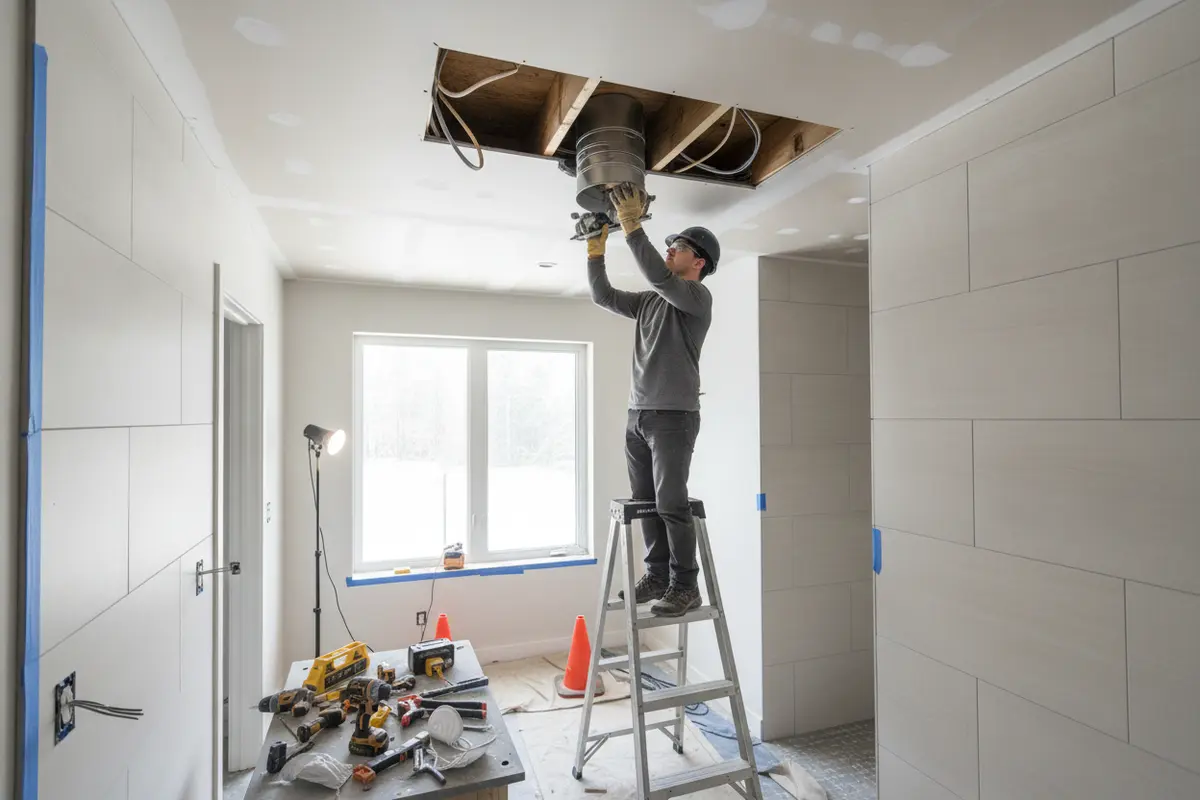
Work can be simpler when the ceiling is already open during a remodel. That gives the project team a chance to coordinate the opening, framing, duct, and electrical work before closing the ceiling. Conversely, a fan installed in a finished ceiling may require extra protection and repair. Ask how the work area will be protected and what cleanup and finish work are part of the scope.
When comparing proposals, look at the whole scope rather than the fan price alone. For an organized discussion of a larger bathroom project, see the company’s remodeling process and the remodeling services overview.
What happens during a replacement project?
A simple, compatible replacement can be brief, but the steps vary with access and the condition of the existing system. Agree on the scope before work begins, including whether the plan is to replace an insert or a full housing, how the duct will be checked, what electrical work is included, and whether ceiling repair is part of the job.
- Inspect the existing fan and symptoms. The professional should identify the make and model when possible, assess noise and operation, check the grille and housing, and ask about persistent moisture or odor concerns.
- Review the duct route and discharge. Confirm what can be seen or accessed, whether the duct is connected and in serviceable condition, and whether the discharge point is appropriate. If parts of the route cannot be inspected without opening a finish, discuss that limitation.
- Choose a compatible replacement. Verify the opening, housing, ceiling clearance, duct connection, and electrical and control requirements. Consider sound, operation, and ease of cleaning as well as the unit’s appearance.
- Protect the room and remove the old unit. Work may involve dust or access through the ceiling. Confirm how surfaces will be protected and whether the removal exposes conditions that could change the scope.
- Install and connect the new unit. The installer secures the assembly, connects it as specified, and makes sure the duct connection is properly completed. Electrical work should be handled within the agreed professional scope.
- Test operation and finish the opening. Confirm that the fan starts, runs, and responds to its control. Agree on how any ceiling gaps or finish damage will be repaired and who handles painting or other restoration.
Do not assume a new fan is complete simply because it turns on. Ask what checks are performed on the duct connection and airflow, and what commissioning or testing can reasonably be confirmed for the installation. Ask for the product documentation and care instructions, too.
How should you choose a replacement fan?
Start with the room and the existing installation, then compare models that suit both. A professional can help verify the fan’s suitability for the bathroom and duct conditions. The right choice is not always the unit with the highest advertised airflow or the most features. A well-matched fan that is installed correctly and used consistently is more useful than a feature-heavy model that does not fit the system.
- Room fit: Have the fan capacity considered for the bathroom size and layout. If the room is unusually large, has a separate toilet area, or has a shower enclosure, discuss whether one fan is adequate for the spaces that need ventilation.
- Noise rating: Compare sound ratings between models using the same measurement method. If quiet operation matters, consider where the bathroom is located and whether the fan may be used at night.
- Controls: Choose a switch or timer that household members can use easily. Confirm compatibility with the fan and existing wiring before purchase.
- Lighting or heat: Combination units can reduce the number of ceiling fixtures, but they also introduce additional product and installation considerations. Confirm clearances and electrical requirements for all functions.
- Cleaning and service: Check whether the grille can be removed for routine cleaning and whether replacement parts are available. A model that is easier to maintain may remain quieter and more effective over time.
- Appearance and placement: Consider the fan’s location relative to the shower, vanity, lights, and ceiling features. Moving the fan can add work and should be discussed before ordering.
Keep the product details with your home records, including the model number, installation instructions, warranty terms, and any maintenance directions. Those details can be helpful if the fan needs service or replacement parts later.
How does fan replacement fit into a bathroom remodel?
A remodel is a useful time to review ventilation because the ceiling, lighting, and other systems may already be part of the design and construction plan. The fan should be considered before finishes are installed, not as a last-minute accessory. Confirm the location, opening, controls, duct route, and finish details as part of the overall plan.
Coordinate the fan with the ceiling layout. Recessed lights, shower enclosures, beams, and other features can affect where a fan can go. If the plan changes the bathroom footprint or ceiling, the old fan location may no longer serve the room well. Discuss whether the fan is staying in place, moving, or changing type before the relevant framing and finish work is complete.
Also distinguish ventilation work from other bathroom upgrades. Replacing the fan does not include fixing a shower leak, repairing water-damaged framing, or resolving a plumbing defect unless those items are specifically evaluated and included. If existing conditions are discovered after opening a ceiling, ask for an explanation of the issue and a written scope change before additional work proceeds.
King Remodeling offers bathroom remodeling services in San Diego. Homeowners considering a wider update can view bathroom and kitchen project examples, explore the design center and showroom, or review remodeling design ideas. A project discussion can help put fan replacement in context with the other decisions that affect the room.
What should you ask an installer?
Clear questions help you compare proposals and understand what is—and is not—included. Before approving work, ask:
- Is the proposed work a motor or insert replacement, or a full housing replacement?
- What do you know about the existing duct route, condition, and exterior termination?
- Does the estimate include checking or correcting the duct connection, or only installing the fan?
- How did you determine that the selected fan is suitable for this bathroom and its duct?
- Will the existing fan opening work, or will the ceiling need to be opened, patched, or refinished?
- Does the price include a new control or timer, and has compatibility been confirmed?
- Who handles electrical work, and what happens if the existing wiring or circuit needs attention?
- What testing will be done after installation, and how will the work area be protected?
- What product information, warranty documents, and maintenance instructions will I receive?
- Which conditions could change the scope or price, and how will additional work be approved?
Written answers make it easier to compare similar scopes. If one estimate includes a new fan and a duct correction while another covers only a direct swap, the totals are not describing the same work. Ask each provider to separate the product, installation, electrical, duct, and finish components where practical.
Frequently Asked Questions
How long does bathroom exhaust fan replacement take?
The time depends on whether the replacement fits the existing housing and opening, how easily the work area can be accessed, and whether the duct, wiring, or ceiling needs attention. A straightforward compatible swap is different from a full housing replacement or a remodel-stage change to the fan location. Ask for a project-specific schedule after the installation conditions are reviewed.
Can I replace only the fan motor?
Sometimes. Some fans have compatible replacement motors or inserts that can be changed without removing the entire housing. The part must fit the existing model, and the housing and connections must be in acceptable condition. Check the product documentation or have a professional verify compatibility instead of assuming that a similar-looking motor will work.
Should I replace a fan that still runs?
Not necessarily. A fan that runs quietly and moves air through a properly connected duct may only need routine cleaning. Consider replacement when there are persistent mechanical problems, poor performance after basic maintenance, a damaged or unsuitable unit, or a planned remodel that calls for a different installation. Diagnose the cause before buying a new fan.
Will a new fan stop mold or mildew?
A properly selected and installed fan can help manage moisture from normal bathroom use, but it cannot guarantee that mold or mildew will not occur. Persistent moisture can come from leaks, inadequate air movement, or other sources. Address visible damage or recurring dampness at its source, and do not rely on fan replacement alone to correct a leak or existing water damage.
Is fan replacement a good time to add a timer?
It can be, if the chosen fan and control are compatible with the existing electrical setup and the project scope includes the necessary work. A timer gives occupants a simple way to keep the fan running after leaving the room. Confirm the control type and installation requirements with the professional before selecting the fan.
Explore bathroom remodeling options
The best replacement plan starts with diagnosing the actual ventilation issue, checking the duct and installation conditions, and agreeing on a clear scope before the new fan goes in.