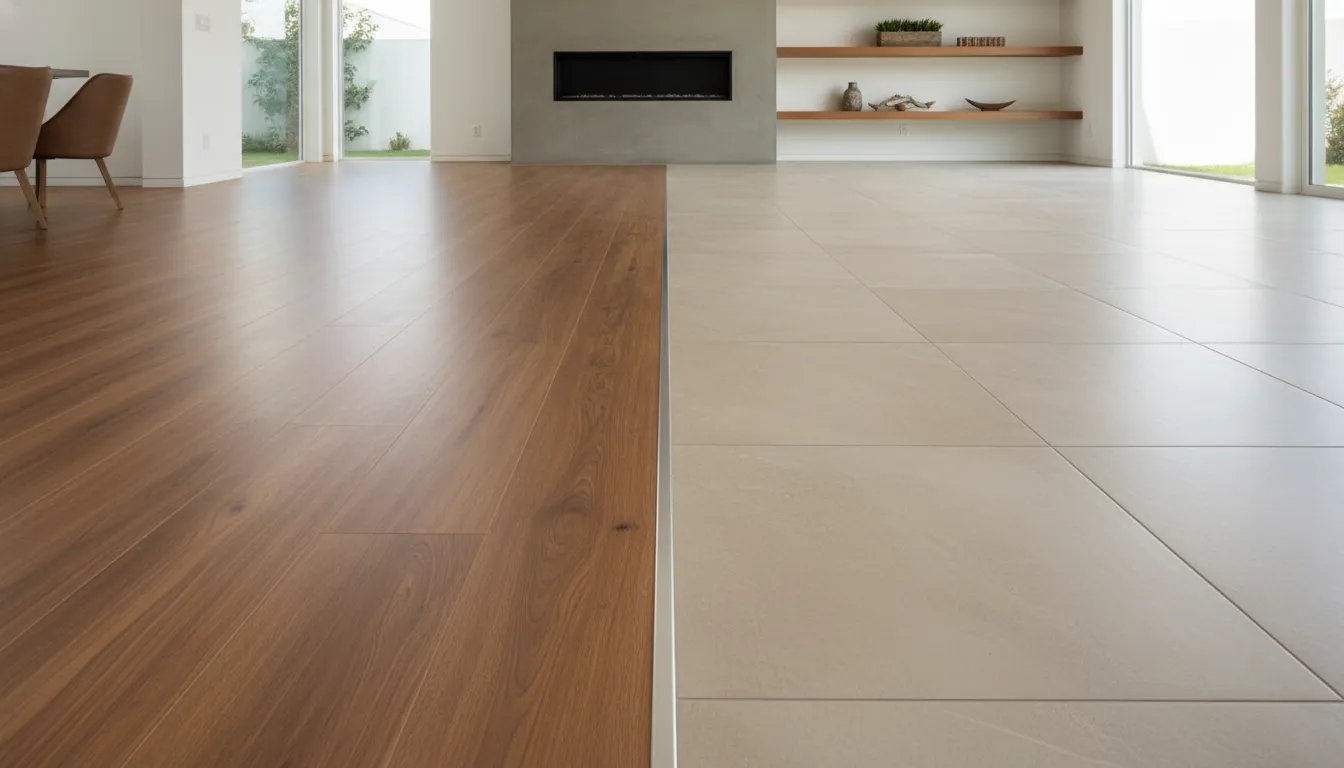
Tile vs LVP Flooring: Cost, Durability and Style Compared
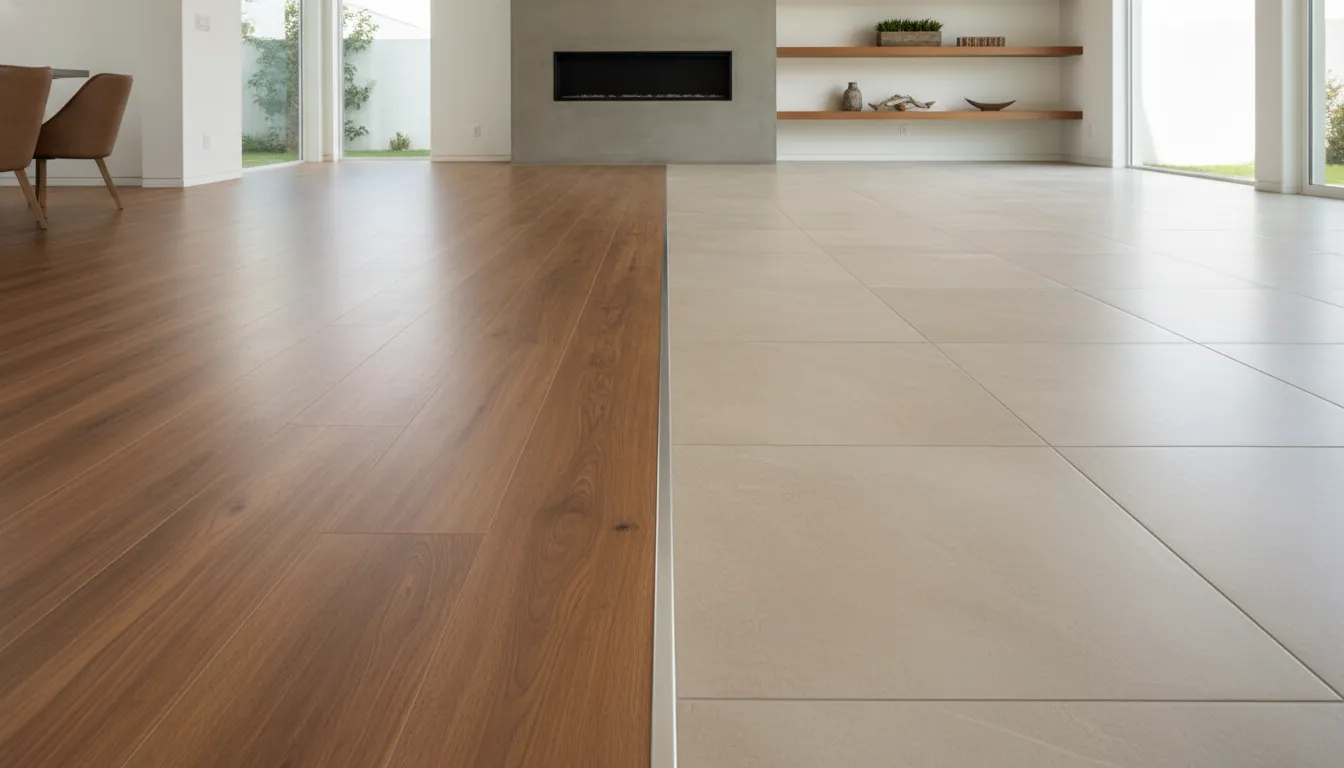
Tile handles heat, water, and decades of wear, while LVP lowers upfront cost and installation time. The right choice depends on where it will go and how your household lives.
Request a flooring remodeling consultation to compare tile and LVP samples with a San Diego design-build team.
Tile vs LVP flooring comes down to your budget, room conditions, maintenance habits, and preferred look. Tile usually costs more to install and feels harder underfoot, but it provides excellent water resistance, strong scratch resistance, and a long service life. LVP is often faster and less costly to install, feels warmer and quieter, and offers convincing wood or stone styles with simple routine cleaning. Its wear layer can scratch or dent, damaged planks may need replacement, and water resistance depends on product quality and proper installation. Consider carefully how each room handles moisture, dropped objects, pets, and foot traffic before comparing full installed prices, warranties, repair options, and subfloor needs.
The question is not simply which material wins, but which one fits each room, spending plan, and long-term remodeling goal. Tile vs LVP flooring at a glance lays out the key tradeoffs first, so you can weigh each one with confidence. King Remodeling brings design, material selection, and construction together for San Diego homeowners, helping each flooring choice support the complete remodel rather than one room in isolation.
See our flooring remodeling services, browse completed remodeling projects, or visit the King Remodeling showroom to compare materials in person.
Tile vs LVP flooring at a glance
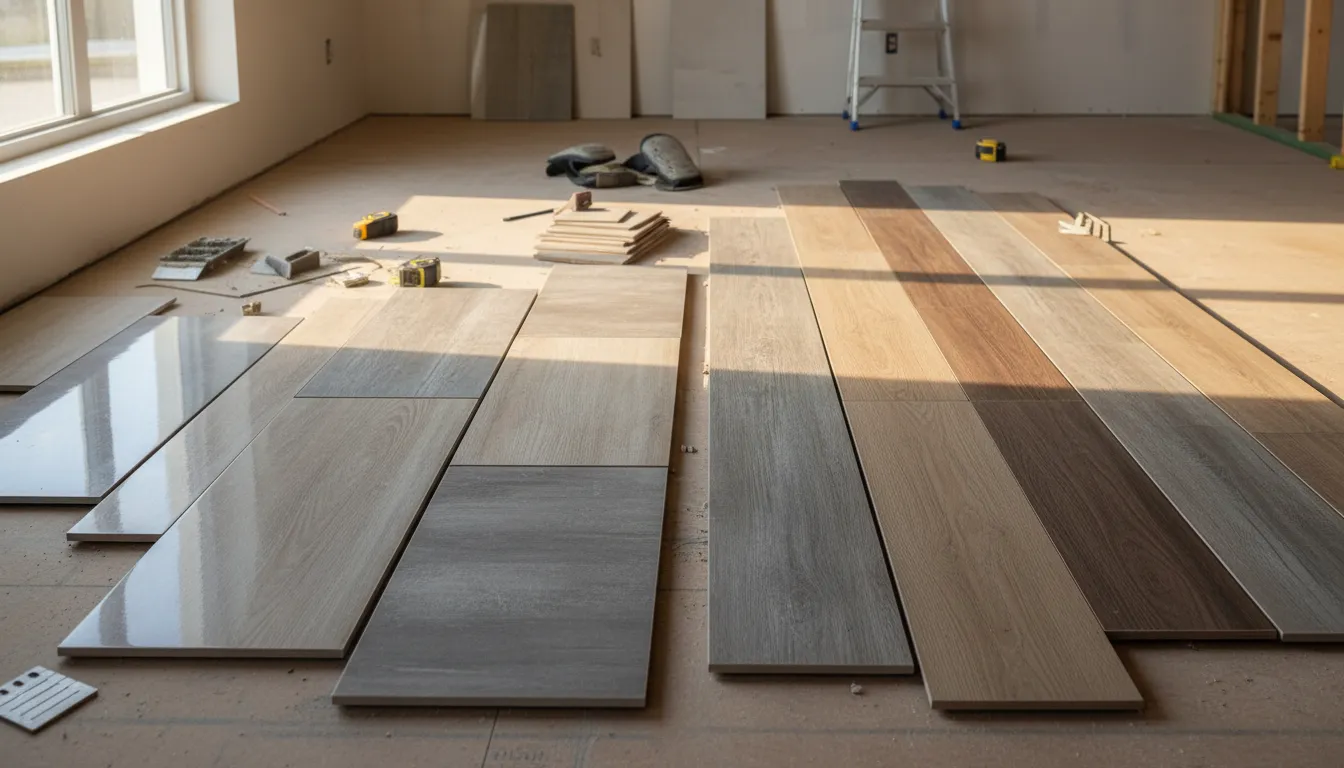
The tile vs LVP flooring choice starts with the room, not the look. Both can handle daily use and offer many styles. Yet they feel different underfoot, require different installation skills, and respond to damage in different ways.
Start by ranking your main goals before comparing samples and review these flooring installation planning tips. Think about water exposure, comfort, expected wear, upkeep, and the limits of the existing subfloor. For broader remodeling choices, the EPA’s indoor air quality guidance can also help you plan for dust, products, and ventilation during the work.
Quick comparison by priority
Tile is often the stronger fit when surface hardness, heat tolerance, and a long service life matter most. It works well in spaces where a firm floor is welcome. Proper grout, movement joints, and a sound base are key parts of the finished system.
LVP is often the easier fit when comfort, fast installation, and simple plank replacement lead the list. Its softer feel can suit busy living areas. Product quality and installation rules vary, so compare wear layers, core types, and warranty terms before choosing.
| Project priority | Tile | LVP |
|---|---|---|
| Cost tendency | Often higher labor and prep needs | Often lower labor and prep needs |
| Durability | Hard surface; may chip or crack | Resists daily wear; may dent or scratch |
| Water resistance | Surface handles water; details still matter | Many products resist water; seams still matter |
| Comfort | Firm and cool underfoot | Softer and quieter underfoot |
| Installation complexity | Needs careful layout, cutting, and setting | Click systems can install faster |
| Maintenance | Easy surface cleaning; grout needs care | Easy cleaning; follow product care rules |
| Style | Stone, ceramic, and patterned looks | Wood, stone, and modern plank looks |
Where each option tends to fit
Choose tile when the room needs a hard, stable finish and you accept a longer installation process. Bathrooms, entries, and kitchens often place water and wear near the top of the list. Still, tile alone does not solve moisture problems below the finished surface.
Choose LVP when the room needs a warmer feel and less disruption during installation. It can be practical for bedrooms, living rooms, and other spaces where comfort matters. Check whether the chosen product suits the room and the planned cleaning routine.
Questions that settle the choice
Ask how the floor will be used every day. A home with pets may value scratch resistance and easy plank replacement. A sunny room may need close review of product limits. A weak or uneven base may also change the scope before either finish goes down.
Then compare complete systems rather than sample boards alone. Include subfloor repairs, trim changes, transitions, underlayment, setting materials, and labor in the decision. The right choice is the one that fits the room’s risks, the household’s habits, and the full project plan.
Which flooring option usually costs less?
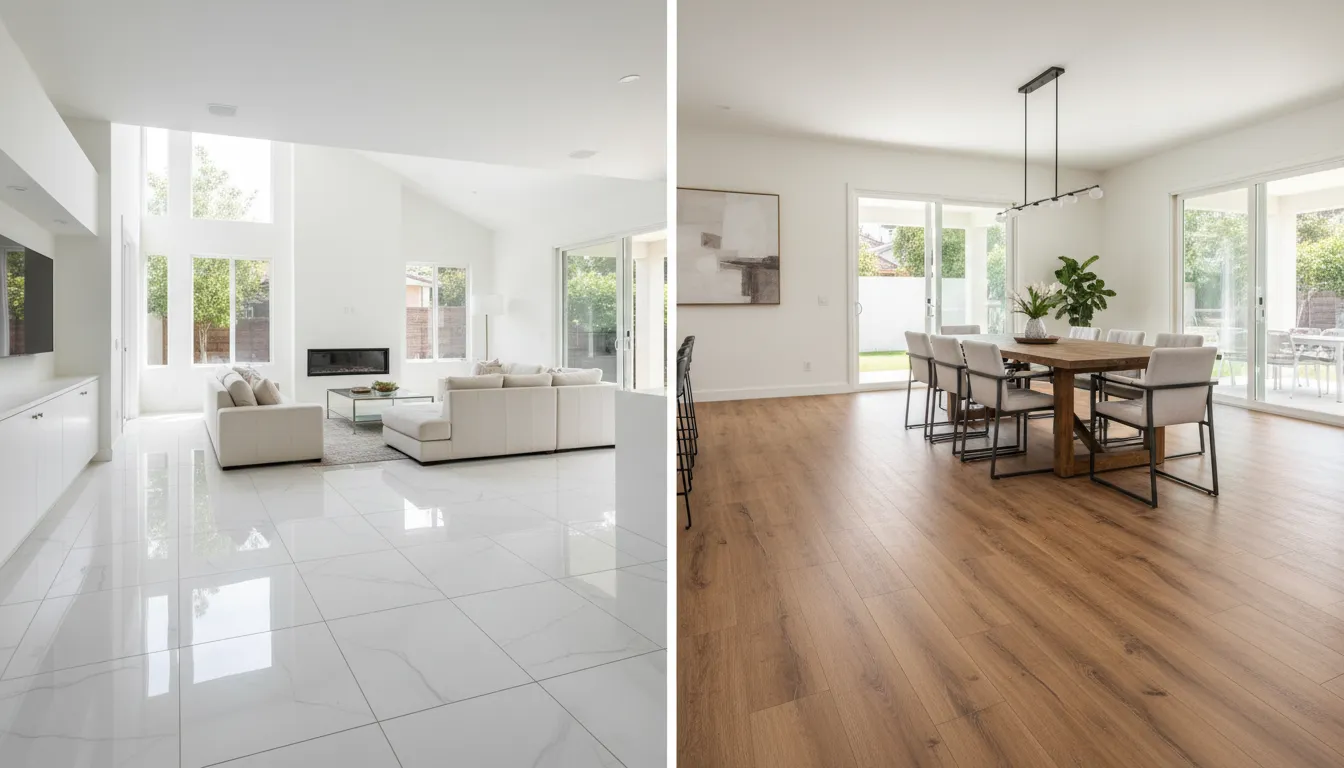
In most remodels, LVP starts as the lower-cost option. The planks are often quicker to install, and many products can float over a suitable existing floor. Tile usually requires more hands-on work, setting materials, grout, and careful surface prep. Still, the lowest material price does not always produce the lowest project total.
Material and labor costs
The material range for both tile and LVP is broad. Basic products may keep the purchase cost down, while premium styles, thicker wear layers, and specialty finishes raise it. Tile projects also need mortar, grout, backer board, and trim. LVP may need underlayment, adhesive, or matching transition pieces.
Labor often creates the clearest cost gap in a tile vs LVP flooring comparison. Installers can place click-lock planks in a steady sequence once the floor is ready. Tile takes more time because each piece must be set, spaced, cut, and grouted. Large tile, small mosaics, borders, and angled patterns can add labor.
- Simple, open rooms tend to cost less than rooms with many corners or fixtures.
- Straight layouts use fewer cuts than diagonal patterns or detailed borders.
- Premium trim, stair parts, and custom transitions can raise either project’s total.
Preparation and removal
Subfloor condition can change the estimate before the new finish goes down. Low spots, movement, moisture damage, or an uneven slab may need repair. Tile needs a firm, flat base because movement can lead to cracked grout or tile. LVP also needs a smooth base, since bumps and gaps may show through or affect the joints.
Removal costs depend on what is already in the room. Pulling up floating planks is often simpler than breaking out tile and removing bonded mortar. Disposal, dust control, and access also affect the work. The EPA’s remodeling guidance advises planning for dust and pollutants during renovation, so containment should be part of the scope.
Transitions deserve attention during planning. A new floor may meet carpet, hardwood, tile, exterior doors, cabinets, or stairs at different heights. Correcting those height changes can require reducers, threshold work, or added subfloor prep. Moving appliances and working around fixed cabinets may add time as well.
Cost now and value over time
LVP often wins when the main goal is a lower upfront cost and a faster installation. It can be a practical choice for busy living areas where comfort and easy care matter. The final choice should still account for product quality, room use, and the expected service life.
Tile may cost more at installation, but its long-term value can make sense in wet areas and high-wear spaces. A sound tile floor can remain in place through years of use. Repairs can be harder if matching tile is unavailable, while damaged LVP planks may also require taking apart part of a floating floor.
A useful estimate separates materials, demolition, disposal, floor prep, installation, trim, and transitions. Our guide to flooring installation cost explains the main budget variables, while an accurate vinyl plank installation quote should clearly identify the chosen product and prep work. That breakdown shows whether LVP is truly less expensive for the room. It also prevents a low material allowance from hiding the work needed below the finished surface.
How do tile and LVP compare for durability?
Wear, scratches, chips, and cracks
In a tile vs LVP flooring comparison, both choices can handle daily life well. Their weak points differ, so durability depends on the type of damage your household is most likely to cause.
Tile has a hard surface that stands up well to pet claws, chair movement, and tracked-in grit. Yet a dropped heavy pan may chip a tile. Tile can also crack when the subfloor bends or shifts beneath it.
LVP feels softer underfoot and is less likely to crack after an impact. Its wear layer helps guard the printed design, but sharp furniture legs and dragged appliances can scratch or gouge it. Deep damage may expose the core and cannot be polished away.
Surface finish matters for both materials. Glossy tile may show marks that a textured finish hides. LVP with a stronger wear layer often suits busy rooms better, but furniture pads and regular sweeping still help protect it.
Moisture, pets, and active homes
Tile is a strong fit for bathrooms, laundry rooms, and busy entry areas. Water does not harm the tile itself, though grout and the materials below still need proper care. Sealed grout also makes routine cleanup easier.
Many LVP products resist spills, which makes them practical for pets and active households. Still, water can reach seams, walls, or the subfloor after a leak. The EPA advises controlling moisture to help prevent mold growth, regardless of the finished floor above it.
Pet owners should weigh more than scratches. Tile handles claws well and cleans easily, but it feels hard and cool. LVP offers more give and may feel quieter, yet grit under paws can dull its surface over time.
Installation quality and future repairs
The strongest flooring can fail when installed over a poor base. Tile needs a flat, firm subfloor because movement can stress tiles and grout lines. LVP also needs a smooth base, since bumps or low spots may show through or strain its joints.
Repair needs can change the better choice. A damaged tile can often be removed by itself, but matching its color and size years later may be hard. Click-lock LVP planks can also be replaced, though reaching one may require taking up nearby rows.
Installation details affect long-term results. See why professional flooring installation matters when the subfloor, transitions, and product warranty all depend on correct preparation. Correct spacing gives LVP room to respond to indoor conditions. For tile, the right underlayment and full mortar contact help reduce hollow spots and stress.
For homes with heavy foot traffic, large dogs, and frequent spills, tile often provides the tougher surface. For households that value comfort, quieter steps, and less risk from dropped items, quality LVP may be the better balance.
Neither option is durable in every setting. Compare product quality, room use, subfloor condition, and installer skill before deciding. Keep extra tiles or planks from the same production run so later repairs are easier to match.
Which is better for kitchens and bathrooms?
Kitchens, laundry rooms, and entryways
In a kitchen, both tile and luxury vinyl plank can handle routine spills when installed as a full system. Tile is a strong fit near hot appliances and in homes where long wear matters most. LVP feels warmer and softer underfoot, which can help in a room where people stand for long periods.
For laundry rooms and entryways, the choice depends on the type of mess you expect. Tile stands up well to tracked-in grit, wet shoes, and appliance movement. LVP makes daily cleanup simple, but seams and wall edges still need careful planning. A waterproof plank does not make the whole floor assembly waterproof.
That difference matters if a washer leaks or water sits near a door. Water can pass through joints, gaps, floor vents, and unfinished edges. It may then reach the subfloor or nearby walls. The EPA explains how moisture supports mold growth, so leaks should be dried and repaired promptly.
Bathrooms and wet-area details
Tile is often the safer choice for bathroom floors that face frequent splashes. For a broader wet-area plan, compare the best materials for a bathroom renovation before coordinating flooring, shower surfaces, and cabinetry. It can also form part of a planned wet-area system around a shower. The installer must use the right backer, membrane, mortar, and edge details. Tile itself may resist water, but grout lines and the layers below still need attention.
Grout is not just a color choice. Joint width, grout type, sealing needs, and cleaning habits affect how the finished floor performs. Cracked grout can point to movement below the tile. A flat, stable underlayment helps limit that movement and supports a clean tile layout.
LVP can work well in a powder room or a bathroom with controlled splashes. Check the product rules before placing it near a tub, shower, or floor drain. Some waterproof planks tolerate surface water, yet their warranties may exclude flooding or water that reaches beneath the floor.
Living spaces and the whole-home plan
Living rooms and open-plan spaces often favor LVP because it is quiet, warm, and easy to carry across connected rooms. It can give a wood look without the hard feel of tile. Tile may suit warm climates, radiant heat systems, or homes that need a firm surface.
Underlayment should match the product and the subfloor. For LVP, too much cushion can strain locking joints, while the wrong vapor layer can trap moisture. For tile, a suitable backer or uncoupling layer can help manage movement. A careful tile installation process coordinates layout, underlayment, movement joints, and transitions as one system. Neither material can correct a weak, damp, or uneven base.
When comparing tile vs LVP flooring, choose by room risk rather than one label. Tile usually leads in full wet areas and spaces exposed to heat or grit. LVP often leads in living spaces and kitchens where comfort matters. In every room, the complete assembly matters more than the surface alone.
Flooring often connects directly to a larger kitchen remodeling plan or bathroom remodeling project. Review King Remodeling’s design-build remodeling process to see how materials, installation details, and project sequencing come together.
Not sure which floor fits your rooms? Talk with King Remodeling about your flooring plan before selecting materials.
Style, comfort, and maintenance differences
Looks, layouts, and visual flow
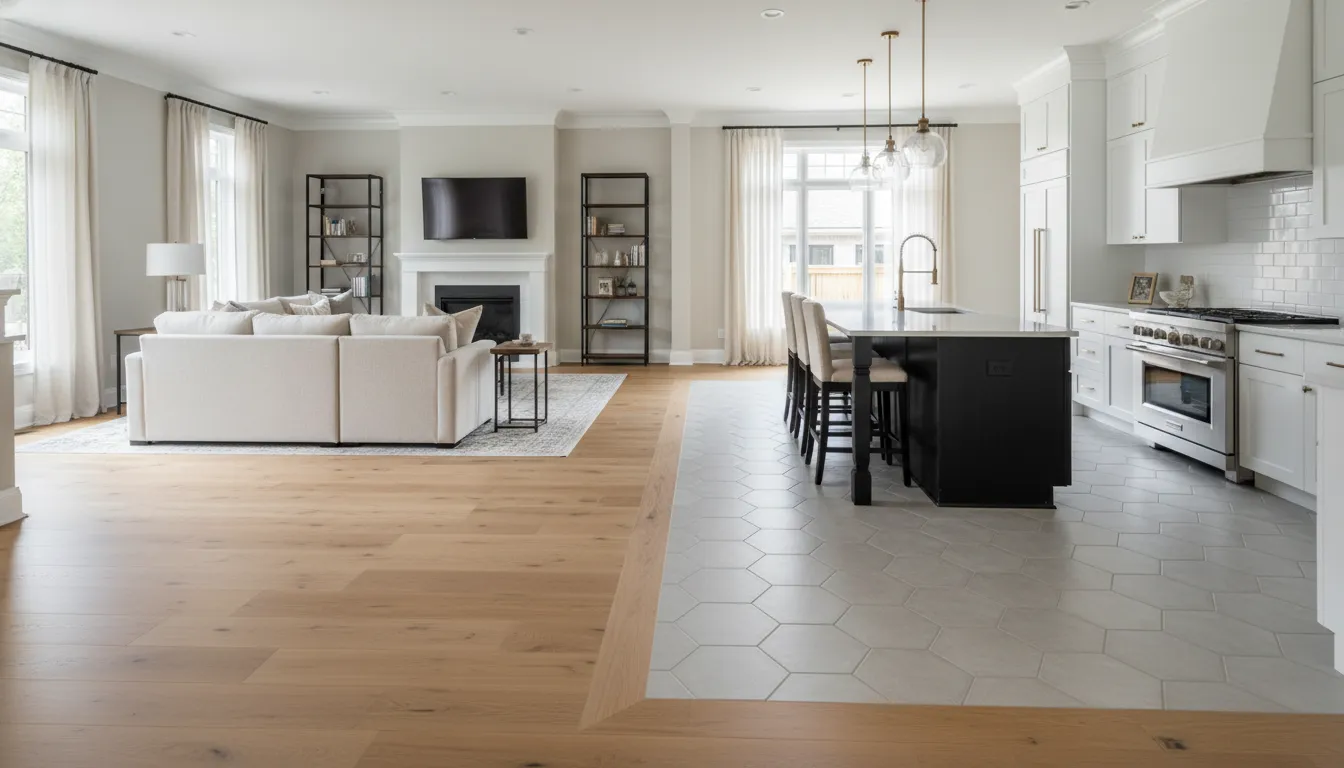
Tile offers a broad range of stone and ceramic looks, from quiet limestone tones to bold patterns. Explore modern flooring trends and practical guidance on choosing flooring for your home’s style before narrowing the sample board. Its shape, edge, finish, and grout color all affect the final design. LVP often copies wood, though many lines also mimic stone or concrete. The printed layer can show grain, knots, color shifts, and saw marks.
Wood-look tile and wood-look LVP can both suit an open remodeling plan. Yet they create different effects. Tile usually has visible grout lines, even when long planks are used. LVP planks often lock together with narrow seams, so the floor reads as one continuous surface.
Plank variation deserves a close look before ordering. A product with too few printed patterns may repeat the same knots across the room. Installers can sort and rotate planks to spread those repeats. With tile, natural shade variation or mixed patterns can add depth, but the layout should still feel balanced.
Transitions also shape the result. Tile may sit higher than nearby flooring because of mortar, backer board, or an uncoupling layer. LVP is often thinner, which can make transitions easier in a whole-home project. The right choice depends on door clearances, adjoining floors, and the planned flow between rooms.
Comfort, temperature, and sound
Tile feels firm underfoot and can feel cool, which may suit warm San Diego days. Its hard surface can also reflect footsteps, voices, and dropped objects. Rugs help soften active areas, while careful subfloor work helps prevent hollow spots and movement.
LVP usually feels warmer and has a slight amount of give. Attached pads or approved underlayment may reduce footfall noise, but the product and subfloor still matter. A flat base supports cleaner joints and a more solid feel. Check the maker’s limits before adding any separate underlayment.
Material choices can also affect indoor air. The EPA explains that some building materials can release volatile organic compounds. Compare product labels, adhesives, and installation methods when indoor air quality is part of the remodeling plan.
Cleaning and long-term upkeep
Both floors are simple to sweep, but their care needs differ. Tile handles routine damp cleaning well, while grout lines may collect soil or change color. Sealing needs depend on the tile and grout type. A repair may also require removing one tile without harming its neighbors.
LVP has no grout to scrub, which makes daily care quick. Still, grit can scratch the wear layer, and heavy furniture may leave marks. Use approved cleaners, soft pads, and floor protectors. Avoid excess water at edges and seams, even when the product is sold as waterproof.
- Choose tile when grout, pattern, and a firm surface support the room’s design.
- Choose LVP when continuous wood looks, warmer footing, and easy transitions matter more.
- Review samples beside cabinets, paint, and nearby floors before making the final selection.
For tile vs LVP flooring, maintenance is only one part of the decision. Match the floor to the room’s traffic, sound needs, finish plan, and connection to nearby spaces. That approach keeps the flooring choice tied to the full remodel rather than one isolated sample.
How to choose tile or LVP for your remodel
The tile vs LVP flooring choice gets easier when you judge each room on its real demands. Start with water, traffic, comfort, and the floor beneath the finish. Then weigh those needs against the look, budget, and upkeep you want.
A room-by-room decision process
Walk through the home before comparing colors or patterns. If flooring is one part of a larger project, use a clear process to plan your remodel and coordinate material decisions with the full scope. Note how each space is used now and how that may change. The EPA’s moisture guidance also makes a useful point: controlling moisture is key to limiting mold growth.
-
Define the rooms and moisture exposure. Mark bathrooms, laundry rooms, kitchens, and entries where splashes or wet shoes are common. Tile often suits spaces with frequent water exposure. LVP can handle routine spills, but seams and edges still need sound installation.
-
Compare daily wear. Think about pets, children, rolling chairs, dropped cookware, and sand tracked indoors. Tile resists many scratches but may chip when struck. LVP feels less brittle, yet grit and furniture legs can mark its wear layer.
-
Consider comfort and maintenance. Tile feels firm and often cool underfoot, which may suit warm rooms. LVP tends to feel softer and quieter during daily use. Compare grout cleaning with plank care, and choose the routine you will follow.
-
Inspect the subfloor and transitions. Ask your remodeler to check flatness, movement, moisture, and floor height before ordering material. Tile needs a stable base. LVP also needs a smooth surface, while its thickness may make transitions to nearby floors simpler.
-
Choose based on remodeling priorities. Rank water resistance, comfort, long-term style, repair needs, schedule, and cost. Use those ranks for each room instead of forcing one finish everywhere. A mixed plan may place tile in wet zones and LVP in living areas.
Lifestyle questions that narrow the choice
Picture an ordinary week, not a staged room. Do pets race through the hall? Does anyone stand in the kitchen for long periods? Would a cracked tile or damaged plank bother you more? These questions show which tradeoffs matter in your home.
Also compare samples in the actual rooms. Check them during morning and evening light, then place them beside cabinets, trim, and nearby flooring. Ask how each product is cleaned, repaired, and replaced. Product quality and installation skill can matter as much as material type.
A concise way to decide
Choose tile where frequent moisture, a firm surface, and a lasting built-in look lead your list. Choose LVP where comfort, quieter steps, and easier room-to-room coverage matter more. If needs differ by room, combine both with planned transitions for a practical remodel.
Frequently Asked Questions
How much does tile vs LVP flooring cost to install?
LVP usually costs less to install because the planks can be cut and fitted quickly. Tile installation often costs more because it requires careful layout, mortar, grout, and extra labor. The final price for either option depends on material quality, room size, subfloor repairs, demolition, and local labor rates. Request itemized estimates that include preparation, materials, installation, trim, and disposal.
Can LVP flooring replace tile in a bathroom?
LVP can replace bathroom tile when the selected product is approved for wet areas and the subfloor is sound. Although many LVP products resist water, moisture can still enter through seams or around the room edges. Tile remains a strong choice for areas exposed to frequent standing water. Always follow the flooring manufacturer’s installation and waterproofing requirements.
How long do tile and LVP floors usually last?
Properly installed tile often lasts longer than LVP, but cracked tiles and stained grout may need occasional repairs. An LVP floor’s service life depends on its wear layer, product quality, traffic, sunlight exposure, and maintenance. Tile may suit homeowners planning for long-term use, while LVP offers easier replacement when styles or room needs change.
What maintenance do tile and LVP floors require?
Both tile and LVP need regular sweeping or vacuuming, followed by cleaning with products approved for the flooring. Tile grout may require deeper cleaning and periodic sealing, depending on the grout type. LVP does not need grout care, but abrasive cleaners and excessive water can damage its finish or reach the seams. Wipe spills promptly on either surface.
Does tile or LVP flooring add more resale value?
Tile may support resale value in bathrooms, kitchens, and warmer climates because buyers often view it as durable and permanent. Quality LVP can also appeal to buyers who prefer a softer, quieter surface with easier upkeep. Resale impact depends on installation quality, design, neighborhood expectations, and the condition of the floor. A well-installed neutral option usually performs better than a damaged premium material.
Ready to Choose the Right Flooring for Your Remodel?
Waiting to settle on flooring can delay material orders, disrupt your remodel schedule, and leave other design decisions unresolved. A clear choice now helps you plan the room around the right balance of upkeep, appearance, water resistance, and budget. Starting early also gives your remodeling team time to review installation needs and coordinate flooring with cabinets, trim, and nearby spaces.
Ready to move your flooring decision forward? Request a remodeling consultation to compare tile and luxury vinyl plank for your home. Share your priorities, questions, and preferred look so the conversation can focus on choices that fit your remodel plan. Contact our team now to begin planning with a clear direction and avoid another round of uncertain flooring decisions.