Bathroom lighting can make a carefully remodeled space feel either calm and spacious or harsh and impractical. The difference is rarely one dramatic fixture. It comes from placing the right light at the right level for grooming, movement, relaxation, and the room’s natural features. Get the plan wrong and even the finest tile, stone, and fixtures will look flat, while well-placed light can make modest materials feel refined.
The most effective bathroom lighting ideas combine ambient light for overall visibility, task lighting at the vanity, and accent lighting for depth and atmosphere. Add natural light where possible, then use efficient LED fixtures and dimmers to adjust the room from bright morning routines to a softer evening retreat. Safety matters too: the right fixtures also reduce glare, improve color accuracy for grooming, and make nighttime movement easier.
That layered approach also helps prevent dark corners and distracting glare, two of the most common complaints in bathrooms. Before choosing finishes or decorative fixtures, consider how each lighting layer will work with the bathroom’s size, layout, mirror placement, and moisture exposure. Your goal is a room that feels welcoming in the morning, comfortable at night, and easy to use for every household member.
In a full remodel, lighting is best planned before the walls are closed. Decisions such as the mirror size, vanity width, ceiling height, and shower layout all influence where fixtures can go and how they are wired. The team at King Remodeling coordinates these details early, so the finished bathroom looks polished and functions comfortably every day. Below, we walk through the core lighting ideas, from vanity placement to safety zones, so you can plan your space with confidence.
Talk to King Remodeling today to plan lighting that fits your bathroom remodel.
What Are the Best Bathroom Lighting Ideas for a Balanced Design?
A well-lit bathroom should support more than one routine. You need clear, comfortable light for grooming, enough visibility for cleaning, and a softer atmosphere when you are winding down in the tub. The most dependable approach is layered lighting, which combines ambient, task, and accent sources instead of asking one ceiling fixture to do everything. This balance can make a bathroom feel calmer while keeping everyday activities practical.
Start with a ceiling fixture or another broad source for the general ambient layer. Ceiling fixtures provide overall illumination in bathrooms of many sizes, while multiple sources help reduce dark corners that can affect both safety and the room’s appearance. Layering also gives you more control over how the space feels at different times of day. These principles apply whether you are comparing simple bathroom lighting ideas for a guest bath or planning a more detailed design for a primary suite.
- Ambient lighting: Provides the general background illumination needed to move through the room safely and see its overall layout.
- Task lighting: Directs focused light toward activities such as shaving, applying makeup, styling hair, or cleaning.
- Accent lighting: Adds visual depth by drawing attention to architectural details, tilework, niches, artwork, or other design features.
The layers should work together rather than compete. Ambient light fills the room, task light supports precision, and accent light adds warmth and dimension. A dimmer can make the combination more flexible, allowing brighter settings during a morning routine and a gentler setting during an evening bath. The right arrangement depends on the room’s size, mirror location, ceiling height, and wet-area layout, so fixture placement should be planned before electrical work begins.
Once the overall layers are established, the vanity deserves special attention. It is where shadows and glare are most noticeable, making the placement of task lighting around the mirror the next important design decision.
How Should You Light a Bathroom Vanity Without Shadows?
Vanity lighting should make everyday grooming easier, not turn your mirror into a guessing game. Shaving, applying makeup, styling hair, and checking details all require light that reaches your face evenly. A single ceiling fixture often shines down from above, creating shadows under the eyes, nose, and chin. Instead, plan the light around the person using the vanity.
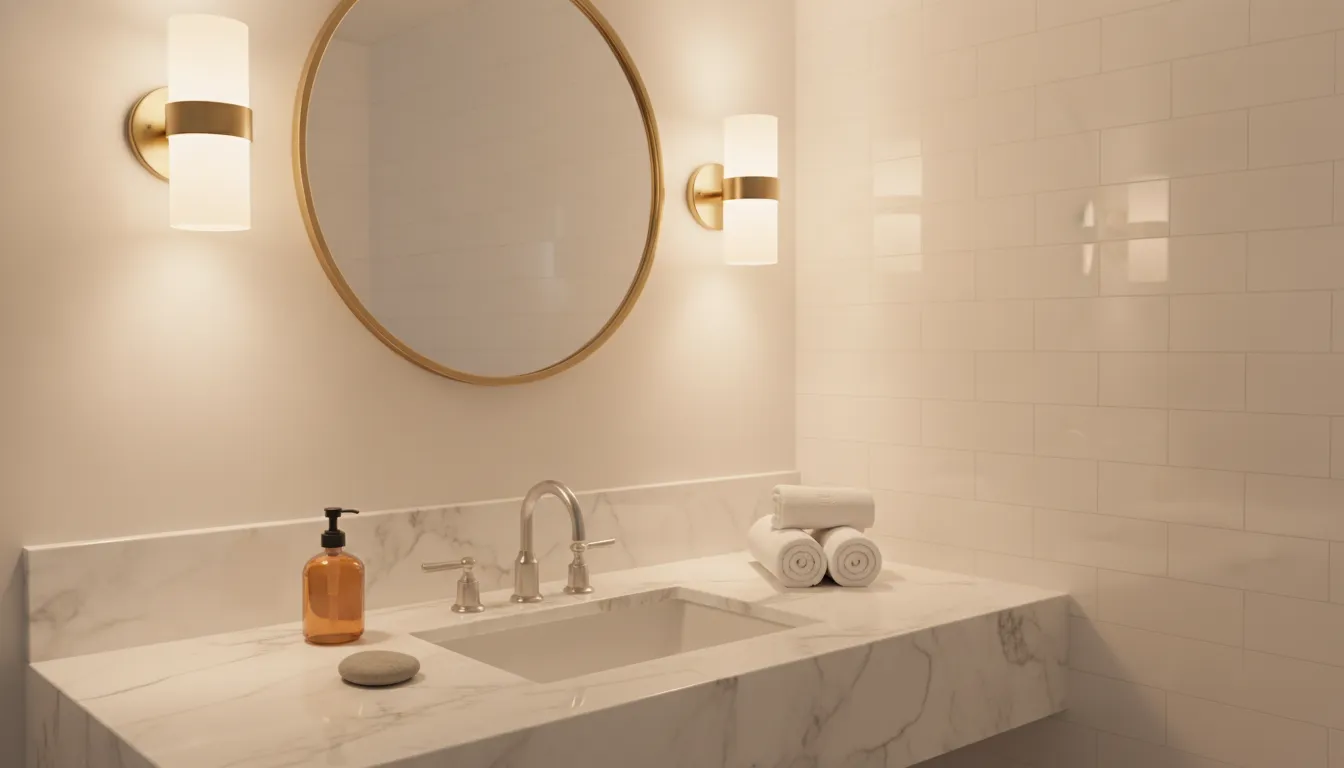
Wall sconces positioned on both sides of the mirror generally provide more direct, flattering illumination than an overhead fixture alone. Place them close to face level and choose shades or diffusers that soften the output without blocking useful light. If the vanity is wide, a carefully selected fixture above the mirror can supplement the sconces, but it should not be the only task light. The goal is balanced illumination from multiple directions.
- Center one sconce on each side of the mirror so the face receives light from both left and right.
- Keep the fixtures aligned with the primary user’s face rather than placing them only for visual symmetry.
- Use diffused bulbs or shades to soften contrast and reduce harsh shadows.
- Angle or position mirror lighting so the source does not reflect directly into your eyes.
- Coordinate the mirror width, vanity width, and fixture scale before electrical work begins.
Glare deserves as much attention as brightness. Mirror lighting that reflects directly toward the user can cause discomfort and make grooming more difficult, particularly when eyes are tired. The Department of Energy research on glare explains why poorly controlled light can affect visual comfort. A designer or remodeler can test sightlines and adjust fixture depth, shade design, and placement before the wall is closed.
Color temperature also affects how accurately you see skin tones and makeup colors. Cooler light is often preferred at the vanity because it supports better color rendering for grooming, while warmer light can feel more relaxing in the evening. LED fixtures make it easier to choose an appropriate color temperature and manage energy use. For a small bathroom, a high-quality mirror can further reflect available light, helping the room appear brighter and more spacious. Thoughtful bathroom remodeling brings these details together before installation, so the finished vanity looks polished and works comfortably every day.
Which Recessed and Ceiling Lights Work Best for Small Bathrooms?
In a compact bathroom, the best overhead fixture is one that provides useful illumination without making the ceiling feel crowded. Recessed lights are especially effective because they deliver general ambient light while taking up virtually no visual space. A clean ceiling helps a small room feel more open, particularly when paired with a large mirror that reflects light throughout the space.
Use recessed fixtures to create an even base layer rather than concentrating one bright light directly over the sink. One fixture may work in a very small powder room. But two or more strategically spaced fixtures can reduce dark corners in a bathroom with a shower, enclosed toilet area, or deeper floor plan. Keep the beam pattern and ceiling height in mind so the light spreads across the room instead of creating harsh pools.
Ceiling fixtures offer another practical option. A low-profile flush mount or semi-flush fixture delivers an overall ambient layer that can suit bathrooms of nearly any size. In a small bathroom, choose a proportionate fixture with a diffused shade. The goal is broad, comfortable light, not a single exposed bulb that creates hot spots and reflections in the mirror.
Placement matters as much as fixture style. Avoid aiming a recessed light directly at the mirror, where its reflection can be distracting. Position overhead lighting to support circulation and general visibility, then use dedicated vanity lighting for grooming. If the ceiling light is near a shower or tub, select a fixture specifically rated for the location and follow local electrical requirements.
Glare is another reason to favor diffusers, recessed trims designed to control brightness, and careful spacing. The U.S. Department of Energy notes that glare can cause discomfort and vision problems, especially when eyes are tired: review its glare research when evaluating fixture placement.
For more layout guidance, combine these fixtures with the recommendations in our bathroom lighting ideas for small spaces. If the project has a tight budget, start with a well-placed ambient fixture and compare it with these budget-friendly bathroom lighting solutions.
Watch for these common placement pitfalls:
- Putting one bright fixture in the exact center and leaving the shower or toilet area dim.
- Pointing recessed lights straight at a mirror, creating distracting reflections.
- Using a bare bulb or clear shade that produces harsh glare.
- Installing a fixture near water without confirming its wet- or damp-location rating.
- Relying on overhead light alone for shaving, makeup, or other close-up tasks.
How Can Accent and Natural Light Create a Spa-Like Retreat?
A spa-like bathroom is shaped by more than bright, functional fixtures. The most inviting spaces also use light to draw attention to texture, proportion, and the details that make the room feel personal. Accent lighting can highlight architectural features or decor, giving a bathroom a calm, layered atmosphere instead of a flat, utility-room look.
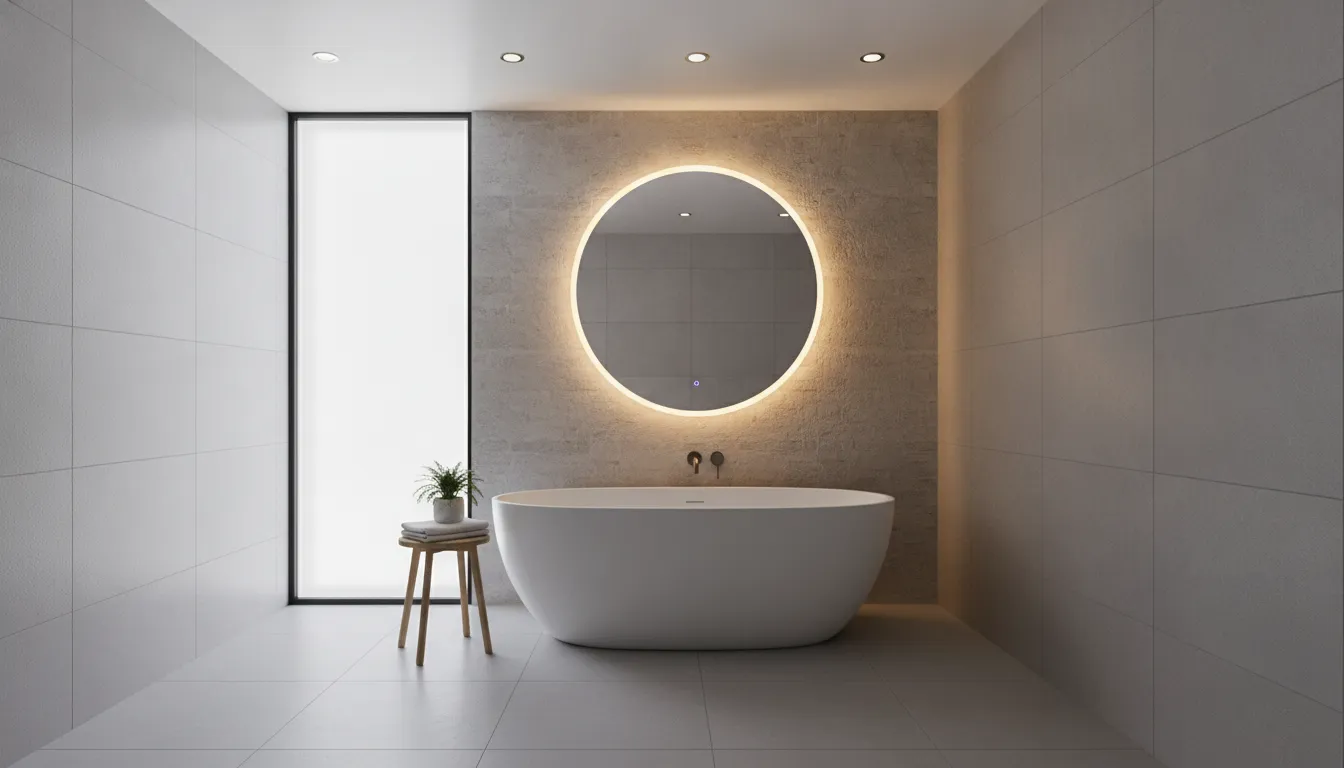
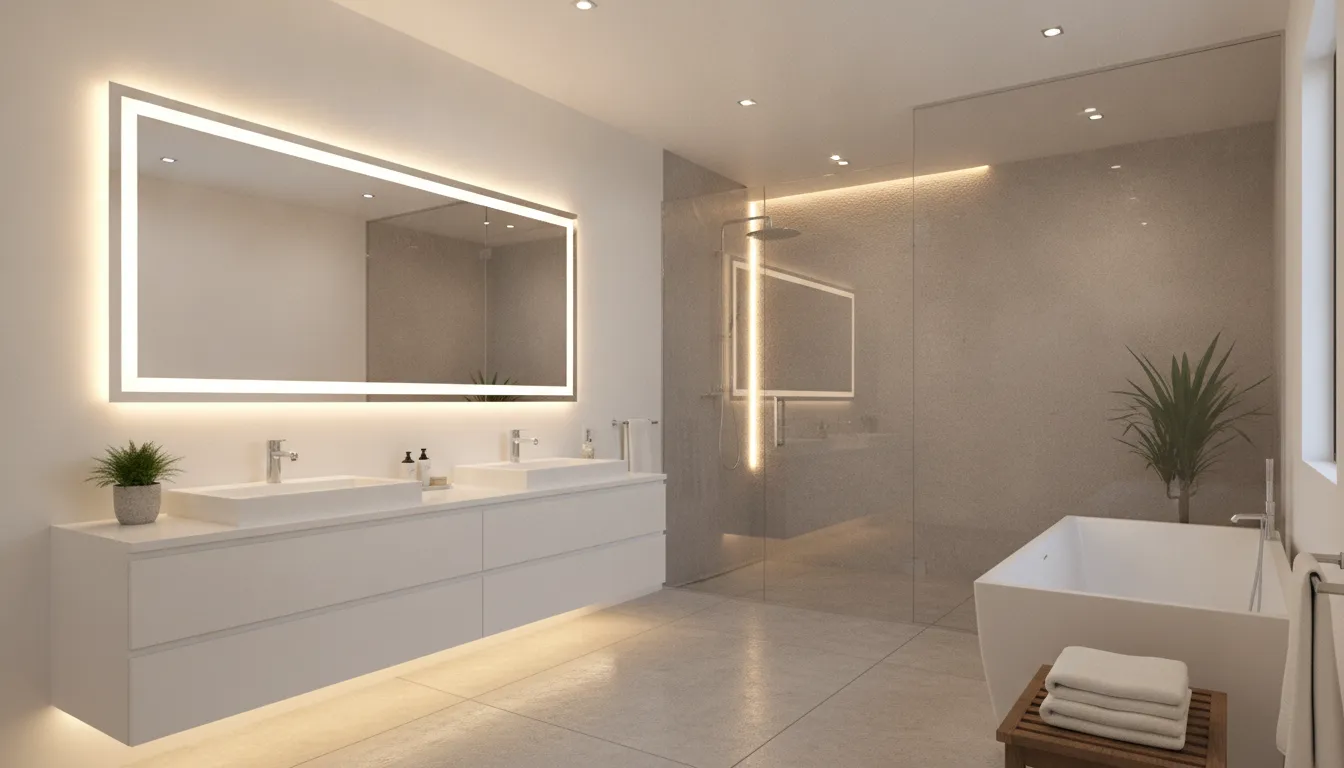
Use accent light selectively. A soft beam can bring out the texture of a stone wall, illuminate a recessed niche, or emphasize a freestanding tub. Backlighting beneath a floating vanity or along a toe-kick can create a gentle evening glow without competing with the mirror lights. For ideas that connect the shower layout and lighting plan, explore accent lighting in your master shower.
- Highlight a textured tile wall with a carefully aimed recessed fixture.
- Backlight a mirror or open shelf to add depth and a soft nighttime glow.
- Illuminate a shower niche or architectural ledge, using fixtures rated for the location.
- Use low-level floor or vanity lighting to guide movement without turning on every fixture.
- Layer a decorative fixture with concealed light so the room remains attractive and practical.
Natural light adds another dimension. Windows and skylights can improve the room’s daytime mood while reducing the need for electric lighting during daylight hours. Privacy is essential in a bathroom, so consider frosted glass, clerestory windows, window treatments, or a skylight positioned to bring in light without sacrificing comfort.
Natural and electric light work best as a coordinated system rather than separate decisions. The U.S. Department of Energy has examined how integrating both types of light can support health and well-being: research on natural and electric light integration offers useful context for a thoughtful design. Dimmers can help the room transition from bright morning grooming to a lower, more restful evening setting.
In a larger master bath with generous ceiling height, a chandelier can serve as a luxurious decorative focal point. Pendants can provide a similar sense of personality at a more adaptable scale, particularly near a tub or beside a tall vanity. In every case, select the fixture for the room’s proportions and verify that its wet- or damp-location rating fits where it will be installed. The result should feel intentional, serene, and easy to use every day.
Request a free consultation to design a spa-like bathroom for your San Diego home.
What Color Temperature and LED Fixtures Should You Choose?
LED fixtures are a practical foundation for bathroom lighting ideas because they use energy efficiently and are available in a wide range of color temperatures. The right choice depends less on a single number and more on how you use each part of the room. A bathroom should support a calm evening routine, clear grooming, and safe movement at night without making the space feel harsh.
Warm light creates a more relaxing atmosphere in the evening. It works well around a soaking tub, in a powder room, or anywhere you want a softer spa-like mood. Cooler light is often more useful at the vanity, where accurate color rendering helps with shaving, makeup, skincare, and other grooming tasks. You do not have to choose one temperature for the entire bathroom. Layering warmer ambient or accent fixtures with clearer vanity lighting can make the room feel comfortable and functional.
Use dimmers to make one fixture work harder
Dimmers give you control over intensity as your needs change. Turn the lights up when cleaning or getting ready in the morning, then lower them when relaxing in the bath. Before selecting fixtures, confirm that the LED bulbs or integrated fixtures are compatible with the dimmer. An incompatible combination can create flicker, buzzing, or an uneven dimming range.
Consider smart controls for daily routines
Smart lighting can automate bathroom illumination by time of day or occupancy. A brighter setting can welcome you in the morning, while a softer setting can guide a late-night visit without flooding the room with glare. Connected controls can also reduce the need to touch switches with wet hands. Keep the system simple enough that everyone in the household can use it easily.
- Choose warmer light for relaxing zones and cooler light for task and grooming zones.
- Use dimmable LEDs where the room needs to shift from active to restful.
- Check the fixture’s wet-location or damp-location rating before installation.
- Coordinate fixture finishes and light quality with the rest of your home’s design.
- Plan smart schedules or occupancy settings around real household routines, not features you will rarely use.
A lighting plan that combines efficient LEDs, flexible controls, and zone-specific color temperatures will feel intentional throughout the day. During a remodel, your design-build team can coordinate fixture placement, switching, and electrical requirements before the walls are closed.
What Are Bathroom Lighting Zones and IP Ratings?
Safety should shape your bathroom lighting ideas as much as appearance does. IP ratings indicate how well a fixture is protected from moisture, while bathroom zones describe how close that fixture is to a bath, shower, or sink. Together, they help determine whether a light is suitable for a wet or damp location. The closer a fixture is to a water source, the more carefully its rating and installation must be evaluated. See the bathroom zone and IP-rating guidance for the technical framework, then confirm the final selection with a qualified electrician familiar with local requirements.
Zone 0: Inside the bath or shower
Zone 0 is the area inside the bath or shower itself, so it has the greatest exposure to water and requires the highest level of protection. Avoid treating a standard decorative fixture as appropriate for this location. If lighting is needed within the bathing area, use only a purpose-rated fixture approved for that environment and installed according to applicable electrical rules.
- Use fixtures specifically rated for the highest-moisture conditions.
- Prioritize sealed, purpose-designed products over open decorative fittings.
- Have placement and wiring reviewed by a qualified professional before installation.
Zone 1: Directly above the bath or shower
Zone 1 covers the area directly above the bath or shower, where spray and rising moisture remain concerns. Choose a fixture rated for the conditions rather than relying on its appearance or a general indoor-use label. Recessed or flush-mounted options can work well when they carry the required wet-location rating, but the product specification matters more than the fixture style.
- Look for a clearly documented rating suitable for the fixture’s exact location.
- Choose sealed recessed or flush fixtures when they meet the required specification.
- Keep switches and controls positioned where they will not be reached from the bath or shower.
Zone 2: Areas near water sources
Zone 2 includes areas near the bath, shower, and sink where splashes are still possible. Fixtures here may need a damp- or wet-location rating depending on their distance and exposure. Vanity sconces, ceiling lights, and accent fixtures should all be selected by checking the manufacturer’s listing, not by assuming that a bathroom label guarantees suitability.
- Use damp-rated fixtures in protected areas and wet-rated fixtures where spray can reach them.
- Account for splash patterns around sinks, tubs, and open showers.
- Reduce glare with careful placement, since poorly positioned light can cause discomfort and vision problems, according to Department of Energy glare research.
Lighting also supports safer movement after dark. The National Institute on Aging recommends motion-activated pathway lighting and suggests leaving a bathroom light on or using an automatic night light. Particularly to help older adults prevent falls. A low-level night light, clear path, and well-placed ambient fixture can make the room easier to navigate for everyone.
Frequently Asked Questions
What are the best bathroom lighting ideas for a small space?
Use layered lighting without adding visual clutter. Recessed or flush-mount ceiling fixtures provide general illumination, while a pair of wall sconces at the vanity reduces shadows on the face. Choose slim fixtures, place them carefully around the mirror, and add a dimmer so the room can shift from bright grooming light to a softer evening setting.
What is the best type of lighting for a bathroom vanity?
Wall-mounted sconces placed on both sides of the mirror usually provide the most even light for grooming. A fixture above the mirror can supplement them, but a single overhead light may cast shadows under the eyes and chin. Select a fixture with comfortable brightness, good color rendering, and a shade or diffuser that limits glare.
How do you choose lighting for a bathroom remodel?
Start by mapping the room’s tasks and layers: ambient light for overall visibility, task light at the vanity, and accent light for architectural or decorative features. Then confirm fixture dimensions, light direction, color temperature, dimming needs, and switch locations. A coordinated plan prevents dark corners and keeps the lighting appropriate for both primary and guest bathrooms.
Why are IP ratings important for bathroom lighting?
An IP rating indicates how well a fixture is protected from intrusion, including moisture. Fixtures near a shower, tub, or other water source need the appropriate wet- or damp-location rating for their placement. Confirm the required rating with a qualified electrician and local code requirements before installation.
What are bathroom lighting zones?
Bathroom zones classify areas by how close they are to water, such as inside a shower, above a tub, or in the surrounding room. The zone affects which fixture type and IP rating are suitable. Treat zoning as a safety requirement, not just a design preference, and have the final layout reviewed during the remodeling process.
Ready to Plan Better Bathroom Lighting?
A thoughtful lighting plan can help your bathroom feel brighter, calmer, and more comfortable to use. King Remodeling can help you match fixtures, placement, and controls to the way your primary or guest bathroom works.
Contact King Remodeling to get started with a free bathroom design consultation.