If your small kitchen feels more chaotic than cozy, you know how frustrating it can be to cook in a space that works against you. Cluttered counters, hard-to-reach corners, and a cramped workflow can make even simple tasks feel like a chore. The good news is that the solution isn’t necessarily more square footage—it’s smarter design. A thoughtful small kitchen cabinet design is the key to transforming a frustrating room into a functional, beautiful hub. This article will show you how to reclaim your space with practical tips for maximizing storage, improving layout, and choosing finishes that make your kitchen feel open and inviting.
Key Takeaways
- Design for an Open Feel: Make your kitchen feel larger by using light colors and reflective finishes to bounce light around the room. Opt for streamlined cabinet doors and consider a two-tone palette with lighter uppers to create a sense of height and airiness.
- Make Your Cabinets Work Smarter: Prioritize function with features that make every inch count. Full-extension drawers, corner pull-outs, and slim pantries transform awkward spots into highly efficient storage, ensuring nothing gets lost in the back.
- Plan for a Flawless Workflow: A great layout is key to a functional small kitchen. Arrange cabinets to support the work triangle, confirm appliance measurements before finalizing plans, and choose hardware that is both stylish and comfortable to use daily.
What’s Different About Designing Cabinets for a Small Kitchen?
Designing cabinets for a small kitchen isn’t just a scaled-down version of a larger project—it’s a completely different strategic game. In a compact space, every choice has a bigger impact, from the color of the doors to the type of handle you choose. It’s less about filling walls and more about creating a functional, beautiful hub that feels open and works for you. The goal is to blend smart storage with design tricks that make the room feel more spacious and inviting. When done right, your small kitchen can be just as efficient and stylish as one twice its size.
Understanding Space Constraints and Opportunities
In a small kitchen, every bit of space counts. The challenge is to plan carefully how you use counters, walls, and even the ceiling to your advantage. This means thinking beyond standard cabinet boxes and looking for opportunities to add function where you might not expect it. Instead of just accepting limited storage, we see it as a chance to get creative with solutions like pull-out shelves that make deep cabinets fully accessible or slim open shelving for everyday items. A well-designed small kitchen remodel turns constraints into a blueprint for a highly efficient and personalized space where everything has its place.
How Design Influences the Feel of a Room
Your cabinet design does more than just store your dishes; it sets the entire mood of your kitchen. In a smaller room, visual choices are especially powerful. For instance, using two cabinet colors—often lighter on top and darker on the bottom—can make your ceiling feel higher and the room more open. Even the hardware plays a crucial role. The right knobs and pulls can add a touch of elegance or a clean, modern line that contributes to an uncluttered feel. These details work together to create an atmosphere that’s bright, airy, and welcoming, proving that great style doesn’t require a huge footprint. You can see how these elements come together in our featured projects.
Use Color and Finish to Make Your Kitchen Feel Bigger
When you’re working with a smaller footprint, every design choice matters. Color and finish are two of your most powerful tools for creating a sense of openness. The right combination can trick the eye, making your kitchen feel brighter, taller, and more spacious than it actually is. It’s not just about painting everything white; strategic use of light, contrast, and texture can transform a cramped kitchen into an airy and inviting hub for your home. By thinking carefully about your cabinet colors, finishes, and even hardware, you can create a space that feels both functional and expansive.
Why Light Colors Create an Open Feel
It’s a classic design rule for a reason: light colors make a room feel bigger. Whites, soft grays, creams, and light pastels are fantastic at reflecting light, which instantly makes a space feel brighter and more open. When you use these shades on your kitchen cabinets, they create a seamless, airy backdrop that doesn’t feel heavy or imposing. This effect is amplified when you extend the light palette to your countertops and backsplash. A cohesive, light-colored scheme minimizes visual breaks, allowing the eye to sweep across the room without interruption. This creates an illusion of depth and space, turning even the most compact kitchen into a bright, welcoming environment.
How Two-Tone Cabinets Add Height and Depth
If an all-white kitchen isn’t your style, two-tone cabinets are a brilliant solution for adding dimension to a small space. The key is to use a lighter color for your upper cabinets and a darker, grounding color for the lowers. This simple trick draws the eye upward, making your ceilings feel higher than they really are. The lighter uppers blend into the wall, creating an open, airy feeling, while the darker base cabinets add depth and visual interest without overwhelming the room. You can explore beautiful combinations like classic white uppers with navy, gray, or natural wood lowers in our San Diego showroom to find a palette that adds personality while maximizing the sense of space.
The Role of Glossy and Reflective Surfaces
Beyond color, the finish of your surfaces plays a huge role in how light moves through your kitchen. Glossy or semi-gloss cabinet finishes, polished stone countertops, and reflective backsplash tiles—like glass or glazed ceramic—bounce light around the room. This constant reflection helps illuminate darker corners and contributes to a brighter, more lively atmosphere. Even small details make a difference. Polished chrome, brushed nickel, or brass cabinet hardware can act like jewelry for your kitchen, catching the light and adding a subtle sparkle. When you see some of our featured projects, you’ll notice how these reflective touches work together to make the entire kitchen feel more spacious and dynamic.
Choose Cabinet Features That Work Harder
The best kitchen cabinets do more than just store your stuff—they make your daily routine smoother. Instead of just thinking about door styles, consider the functional hardware and clever configurations that can transform how you use your space. In a small kitchen, these details aren’t just nice to have; they’re essential for creating a room that feels organized, efficient, and easy to work in. From drawers that glide out to meet you to pantries that find storage in the slimmest of spaces, the right features turn standard boxes into a high-performance system. A thoughtful kitchen remodeling plan focuses on integrating these elements from the very beginning.
Smart Additions: Pull-Out Drawers and Soft-Close Glides
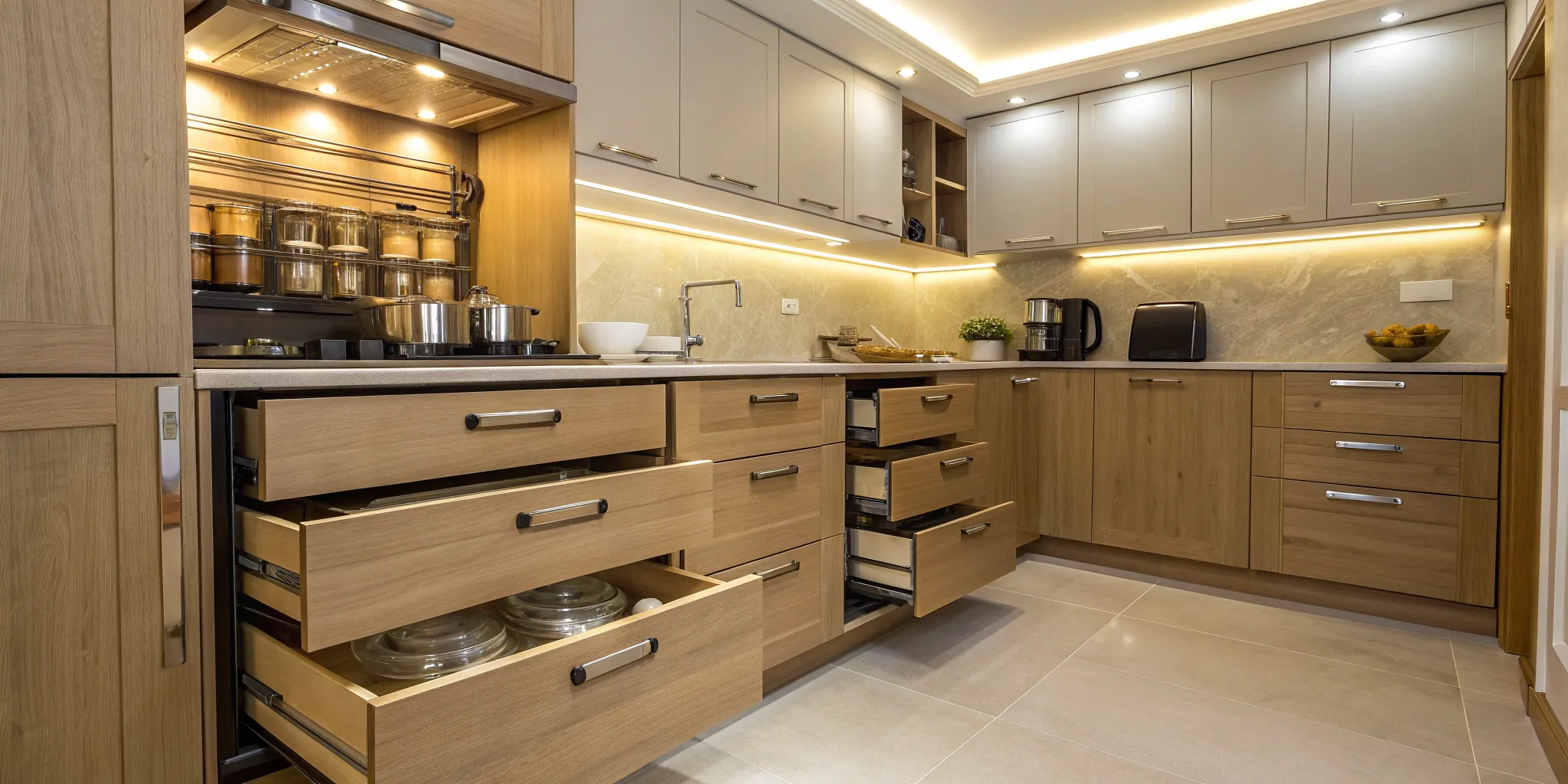
If you’ve ever had to get on your hands and knees to find a pot lid in a deep lower cabinet, you’ll appreciate this upgrade. Replacing standard shelves with full-extension pull-out drawers brings everything into the light and within easy reach. No more forgotten items lost in the back! Paired with soft-close glides, your drawers and doors will shut smoothly and silently, adding a touch of quiet luxury to your kitchen. This simple change makes accessing your daily items so much easier and is a must-have for an ergonomic and organized kitchen design.
Making Corners Count with Lazy Susans
Corner cabinets are notoriously awkward, often becoming a black hole for mismatched containers and rarely used gadgets. A Lazy Susan or a more advanced blind-corner pull-out system completely reclaims this valuable real estate. These rotating or sliding shelves swing out, presenting all their contents so you can grab what you need without a search party. It’s one of the most effective ways to ensure every square inch of your cabinetry is working for you. You can see how these solutions create seamless functionality in our featured projects.
The Power of Tall, Narrow Pantries
Have a slim, six-inch gap next to your refrigerator? Don’t seal it off—turn it into a storage powerhouse. Tall, narrow pull-out pantries are designed to fit into these tight spots, creating the perfect home for spices, oils, and canned goods. These clever units slide out completely, giving you a full view of your inventory at a glance. Identifying these opportunities for “found space” is a key part of our process, where we look for creative ways to build more storage into your existing footprint without adding bulk.
Why Handle-less Cabinets Create a Clean Look
In a compact kitchen, visual clutter can make the room feel even smaller. Cabinets without handles—using integrated channels or push-to-open hardware instead—create a smooth, uninterrupted surface that helps the space feel more open and streamlined. This minimalist aesthetic is not only stylish but also practical. With no knobs or pulls to bump into or snag your clothes on, you can move more freely through a narrow walkway. You can explore different handle-less styles and finishes in person at our San Diego showroom.
Maximize Every Inch with Smart Storage
When you have a small kitchen, every square inch is prime real estate. The key isn’t just to add more cabinets, but to make the ones you have work smarter. Smart storage solutions transform cluttered, frustrating spaces into organized, functional work zones where everything has a place. From using overlooked vertical space to incorporating clever interior organizers, a thoughtful design can make a compact kitchen feel surprisingly spacious and easy to use. This is where a professional plan makes all the difference, turning potential pain points into your favorite features.
Think Vertically: Using Space Up to the Ceiling
That awkward, dust-collecting gap between your upper cabinets and the ceiling? It’s a missed opportunity. Extending your kitchen cabinets all the way to the ceiling is one of the best moves you can make in a small kitchen. Not only does it give you valuable storage for less-frequently used items like holiday platters or specialty appliances, but it also draws the eye upward, making the entire room feel taller and more open. To enhance the effect, consider running your backsplash tile all the way to the ceiling, too. This creates a seamless, high-end look that visually expands the space.
Get More from Your Cabinets with Multi-Functional Designs
In a small kitchen, every element should serve a purpose—or two. Multi-functional cabinet designs are brilliant for this. Think beyond simple doors and drawers and look for features that combine tasks. Imagine a drawer that pulls out to reveal a built-in cutting board, or a narrow cabinet designed specifically to hold baking sheets and trays vertically. You can even incorporate toe-kick drawers beneath your base cabinets to store flat items like placemats or serving trays. These clever solutions help keep your countertops clear and your tools exactly where you need them, as you can see in some of our favorite featured projects.
How Interior Organizers and Dividers Tidy Up
The real magic happens inside your cabinets. Instead of deep, dark shelves where items get lost in the back, interior organizers bring order to the chaos. Pull-out shelves with soft-close glides are a game-changer, allowing you to access everything with ease. No more kneeling on the floor to find a pot lid! Custom drawer dividers keep utensils from becoming a jumbled mess, while vertical partitions create perfect slots for cutting boards. When you visit our San Diego showroom, you can explore these options firsthand and see how a designated spot for everything makes your kitchen feel instantly more manageable.
Finding Room for Spices and Supplies with Slim Pullouts
Every kitchen layout has those few awkward inches of leftover space—often next to the stove or refrigerator. Don’t let them go to waste. Tall, skinny pull-out pantries can fit into spots as narrow as six inches, creating the perfect home for spices, oils, and cooking sprays right where you need them. These clever units turn what would have been a useless filler panel into highly functional storage. Similarly, a small section of open shelving can break up a wall of cabinetry and provide a convenient spot for everyday glasses or your favorite cookbooks. Finding these opportunities is a key part of our design process.
Plan a Cabinet Layout for a Better Workflow
A beautiful kitchen is one thing, but a kitchen that’s a dream to cook in? That’s the real goal. The layout of your cabinets plays a huge role in how your kitchen functions day-to-day. In a small space, a thoughtful layout is even more critical because every step counts. The right plan creates a natural flow, putting everything you need within easy reach and eliminating those frustrating moments of crisscrossing the room just to grab a pot or a spice jar.
This is where we move beyond just storage and start thinking about ergonomics and efficiency. A well-designed workflow makes cooking feel intuitive, not chaotic. It considers how you move between the sink, stove, and refrigerator—the classic kitchen work triangle. By planning your cabinet placement around these core stations, you create a space that supports your daily routines, from making morning coffee to preparing a family dinner. A professional kitchen remodeling plan ensures your layout is optimized for your specific needs, making the most of every square inch.
Arranging Cabinets for an Efficient Kitchen Triangle
The kitchen work triangle is a design concept that connects your three main work areas: the refrigerator, the sink, and the stove. In a small kitchen, these points are naturally closer together, but the key is to keep the paths between them clear. Your cabinet layout should support this flow. For example, store pots and pans in a deep drawer next to the stove, and keep your everyday dishes and glassware in an upper cabinet near the dishwasher for easy unloading. The goal is to create zones for specific tasks, which minimizes unnecessary movement and makes your kitchen feel more organized and efficient.
Getting Upper Cabinet Height Just Right
Have you ever felt like you needed a step stool just to grab a coffee mug? The height of your upper cabinets makes a big difference in accessibility and comfort. The industry standard is to install upper cabinets so the bottom is 18 to 20 inches above the countertop. This leaves enough room for small appliances like a stand mixer or coffee maker while keeping the cabinet contents within a comfortable reach. Getting this measurement right is a small detail that has a huge impact on daily usability. Following a clear design and build process ensures these crucial details are planned from the start.
How to Seamlessly Integrate Your Appliances
In a small kitchen, bulky appliances can quickly overwhelm the space. A great way to create a clean, cohesive look is to integrate them into your cabinetry. Consider using custom panels on your refrigerator and dishwasher that match your cabinet doors, allowing them to blend in completely. You can also design a dedicated “appliance garage” with a lift-up or retractable door to hide smaller items like your toaster and blender. This keeps your countertops clear and contributes to a streamlined, uncluttered aesthetic that makes the entire room feel larger and more polished.
Smart Solutions for Tricky Corner Cabinets
Kitchen corners are notorious for becoming black holes where pots and pans go to disappear. But with the right hardware, these awkward spaces can become some of your most valuable storage spots. Instead of a deep, dark cabinet that’s impossible to organize, consider a Lazy Susan or a blind corner pull-out shelf system. These solutions bring the contents of the cabinet out to you, so you can see and reach everything easily. For lower cabinets, pull-out shelves with soft-close glides are a fantastic upgrade that makes accessing items at the back a breeze. Seeing these options in a showroom can help you decide which solution is best for your space.
How to Add Style Without Sacrificing Function
A small kitchen doesn’t have to feel purely utilitarian. Once you’ve planned a layout that maximizes every square inch, you can focus on the fun part: infusing your personality into the design. The right aesthetic choices can make your kitchen feel more spacious, intentional, and uniquely yours. Small details have a huge impact in a compact room, turning a functional space into a beautiful one.
Thoughtful design elements like open shelving, glass-front doors, and unique hardware can break up the monotony of solid cabinetry and create visual interest. Color also plays a huge role in shaping the feel of the room. By layering in these stylish touches, you can create a kitchen that’s not just easy to work in but also a joy to be in. You can see how we balance style and utility in our featured projects to get ideas for your own space.
Using Open Shelving for Display and Easy Access
Swapping a few upper cabinets for open shelving is one of the best ways to make a small kitchen feel lighter and more open. Solid rows of cabinet doors can feel heavy and imposing, but shelves create breathing room and a sense of airiness. They offer a perfect spot to display your favorite ceramic dishes, stylish glassware, or a few cherished cookbooks, adding a personal touch that makes the space feel like home.
From a practical standpoint, open shelves keep your most-used items within easy reach. Placing your everyday plates, bowls, and coffee mugs on a shelf near the dishwasher or coffee maker simplifies your daily routine. It’s a simple, beautiful solution that combines easy access with a curated display.
Why Glass-Front Cabinets Make a Space Feel Open
If you love the airy look of open shelving but prefer to keep your dishes behind a door, glass-front cabinets are the perfect compromise. By allowing your eyes to see through the door to the back of the cabinet, they create an illusion of depth that makes the entire kitchen feel larger. This visual trick prevents the walls from feeling like they’re closing in on you.
You can use them to showcase a beautiful set of dishes or colorful glassware while keeping them protected from dust. For a softer look, you can opt for frosted or reeded glass, which provides the same sense of depth without requiring perfectly organized interiors. Exploring these options in a design showroom can help you find the perfect style for your home.
Making a Statement with Decorative Hardware
Think of cabinet hardware as the jewelry of your kitchen. The right knobs and pulls are small details that can completely transform the look of your cabinetry and tie your entire design together. In a small kitchen, these finishing touches are especially important because they add a layer of polish and intention without taking up any physical space.
Whether you choose sleek brass pulls for a modern look, classic nickel knobs for a timeless feel, or matte black hardware for a touch of drama, your choice makes a statement. This is an opportunity to add a metallic accent or a contrasting color that complements your faucet, lighting, and appliances. It’s a simple update that adds significant character to your kitchen remodeling project.
Adding Personality with Two-Tone Color Palettes
Using two different cabinet colors is a fantastic strategy for adding depth and style to a small kitchen. A popular approach is to use a darker color for the lower cabinets and a lighter shade for the uppers. This technique grounds the space while drawing the eye upward, making the ceiling feel higher and the room feel more expansive.
A two-tone scheme also adds a custom, high-design feel to your kitchen. It’s a chance to play with color in a way that isn’t overwhelming. Imagine deep navy base cabinets paired with crisp white uppers, or earthy sage green with a soft cream. This approach breaks up the visual bulk of the cabinetry and introduces a dynamic element that’s full of personality.
Select Hardware That Complements a Small Space
Think of cabinet hardware as the finishing touch that ties your whole kitchen together. In a smaller space, these details matter even more. The right knobs and pulls can make your kitchen feel streamlined and intentional, while the wrong ones can add visual clutter. The key is to choose hardware that enhances your design without overwhelming it. When you’re planning a kitchen remodeling project, selecting hardware that is both beautiful and functional will help you create a space that feels cohesive and works for your daily life. It’s about finding that perfect balance between style, scale, and usability.
Creating Clean Lines with Minimalist Hardware
In a small kitchen, the goal is to reduce visual noise. Minimalist cabinet hardware is perfect for this because it offers a clean look without sacrificing function. Think sleek, simple shapes like slim bar pulls, discreet tab pulls that sit on top of the door, or even classic, unadorned knobs. These styles create long, uninterrupted lines that help the eye move smoothly across the room, making the space feel more open and less busy. By avoiding ornate or bulky designs, you let the cabinetry and countertops remain the focus. Seeing these options in person at a showroom can help you appreciate how their subtle design makes a big impact.
Why Ergonomic Pulls Matter for Accessibility
Hardware isn’t just about looks; it’s about how you interact with your kitchen every day. Ergonomic pulls are designed to be easy and comfortable to grip, which is a huge plus in a busy, compact kitchen. You want hardware that you can open with a single hand, even if your other hand is full. This is especially important for heavy drawers or for family members with limited hand strength. C-shaped or D-shaped pulls are great examples because they provide ample space for your fingers. Choosing functional, comfortable hardware ensures your kitchen isn’t just beautiful, but also a joy to use.
Finding the Right Balance and Proportion
Scale is everything in a small kitchen. Hardware that is too large can overpower your cabinets, while hardware that is too small can look lost and feel flimsy. The right knobs and pulls should feel proportional to the size of your cabinet doors and drawers. A good rule of thumb is to follow the “one-third rule,” where a pull is roughly one-third the length of the drawer front. For doors, choose knobs or pulls that feel substantial enough to be functional but don’t dominate the door’s style. Looking through a portfolio of featured projects can give you a great visual sense of how to balance hardware with cabinetry for a polished, professional look.
Avoid These Common Small Kitchen Cabinet Mistakes
A beautiful and functional kitchen is all about the details, and that’s especially true in a smaller space. While it’s easy to get excited about finishes and colors, a few common planning mistakes can leave your new kitchen feeling cramped or awkward. With a little foresight, you can sidestep these issues entirely. Thinking through appliance placement, cabinet height, and door styles ahead of time ensures your final design is as practical as it is beautiful. Let’s walk through the missteps we see most often so you can avoid them in your own remodel.
Forgetting to Measure for Appliances and Clearances
One of the most disruptive mistakes is designing a cabinet layout without accounting for your appliances. It’s crucial to select your refrigerator, oven, dishwasher, and microwave before finalizing your cabinet order. For instance, ovens are often deeper than people realize—sometimes close to 30 inches—and need enough space to be installed correctly without sticking out. You also need to plan for refrigerator door swings so they don’t hit a wall or an adjacent counter. The same goes for your dishwasher; you must have enough clearance to open the door fully and load it without being blocked by a corner cabinet. Our design-build process always starts with a detailed plan that maps out every element to ensure a perfect fit.
Placing Upper Cabinets Too High or Too Low
There’s a sweet spot for upper cabinet placement, and missing it can impact your kitchen’s daily usability. The industry standard is to install upper cabinets 18 inches above the countertop. This height leaves enough room for small appliances like your coffee maker and stand mixer while keeping the shelves within reasonable reach. Installing them much higher, say 24 inches above the counter, can make it difficult for many people to access anything beyond the bottom shelf without a step stool. On the other hand, placing them too low can make your countertops feel cramped and boxed in. We always consider your family’s needs to create a kitchen design that is comfortable and ergonomic for you.
Choosing Bulky Designs Over Streamlined Options
In a small kitchen, the style of your cabinet doors has a major impact on how open the room feels. Ornate, bulky designs with heavy detailing or raised panels can add a lot of visual weight, making the space feel smaller and more cluttered. To create a more expansive feel, it’s best to choose simple designs. Flat-panel or simple Shaker-style doors offer clean, uninterrupted lines that help the eye move smoothly through the space. These streamlined options reflect light more evenly and contribute to a modern, airy aesthetic. Visiting a showroom is a great way to see firsthand how different door styles can change the entire feel of a kitchen vignette.
Overcrowding the Look with Complicated Door Styles
Just as bulky designs can weigh a room down, so can overly complicated ones. Busy wood grains, intricate trim, and decorative flourishes can make a small kitchen feel chaotic. The goal is to create a calm, cohesive look, not a collection of competing details. This principle extends to your hardware, which plays a huge role in the final aesthetic. Instead of large, ornate pulls that command attention, consider minimalist hardware like slim bar pulls, simple knobs, or even integrated handle-less channels. These subtle choices support a clean, uncluttered look and keep the focus on the overall beauty of your new kitchen.
Why Professional Design Makes a Difference
You’ve probably spent hours scrolling through inspiration photos, but translating those ideas into a functional plan for a small kitchen is a completely different challenge. This is where professional design becomes your most valuable tool. It’s not just about making things look pretty; it’s about creating a space that works seamlessly for your lifestyle, avoids common pitfalls, and ensures the final result is exactly what you envisioned.
Working with a professional designer gives you a strategic partner who understands how to balance aesthetics with practicality. They see the hidden opportunities in your layout, know which materials will stand up to daily use, and create a detailed blueprint that guides the entire project. From maximizing storage to ensuring proper workflow, their expertise turns a potentially stressful process into a confident and predictable journey. A great design is the foundation of a successful remodel, saving you time, preventing costly mistakes, and delivering a kitchen you’ll love for years to come.
The Advantage of a Design-Build Expert
In a small kitchen remodel, every decision impacts the next. A design-build firm brings your designer, material specialist, and construction crew together under one roof, creating a single, cohesive team. This integrated approach is a game-changer. Instead of you juggling multiple contacts, your design-build expert manages every detail, ensuring the initial vision is perfectly executed. They can create truly custom solutions, like tailored cabinets that use every last inch of space, because the people designing the cabinets are in constant communication with the people building and installing them. This synergy is what makes our design-build process so effective at delivering beautiful, functional kitchens on time and on budget.
How a Showroom Simplifies Material Selection
Choosing cabinet finishes, countertop materials, and hardware can feel overwhelming. A showroom experience simplifies everything by putting curated, high-quality options right at your fingertips. Instead of guessing how samples will look together, you can see, touch, and compare materials side-by-side with guidance from a design professional. This hands-on approach helps you finalize your palette with confidence and lock in your choices early, reducing the chance of delays or budget surprises down the road. When you visit our showroom, you can explore cohesive displays that make it easy to visualize your new kitchen and find the perfect combination of style and function for your home.
Planning for a Flawless Installation
A beautiful design is only as good as its execution. Professional designers create meticulous plans that account for every technical detail, from appliance specifications and electrical placements to plumbing lines and proper clearances. They anticipate potential challenges—like an uneven wall or a tricky corner—and solve them on paper before construction even begins. This foresight is critical for a smooth installation. It ensures that every cabinet fits perfectly, every drawer opens fully, and your new kitchen functions flawlessly from day one. This level of detailed planning is a core part of our kitchen remodeling projects, preventing costly on-site changes and ensuring the build phase is efficient and predictable.
Related Articles
Frequently Asked Questions
My kitchen is tiny. Where do I even begin with a cabinet plan? Start by thinking about what frustrates you the most right now. Is it the lack of counter space, the hard-to-reach corner cabinet, or the cluttered drawers? Make a simple list of these daily pain points. This functional audit is a much better starting point than just looking at pretty pictures. Once you know what problems you need to solve, you can work with a designer to create a layout that addresses those issues head-on, ensuring your new kitchen works as beautifully as it looks.
Do I have to choose white cabinets to make my kitchen feel bigger? Not at all! While white is a classic choice for creating a bright, airy feel, it’s definitely not your only option. Soft grays, creams, or even a light sage green can reflect light just as effectively. A two-tone approach, with a darker color on the bottom cabinets and a lighter one on top, is another great strategy. This draws the eye upward and creates an illusion of height. The key is to focus on a cohesive palette and consider finishes with a subtle sheen to help bounce light around the room.
I’m worried about losing storage. What’s more important: open shelves or more cabinets? This is all about finding the right balance for your needs. While closed cabinets offer maximum storage, a solid wall of them can feel heavy in a small space. Swapping just one or two upper cabinets for open shelving can make the entire room feel more open and personalized. If you’re concerned about clutter, consider glass-front doors instead. They provide the same sense of depth and openness as shelves but keep your dishes protected from dust.
What’s one cabinet feature you think is a non-negotiable for a small kitchen? If I had to pick just one, it would be full-extension pull-out drawers for all your lower cabinets. They are an absolute game-changer. Instead of getting on your knees to search for a pot or pan in a dark, deep cabinet, you can simply slide the drawer out and see everything at once. This feature makes every square inch of your storage completely accessible and is one of the single best investments you can make in your kitchen’s day-to-day functionality.
Can I just replace my cabinet doors, or do I need a whole new layout? Replacing your cabinet doors can certainly give your kitchen a fresh look, but it won’t solve underlying functional problems. In a small kitchen, the layout is everything. An inefficient workflow, awkward corner, or poorly placed appliance can make the space feel frustrating to use, no matter how nice the doors are. A full remodel allows you to rethink the entire layout to improve flow, integrate appliances seamlessly, and build in smart storage solutions that a simple refacing project can’t address.