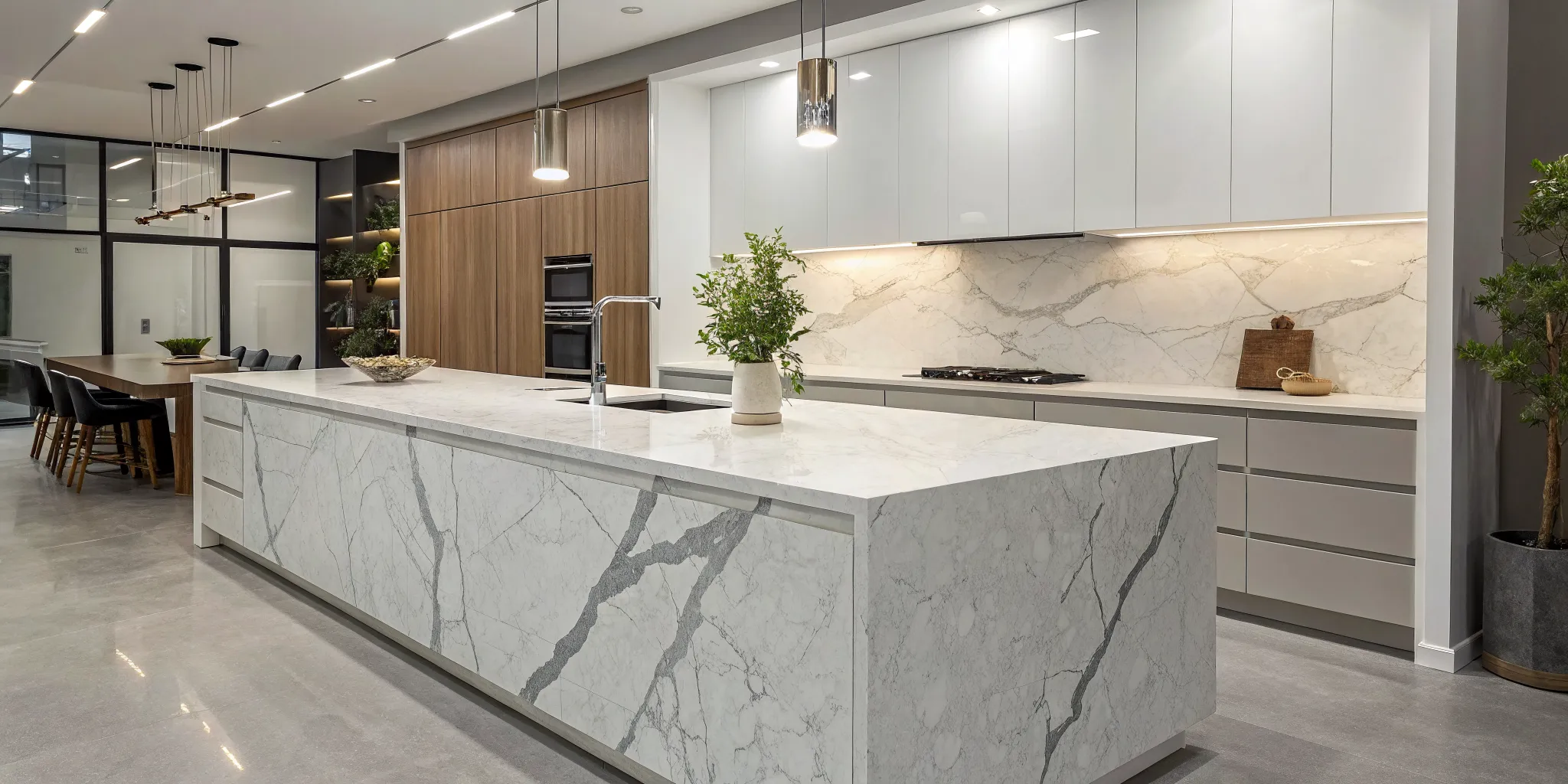
The countertop is often the star of a kitchen design. It’s the surface that ties your cabinetry, backsplash, and flooring together into one cohesive look. Many of our clients dream of the elegant, veined look of natural marble but worry about its tendency to stain and etch. This is where the design flexibility of quartz truly shines. Thanks to modern manufacturing, you can get that luxurious marble look without any of the maintenance headaches. From bold, dramatic patterns to soft, subtle hues, quartz countertops offer a level of design freedom that natural stone simply can’t match. Here’s how to find the perfect style to define your space.
Key Takeaways
- It’s a smart blend of nature and technology: Quartz countertops are engineered using natural ground quartz and polymer resins. This process creates a completely non-porous surface that resists stains and scratches without the annual sealing required by stones like granite or marble.
- Design with confidence and consistency: Because quartz is a manufactured product, the color and pattern you see in a sample will reliably match your final slab. This consistency eliminates surprises and ensures a seamless, uniform look across large islands and multiple counter sections.
- One simple habit protects your investment: While quartz is highly durable, it is not heat-proof. Always use a trivet or hot pad for items coming directly from the stove or oven to prevent thermal shock, which can cause discoloration or cracking.
What Exactly Are Quartz Countertops?
If you’re starting your kitchen remodeling journey, you’ve almost certainly come across quartz. It’s one of the most popular countertop materials available, and for good reason. But there’s often confusion about what it actually is. Is it a natural stone? Is it man-made? The simple answer is: it’s a bit of both.
Unlike granite or marble, which are quarried from the earth in large, solid blocks, quartz countertops are engineered. This means they are factory-made products created by combining natural minerals with man-made materials. This process gives quartz its signature durability, consistency, and low-maintenance appeal. Think of it as the best of nature, enhanced by modern technology to create a surface perfectly suited for the demands of a busy home. Let’s break down exactly how these beautiful slabs are made.
The Building Blocks: What’s Inside Engineered Stone
At its core, a quartz countertop is made of crushed natural quartz, one of the hardest and most abundant minerals on earth. This isn’t just a small component; the slabs are typically composed of about 90-95% ground quartz. The remaining 5-10% consists of polymer resins and pigments. The resins act as a binder to hold the quartz particles together, while the pigments provide the color. This specific recipe is what gives the final product its strength and creates a consistent, non-porous surface that you just don’t get with natural stone.
How a Quartz Slab Comes to Life
The manufacturing process is what transforms those raw ingredients into the polished slab you see in a showroom. First, the ground quartz is blended with the resins and pigments to create a uniform mixture. This mix is then poured into a large mold, compressed under immense pressure to squeeze out any air, and vibrated to settle the particles. Finally, the slab is cured in an oven at a high temperature, which hardens the resin and fuses everything together into an incredibly dense and durable surface. This controlled process ensures every slab is strong, solid, and ready for years of daily use.
Quartz vs. Natural Stone: Setting the Record Straight
This is where people often get tripped up. While the primary ingredient is natural stone, the final product is engineered. This is the key difference between quartz and materials like granite or marble. Because it’s man-made, you get a level of predictability that natural stone can’t offer. The color and pattern you see in a sample at our San Diego showroom will be a reliable representation of the final slab. While quartz is exceptionally durable and resistant to scratches and stains, it’s important to remember that no surface is completely indestructible. It’s a tough material designed for real life, but not immune to damage from extreme heat or heavy impact.
Why You’ll Love Quartz Countertops
When it comes to choosing the perfect countertop, the decision often comes down to finding a material that balances beauty, durability, and ease of care. For so many of our clients here in San Diego, quartz checks every single box. It’s a true workhorse that delivers the high-end look you want without the demanding upkeep of other stones. If you’re looking for a surface that can handle the realities of a busy home while looking incredible for years, quartz is an amazing choice. Let’s get into a few of the reasons we recommend it time and time again.
Unmatched Durability for Everyday Life
Your kitchen is the heart of your home, and your countertops see it all: hurried breakfasts, art projects, and nightly meal prep. Quartz is engineered to handle the pressure. Made from one of the hardest minerals on earth combined with resins, it’s one of the most durable countertop materials you can install. This composition makes it incredibly resistant to the scratches, chips, and etching that can happen with daily use. You can slide a mixing bowl across the surface or chop vegetables without worrying about causing permanent damage. This resilience gives you peace of mind, knowing your investment will hold up to real life.
A Low-Maintenance Dream (No Sealing Required!)
If the thought of annual countertop maintenance sounds like a chore you’d rather skip, you’ll love quartz. Unlike natural stones such as granite and marble, which are porous and need regular sealing to prevent stains, quartz is non-porous. This means liquids can’t penetrate the surface. Because of this, quartz countertops are one of the few stone options that do not require sealing, ever. You get the beautiful look of stone without the added work, saving you time and money over the years. A simple wipe-down with soap and water is all it takes to keep it looking brand new.
Consistent Color and Pattern You Can Count On
While the unique, unpredictable veining of natural stone is beautiful, it can also make it tricky to find the perfect slab. With quartz, what you see is what you get. Since it’s an engineered product, the colors and patterns are consistent from one slab to the next. This gives you the freedom to design a space that perfectly matches your vision, without any surprises. It’s especially helpful for large kitchens with long counter runs or waterfall islands, as it ensures a seamless, uniform look that’s difficult to achieve with natural stone.
Stain Resistance That Stands Up to Spills
Life is messy, but your countertops don’t have to be. Thanks to its non-porous surface, quartz is highly resistant to stains from everyday culprits like coffee, red wine, juice, and olive oil. Spills sit on top of the surface instead of seeping in, so you can simply wipe them away without a trace. This makes quartz an ideal choice for families with young children or anyone who loves to cook and entertain. You can relax and enjoy your kitchen without constantly worrying about accidental spills causing permanent marks on your beautiful new counters.
A Quick Note on Heat: What to Know
Quartz is very durable, but it’s not indestructible. While it is heat-resistant, the resins used in its construction can be damaged by sudden, extreme temperature changes. Placing a hot pot or pan directly from the stove or oven onto the counter can cause discoloration or cracking, a phenomenon known as thermal shock. The fix is simple: always use a trivet or hot pad. Taking this small, easy step will protect the surface and ensure your countertops stay in pristine condition for their entire lifespan. It’s a minor habit that makes a major difference.
Let’s Talk Budget: How Much Does Quartz Cost?
One of the first questions on every homeowner’s mind is, “What’s this going to cost?” And for good reason. Your countertop is a major part of your kitchen or bathroom remodel, both visually and financially. While quartz is considered a premium material, its price reflects its incredible value in durability, style, and ease of care. Think of it as a long-term investment in your home’s daily function and beauty.
The final price tag for your quartz countertops isn’t just about the material itself. It’s a combination of the slab you choose, the complexity of your kitchen layout, and the skilled labor required for fabrication and installation. At King Remodeling, we bundle all these costs into a clear, upfront proposal. Our design-build process is designed to give you a predictable budget from the start, so you can make decisions with confidence and avoid any surprise fees along the way.
Breaking Down the Price per Square Foot
When you start shopping, you’ll see quartz priced per square foot. Generally, you can expect quartz to run from $60 to over $100 per square foot for the material alone. This range covers everything from simple, solid-colored designs to intricate slabs that mimic the dramatic veining of natural marble.
The price variation comes down to the complexity of the design and the manufacturing process. Entry-level quartz often features more uniform patterns and a standard color palette. As you move up in price, you’ll find more dynamic patterns, unique color blends, and premium finishes. Visiting our San Diego showroom is the best way to see these differences up close and find a beautiful option that fits your budget.
Key Factors That Influence Your Total Cost
The price per square foot is your starting point, but several other factors shape the final number on your proposal. The complexity of your kitchen or bathroom layout is a big one. A simple rectangular island will cost less to fabricate than a U-shaped kitchen with multiple seams and cutouts for a sink and cooktop. Because it’s an engineered product, quartz can sometimes be more affordable for complicated shapes since it’s easier to cut than natural stone. The thickness of the slab and your chosen edge profile also play a role in the final cost.
How Quartz Stacks Up Against Granite and Marble
It’s helpful to compare quartz to other popular countertop materials. Its price is often similar to granite, but quartz pulls ahead on value because it never needs to be sealed. Granite, on the other hand, requires regular maintenance to protect it from stains.
Compared to marble, quartz offers a similar high-end look without the stress. Marble is porous and can easily stain or etch, while quartz is nonporous and stands up to spills like coffee and wine. And when you look at laminate, there’s no contest. Quartz is far more durable than laminate, which can easily scorch, scratch, and stain, making quartz a smarter investment for any kitchen remodeling project.
Understanding Fabrication and Installation Fees
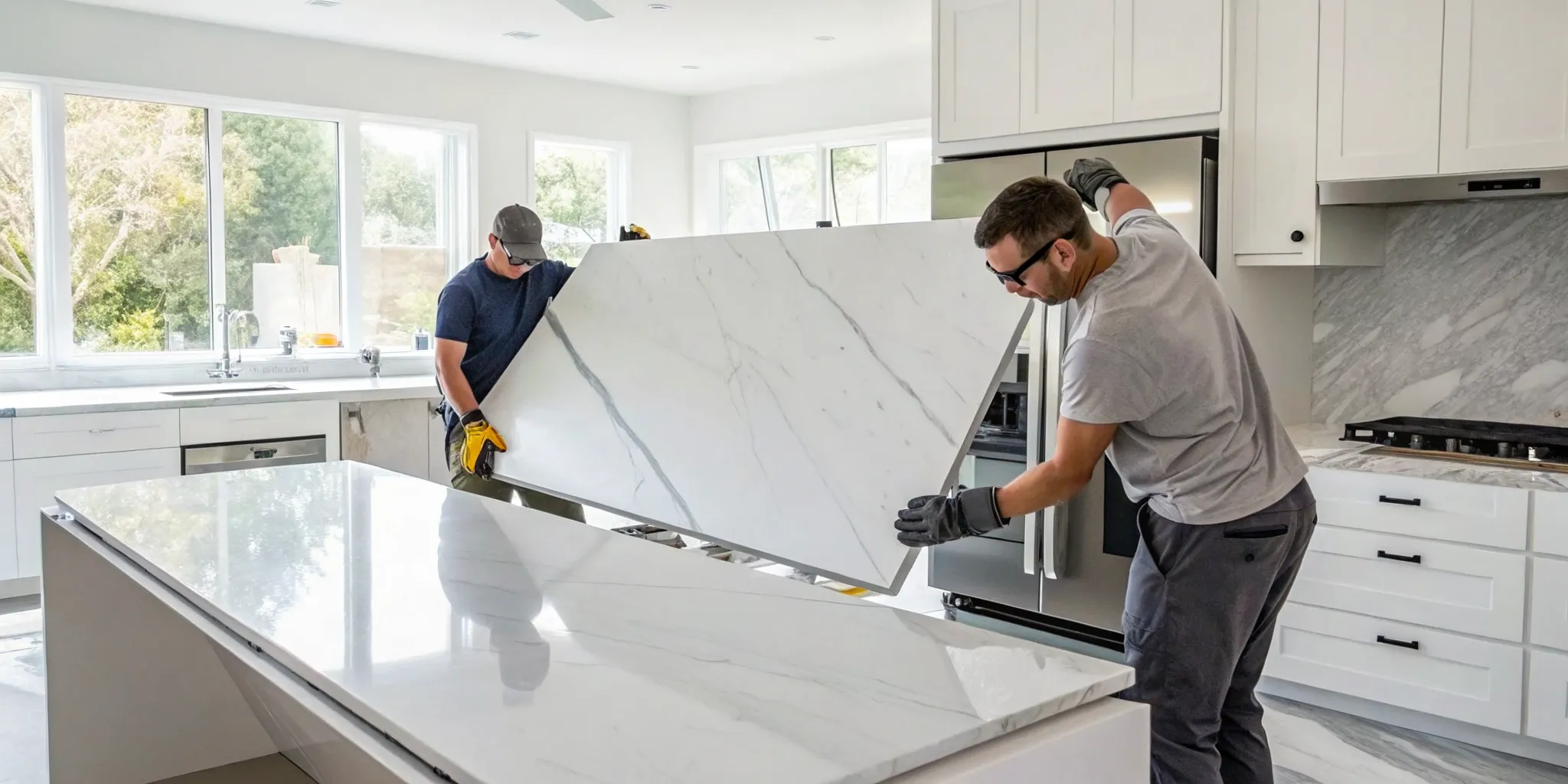
Choosing your slab is just the first step. Fabrication and installation are where artistry and precision come in, turning that raw slab into a perfectly fitted countertop. Fabrication includes everything from taking precise measurements at your home to cutting the stone to size, creating sink and faucet holes, and polishing the edges.
Installation is the final, crucial step where our team delivers and secures your countertops. The cost of installation can vary based on the project’s complexity, but with our integrated team, you don’t have to worry about coordinating separate contractors. We handle it all, ensuring a flawless fit and finish every time.
Finding Your Style: Exploring Quartz Colors and Designs
This is where the fun really begins. Once you’ve decided on quartz, you get to explore a massive world of colors, patterns, and finishes to find the perfect match for your home. Unlike natural stone, which is limited to what the earth creates, engineered quartz offers endless possibilities. You can find everything from crisp, solid whites to dramatic, black slabs with bold veining. The goal is to choose a design that not only complements your cabinetry and flooring but also reflects your personal style.
Whether you’re drawn to the timeless elegance of marble or a more modern, industrial look, there’s a quartz slab that can bring your vision to life. The best way to understand your options is to see them in person. At our San Diego showroom, you can see and touch large slabs, compare different brands, and get expert guidance from our designers. Seeing how the colors and patterns look under different lighting is a critical step in making a confident choice for your kitchen or bathroom remodel.
Get the Look of Marble Without the Maintenance
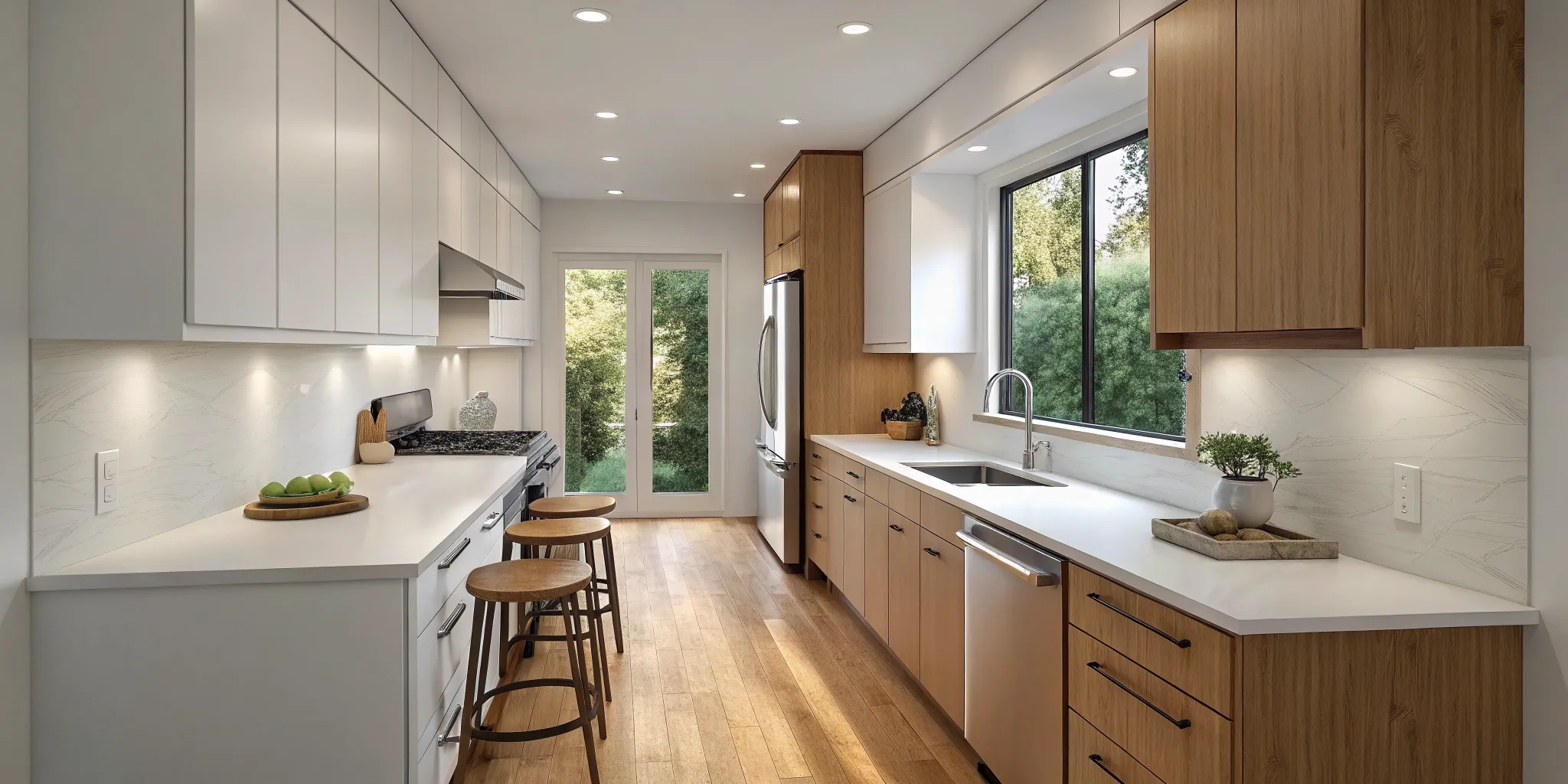
Many homeowners love the luxurious, elegant look of natural marble but hesitate because of its porous nature. Marble can easily stain from things like red wine or coffee and can be etched by acidic foods like lemon juice. This is where quartz truly shines. Manufacturers have perfected the art of creating quartz that beautifully mimics the classic look of Calacatta and Carrara marble, complete with soft, subtle veining or dramatic, flowing patterns. You get all the high-end beauty of marble without the constant worry and upkeep. It’s the perfect, stress-free solution for a busy kitchen remodel or a serene bathroom retreat.
Trending Styles: From Bold Veins to Subtle Textures
While marble-look quartz is a timeless favorite, design trends are always evolving. We’re seeing a strong move toward countertops that make a statement. Think bold, high-contrast designs like a deep black or charcoal base with striking white or gold veins running through it. These dramatic slabs can act as the centerpiece of your kitchen, creating a focal point that’s both artistic and functional. On the other end of the spectrum, soft, neutral tones and subtle, organic patterns are also popular for creating a calm and sophisticated atmosphere. You can explore a wide range of these styles in our featured projects to see what resonates with you.
Go Big and Seamless with Large Format Slabs
If you have a large kitchen island or want to create a stunning full-height backsplash, minimizing seams is key to achieving a clean, high-end look. Many quartz manufacturers now offer jumbo or large format slabs that are longer and wider than standard sizes. Using a single, oversized slab means you can often cover your entire island without any distracting seams. This creates a seamless, uninterrupted surface that allows the beauty of the quartz pattern to flow continuously. It’s an especially great choice for a bathroom remodel, where a single slab can be used to create a grout-free, easy-to-clean shower wall.
Polished vs. Honed: Picking the Perfect Finish
Beyond color and pattern, you also get to choose the finish of your quartz countertop. The two most common options are polished and honed. A polished finish is the traditional choice; it’s glossy, shiny, and reflects light, which can help make your space feel brighter and larger. A honed finish, on the other hand, is matte. It has a soft, low-sheen look that doesn’t reflect light, giving it a more subtle and modern feel. Honed surfaces are excellent at hiding fingerprints and smudges, while polished surfaces are slightly more resistant to stains. The choice is purely aesthetic, and we recommend seeing and touching both finishes at our design showroom to decide which one you prefer.
Navigating the Brands: Our Go-To Quartz Picks
When you start looking at quartz, you’ll quickly realize there are many brands to choose from. While having options is great, it can also feel a bit overwhelming. Over our 25+ years of designing and building kitchen remodels, we’ve worked with countless materials and have developed a short list of go-to brands we trust for their quality, consistency, and beautiful designs. These are the manufacturers that consistently deliver stunning results and stand behind their products.
The best part? You don’t have to rely on tiny online samples. We have large slabs and samples from our favorite brands right here in our San Diego showroom. Seeing and touching the material in person is the only way to truly appreciate its color, veining, and finish. Our design team can walk you through the differences and help you find the perfect slab that ties your entire project together. Below are a few of the trusted brands we frequently recommend to our clients.
A Look at Caesarstone
Caesarstone is one of the pioneers in the quartz industry, and their name is practically synonymous with quality. They are known for their innovation and offer a stunning palette of colors and patterns that range from subtle, solid hues to slabs with dramatic, flowing veins. We love their commitment to creating durable surfaces that are perfect for busy kitchens and high-traffic bathroom remodels. Whether you’re aiming for a classic look or something more modern, Caesarstone has a sophisticated option to match. Their collections are always evolving, giving you access to some of the most current styles on the market.
Exploring ONE Quartz Surfaces
If you love the look of natural stone but want the performance of quartz, ONE Quartz by Daltile is a fantastic choice. This line excels at capturing the organic beauty of materials like marble and granite without the associated maintenance. Their designs range from classic marble looks with delicate veining to contemporary concrete-inspired finishes. ONE Quartz offers a durable, nonporous surface that’s easy to care for, making it a practical and beautiful option for any space. It’s a reliable brand that gives you the best of both worlds: timeless style and modern convenience.
Why We Trust Q Premium Quartz
For homeowners who want the widest possible selection, we often turn to Q Premium Quartz from MSI. With over 100 different designs, their collection is one of the most extensive available. You can find everything from bright, clean whites to rich, dark tones and patterns that mimic exotic natural stones. This variety makes it easy to find a countertop that perfectly fits your vision and budget. Q Premium Quartz is known for its high-quality engineering and durability, ensuring your countertops will look great for years to come. Their broad range makes them a versatile and dependable choice for any project.
Comparing Brands and Understanding Warranties
While we have our trusted favorites, the best brand for you ultimately comes down to which one has the specific color and pattern you fall in love with. During the design phase of our process, we’ll compare options side-by-side to see what works best with your cabinetry, flooring, and overall aesthetic. It’s also important to consider the warranty offered by each manufacturer, as the terms can vary. We’ll help you review the details so you can feel confident in your investment and know your beautiful new countertops are well-protected.
Keeping Your Quartz Beautiful: Care and Maintenance Tips
One of the best things about quartz is how simple it is to maintain. You chose it for its beauty and durability, and with just a little routine care, it will look brand new for years. Unlike natural stones that require special sealants and careful cleaning, quartz is designed for the realities of a busy home. A few simple habits are all it takes to protect your investment and keep your surfaces looking pristine, letting you focus on enjoying your new space.
Your Simple Guide to Daily Cleaning
Keeping your quartz countertops clean is refreshingly straightforward. For everyday messes and wipe-downs, all you need is a soft cloth with a bit of mild soap and warm water. A gentle, non-abrasive cleaner is also a great option. Just wipe the surface down and dry it with a clean towel to prevent water spots. There’s no need for harsh chemicals or vigorous scrubbing. This simple routine is enough to handle daily spills and keep your countertops sparkling, making it a perfect fit for a beautiful, functional kitchen remodel built for real life.
What to Avoid to Prevent Damage
While quartz is incredibly tough, it’s not indestructible. To keep it in top shape, avoid placing hot pots and pans directly on the surface. Even though quartz is heat-resistant, extreme or sudden temperature changes can cause damage. Always use a trivet or hot pad as a precaution. You’ll also want to steer clear of abrasive scouring pads and harsh chemicals like bleach or oven cleaner, as they can dull the finish. Protecting your investment is easy, and these small habits ensure your countertops remain a highlight in your home, just like in our featured projects.
Busting a Few Common Quartz Myths
Let’s clear up a couple of common misconceptions about quartz. First, many people think quartz is a 100% natural stone, but it’s actually an engineered stone. It’s made from about 90% ground natural quartz combined with resins and pigments. This is a huge advantage, as the manufacturing process makes the surface non-porous and incredibly consistent. Another myth is that you can use harsh chemicals like bleach for disinfecting. This is a definite no, as it can damage the resin and discolor the surface. Stick to simple soap and water for a safe and effective clean.
The Long-Term Durability You Can Expect
Quartz countertops are built to last a lifetime. Their engineered composition makes them highly resistant to scratches, chips, and stains from things like coffee, wine, and oil. One of the biggest perks is that, unlike granite or marble, quartz is non-porous and never needs to be sealed. This means less maintenance and more peace of mind for you. It is worth noting that some colors can be sensitive to direct, prolonged sunlight, so it’s a factor to consider for outdoor applications or very sunny indoor spots. Ready to see these durable materials up close? You can explore our curated collection at the King Remodeling showroom.
Related Articles
- Best Material for Kitchen Countertops: Compare Quartz, Granite & More | King Remodeling
- Get a Countertop Replacement Quote: A Simple Guide
- Countertop Replacement Quote Guide: Costs, Materials & Tips | King Remodeling
Frequently Asked Questions
What’s the real difference between quartz and granite? The simplest way to think about it is this: granite is 100% natural stone, while quartz is an engineered product made mostly from natural stone. Because granite is quarried directly from the earth, each slab is unique, but it’s also porous and needs regular sealing to prevent stains. Quartz, on the other hand, is non-porous because of the resins used in its creation. This means it never needs to be sealed and offers incredible consistency in color and pattern, which makes designing your kitchen much more predictable.
Can I really put a hot pan on my quartz countertop? This is a great question, and the short answer is no, you shouldn’t. While quartz is very durable and heat-resistant, the resins that bind the stone particles together can be damaged by sudden, extreme heat. Placing a pan directly from the oven or stove onto the counter can cause discoloration or even cracking. The fix is simple: just make it a habit to use a trivet or hot pad. It’s a small step that will keep your countertops looking perfect for a lifetime.
With so many styles, how do I choose the right one for my kitchen? It can feel overwhelming, but that’s where our design process really helps. Instead of looking at tiny samples online, you’ll work with our designers in our San Diego showroom. We’ll place large quartz samples next to your chosen cabinet doors and flooring options so you can see how everything works together in real lighting. We guide you through the process, helping you find a style that not only looks beautiful but also fits the way you live.
Is quartz truly stain-proof? What about red wine or coffee? Thanks to its non-porous surface, quartz is highly resistant to stains. Spills from common culprits like coffee, red wine, and juice can’t penetrate the surface, so they won’t leave a permanent mark. As long as you wipe up spills in a reasonable amount of time with simple soap and water, you won’t have to worry. This makes it an incredibly forgiving and low-stress option for a busy family kitchen.
Why should I get my quartz countertops through a design-build firm like yours? Choosing a countertop is just one piece of the puzzle. When you work with us, we manage the entire process from start to finish. Our team handles the design, material selection, precise templating, fabrication, and final installation. This integrated approach means you have one point of contact, a predictable timeline, and the assurance that every element of your remodel will fit together flawlessly, without you having to coordinate multiple vendors.