A window problem rarely announces its full scope. A draft may come from a failed seal, while condensation, damaged glass, worn hardware, or a deteriorating frame can point to very different solutions. For San Diego County homeowners, coastal exposure, the home’s age, and the condition of surrounding materials can also affect the decision.
Contact King Remodeling to discuss your San Diego home improvement project.
Home window repair can address isolated damage, but the right path depends on whether the glass, seal, operating parts, sash, or frame has failed. A careful assessment helps you compare repair with replacement or a larger remodeling project without relying on a generic price. The U.S. Department of Energy notes that replacement glass must be properly sized, secured, and sealed to prevent air and water leakage: review its window-glass guidance.
The most useful first step is identifying the component behind the symptom. Once you know what is actually failing, you can ask better questions about safety, materials, labor, and long-term value. That starts with the common problems a repair may be able to fix.
What Does Home Window Repair Usually Fix?
Home window repair can address a focused defect without turning every problem into a full replacement. The right repair depends on which part has failed, how much surrounding damage exists, and whether the window can still provide a reliable seal and safe operation.
Failed seals and moisture between panes
When an insulated window develops a failed seal, fogging or condensation may appear between the panes. The issue is not simply dirty glass. The sealed unit has lost its ability to keep moisture out, and the repair may involve replacing the glass unit rather than cleaning the surface. Moisture around the frame can also point to deteriorated sealant, drainage problems, or water entering from nearby construction.
Cracked or broken glass
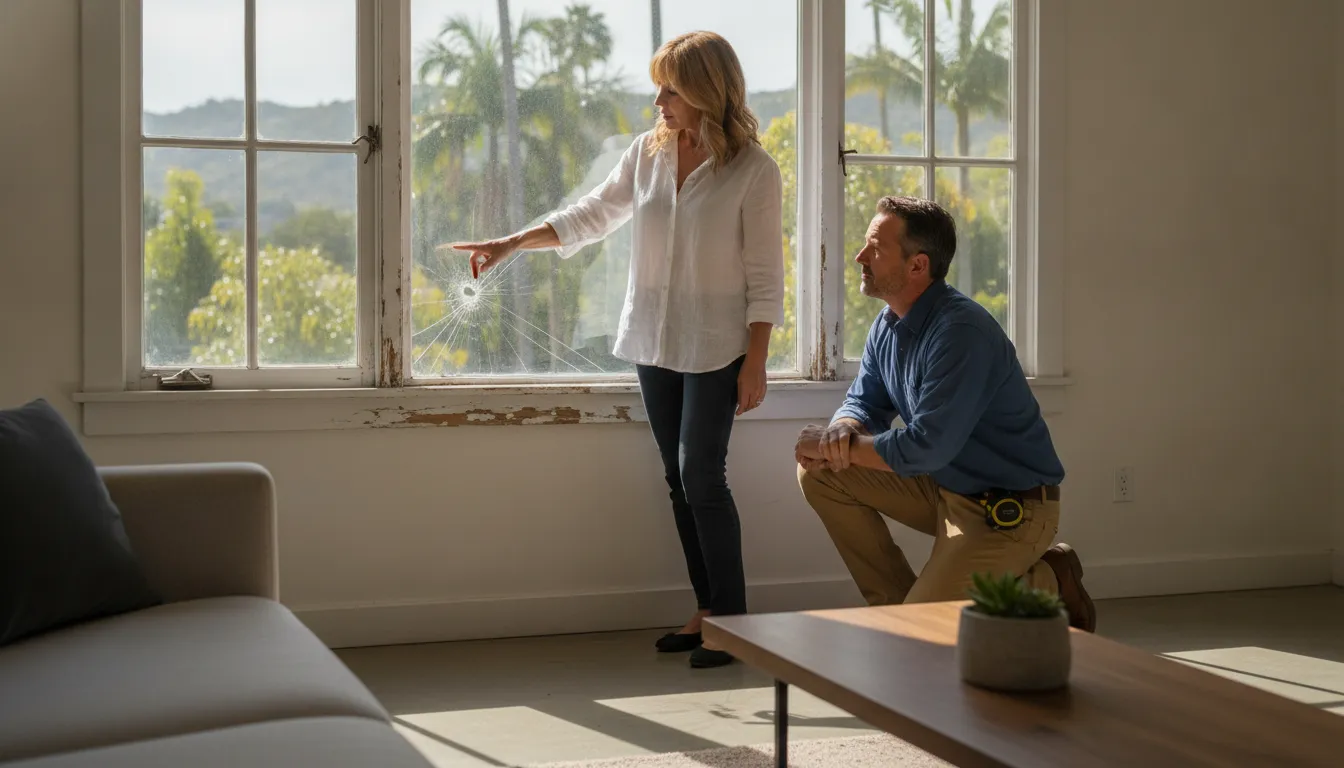
Cracked, broken, or missing glass compromises the window’s pressure and thermal boundary. The U.S. Department of Energy recommends replacement glass that meets the original specifications. Use tempered glass where local code requires it, and seal the edges to limit air and water leakage. Proper sizing and fastening matter as much as the pane itself. A replacement should fit the opening securely, match the existing appearance when appropriate, and be supported by the frame.
Hardware, frames, and drafts
Loose locks, worn handles, failed balances, and damaged hinges can make a window difficult to open, close, or secure. In some cases, replacing the hardware restores useful operation. Drafts may come from worn weatherstripping, gaps around the sash, or failed glazing and perimeter seals. A draft that remains after a hardware adjustment usually deserves a closer inspection rather than repeated tightening.
Frame damage changes the decision. Minor deterioration may be repairable, while rot, distortion, or movement around the opening can affect the window’s support and weather resistance. Older windows also require added care. For pre-1978 windows, lead is assumed unless testing shows otherwise and the work is handled accordingly.
If window problems are part of a broader remodeling need, an assessment can clarify whether a targeted fix or larger project makes more sense. Contact King Remodeling to discuss the condition of your home without assuming that a dedicated window repair service is the answer.
How Can You Tell Which Part of a Window Failed?
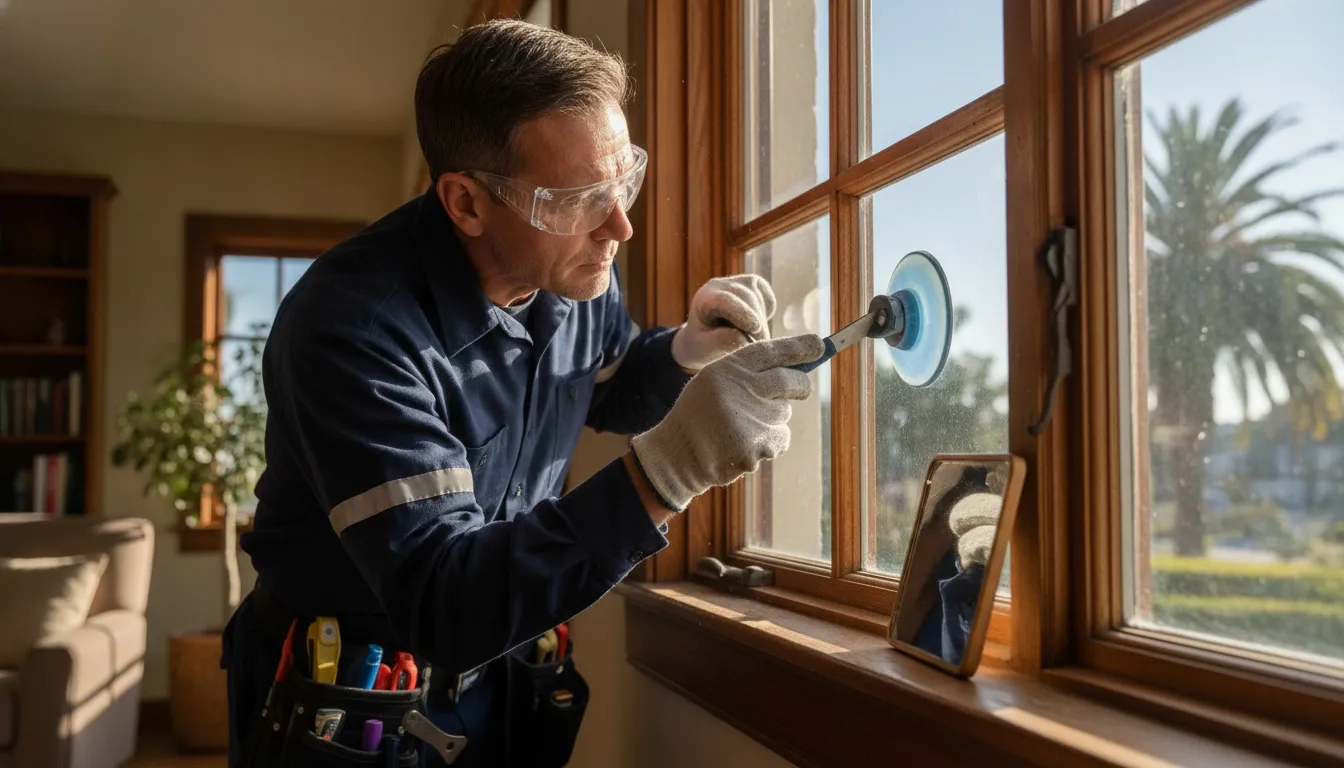
A window symptom usually points to a component, but one problem can affect several parts at once. Start by observing when the issue appears, where it is located, and whether it changes with wind, rain, temperature, or repeated use. This basic inspection can help you describe the problem accurately before a professional assessment.
Do not remove broken glass or force a stuck sash. The U.S. Department of Energy treats cracked or broken glass as a repair-or-replace task, with attention to safe removal, proper fastening, and air and water sealing.
- Condensation between panes: Moisture trapped inside insulated glass usually indicates a failed seal around the glass unit. Wiping the inside and outside surfaces will not remove it because the moisture is within the sealed space. The glass unit may need repair or replacement, depending on its construction and condition.
- Cold air or a noticeable draft: Air movement may come from failed glazing, gaps around the sash, worn weatherstripping, or an opening that is no longer sealed correctly. Check whether the draft follows the glass edge, the moving sash, or the perimeter where the frame meets the wall. DOE guidance emphasizes sealing glass to prevent air movement and leakage.
- Hard operation, rubbing, or a sash that will not stay open: The likely source may be hardware, balance components, track alignment, swelling, or frame movement. Avoid repeated force, which can damage the sash or hardware and make the original issue harder to diagnose.
- Water entry after rain: Look for the first visible point of moisture, not just the lowest stain. The source may involve glazing, drainage paths, perimeter sealant, flashing, or deterioration around the frame. Water that reaches the wall or trim deserves prompt attention.
- Cracked or shattered glass: The damaged pane is the immediate concern, but the sash, stops, glazing, and surrounding frame also need inspection. Replacement glass should match the original appearance and meet applicable safety-glass requirements, including tempered glass where code requires it. See the DOE glass replacement guidance for installation considerations.
- Soft, swollen, or visibly damaged frame: Rot, separation, or persistent deterioration can indicate that the frame or surrounding structure is involved, not only the glass. In that situation, a pane-only fix may not address the source of the problem.
Record photos, weather conditions, and which parts move or remain fixed. That information helps separate a glass, seal, hardware, sash, or frame issue and supports a more accurate repair-versus-replacement decision.
When Can You Repair a Window Instead of Replacing It?
Repair is often reasonable when the window’s main structure remains sound and the problem is limited to one serviceable component. A cracked pane, worn latch, failed seal, or damaged sash does not automatically mean the entire unit must be removed. The right choice depends on the condition of the glass, frame, moving parts, and surrounding opening.
When a pane or seal may be repairable
Replacing a single pane can make sense when the frame and sash are stable, square, and free of significant rot or distortion. Broken or cracked glass should not be left in place because it compromises the window’s pressure and thermal boundary. A proper repair includes removing the damaged pieces, preparing the sash, selecting glass that matches the original appearance, and sealing the edges to limit air and water leakage. The U.S. Department of Energy’s window-glass replacement job aid also emphasizes secure fastening and proper sealant preparation.
A failed insulating-glass seal may sometimes be addressed by replacing the sealed glass unit rather than the complete frame. This option is more practical when the frame still operates correctly and has not been damaged by moisture. If condensation, swelling, or deterioration extends into the sash or frame, a glass-only repair may not solve the underlying problem.
When hardware, sash, or frame condition changes the decision
Hardware such as a latch, balance, hinge, or operator can often be replaced when the surrounding frame is sound. A sash may also be repairable if it can be restored to a secure fit without leaving gaps or compromising operation. By contrast, extensive rot, persistent movement, severe warping, or widespread water damage can make replacement more sensible. The DOE’s guidance treats wood-window repair, rehabilitation, and replacement as distinct approaches, so the decision should follow an inspection rather than a one-size-fits-all rule.
Safety glass and code requirements still apply
Glass repair is not a shortcut around safety requirements. Replacement glazing should meet local code, including tempered or safety-glass requirements where applicable, and should meet or exceed the prior glazing specifications. Older windows also deserve extra caution. For pre-1978 windows, lead is assumed unless testing establishes otherwise and the work is completed accordingly. When the opening, glass type, or installation details are uncertain, have the condition assessed before choosing repair. In San Diego County, local code awareness and coastal exposure can also affect the broader project scope.
What Affects Home Window Repair Cost in San Diego?
There is no single price for home window repair in San Diego because the work can range from replacing one pane to addressing a damaged frame. Failed seal, or larger remodeling concern. The first question is scope. A straightforward component repair may involve less preparation than work that requires removing surrounding materials, correcting water damage, or coordinating several windows at once.
Material selection also changes the project. Glass must fit the opening, match the existing appearance where appropriate, and meet applicable safety requirements. For example, tempered or safety glass may be required in certain locations. Proper sealing and fastening matter as well, since the finished assembly should resist air and water leakage. The U.S. Department of Energy provides detailed guidance on replacement glass, sizing, sealing, and local code considerations in its window-glass replacement guide.

Labor complexity is another major factor. Access may be simple when a window is on the ground floor, but tighter spaces. Upper levels, interior finishes, or difficult exterior access can require additional planning and protection. Existing conditions matter too. Rot, moisture intrusion, deteriorated trim, uneven openings, old sealant, or components that are difficult to source can expand the work beyond the visible symptom. Older homes may also require additional care when materials or lead-related concerns are present.
Technical requirements can affect both the work plan and the materials selected. A project may need to account for safety glazing, weather sealing, appearance matching, permitting, or coordination with other building improvements. San Diego County’s coastal environment and local code considerations are also relevant when evaluating materials and installation details. These variables are why a reliable assessment should come before a firm proposal.
Sometimes a window concern is best handled as part of broader remodeling rather than as an isolated repair. If the surrounding wall, room layout, flooring, cabinetry, or moisture damage is already being addressed, combining the work may change the overall scope and sequencing. King Remodeling evaluates project scope, material selections, labor complexity, technical requirements, and existing home conditions during its consultation and planning process. After consultation and design, the company uses fixed-bid pricing to reduce budget uncertainty during construction. You can review our remodeling process to see how assessment, planning, quote presentation, construction, and the final walkthrough fit together.
When Should San Diego Homeowners Call a Professional?
Some window problems are inconvenient. Others affect safety, moisture control, or the condition of the surrounding wall. Call a qualified professional when the problem goes beyond a simple, clearly identified adjustment. Especially if you cannot determine whether the issue involves the glass, sash, frame, flashing, or adjacent construction.
Call promptly for broken glass or unsafe frames
Cracked, shattered, or missing glass should not be treated as a cosmetic defect. Broken glass disrupts the window’s pressure and thermal boundary, and loose fragments can create an immediate injury risk. The U.S. Department of Energy recommends removing broken glass, preparing the sash properly, sealing the replacement, and fastening the pane securely. Its guidance also notes that tempered or safety glass may be required by local code: review the DOE window-glass replacement guidance.
Get professional help if the frame is soft, visibly rotted, warped, pulling away from the wall, or unable to hold the glass firmly. A replacement pane will not solve a structural frame problem. Older windows require additional care as well. For pre-1978 windows, lead is assumed unless testing proves otherwise and the work is handled accordingly.
Do not ignore water intrusion or persistent drafts
Water stains, bubbling paint, damp trim, or recurring moisture around a window can point to failed seals, drainage problems, or deterioration beyond the glass itself. Persistent drafts also deserve an assessment when caulking or weatherstripping has not resolved them. Proper glass installation should prevent air and water leakage, but the source may be elsewhere in the opening or wall assembly.
San Diego County homes face different exposure conditions, including coastal air and weather. A local professional can assess the existing installation, identify whether the problem is limited to the window, and account for relevant building-code and permit questions. Do not assume that a quick bead of sealant is an adequate long-term repair.
Ask for an assessment when parts or project scope are unclear
Professional guidance is especially useful when hardware is obsolete, replacement parts are difficult to source, or several windows show the same failure. It is also appropriate when the window work is part of a larger remodel involving walls, exterior finishes, layout changes, or multiple openings. In those cases, the right solution may be repair, replacement, or coordinated remodeling rather than an isolated fix.
King Remodeling serves San Diego County exclusively and documents California Contractor License #1039019. The company does not present itself as a dedicated window-repair shop, but homeowners can discuss a broader remodeling need, existing-condition assessment, or project scope through its consultation process.
Contact King Remodeling to discuss your San Diego home improvement project.
What Questions Should You Ask Before Hiring a Contractor?
A careful conversation can reveal whether a proposed fix addresses the actual cause of the problem or only hides a symptom. Before approving home window repair or related remodeling work, ask questions that clarify the diagnosis, the limits of the service, and what you will receive at the end.
- What failed, and how did you diagnose it? Ask whether the issue is cracked glass, a failed seal, damaged hardware, a deteriorated sash, a distorted frame, or water intrusion. A clear diagnosis should come before a recommendation.
- What is included in the scope? Confirm whether the proposal covers only the pane, or also stops, sash preparation, frame repairs, surrounding trim, flashing, and related wall or finish work. Ask what conditions would expand the scope.
- Which materials and glass specifications will you use? Ask how the replacement will match the existing appearance and whether tempered or safety glass is required by local code. The Department of Energy recommends meeting or exceeding the prior glazing specifications and using tempered glass where code requires it: review the glass replacement guidance.
- How will the opening be sealed? Ask how the contractor will clean the opening, fasten the glass, and prevent air and water movement. Sealing details matter when drafts or moisture are part of the complaint.
- Are there safety, permit, or code concerns? Ask how the team will handle broken glass, older windows, possible lead in pre-1978 components, safety glazing, and any permit questions.
- What is the timeline and price format? Request the expected start and completion window, assumptions about material availability, and a written scope-based proposal. Make sure labor, materials, preparation, disposal, and possible change-order conditions are clear, without relying on an unexplained allowance.
- What warranty applies to each part of the work? Separate workmanship coverage from manufacturer coverage for glass, hardware, sealants, and fixtures. Ask who handles a warranty claim and what exclusions apply.
- How will cleanup and disruption be handled? Confirm removal of broken glass, protection of nearby finishes, daily cleanup, and the condition in which the room will be left.
- Can you provide relevant references and confirm this service is offered? Ask for examples involving a similar window type and problem. If the repair is part of a larger renovation, a San Diego general contractor may help coordinate the broader scope. For projects that extend beyond one opening, compare the company’s San Diego remodeling services, while confirming the specific window work before signing.
The right questions make it easier to compare proposals on diagnosis, workmanship, communication, and accountability rather than on a vague bottom-line figure alone.
Request a consultation about your window project before choosing a repair path.
Frequently Asked Questions
Can you repair windows instead of replacing them?
Often, yes. A repair may make sense when the problem is limited to cracked glass, a failed seal, worn hardware, or a localized component. Replacement is more likely when the frame is badly deteriorated, the window has repeated failures, or the existing unit cannot provide a safe, weather-tight fit. The right choice depends on the condition of the glass, sash, frame, and surrounding opening.
Can a house window be repaired?
Many house windows can be repaired, but the work should address more than the visible symptom. Replacement glass must meet the original performance requirements and applicable local safety rules. The U.S. Department of Energy notes that tempered or safety glass may be required in certain locations, and newly installed glass should be sealed to prevent air and water leakage: DOE window-glass replacement guidance.
How much should it cost to fix a window?
There is no reliable single price for every repair. Cost changes with the problem, window size and type, material selection, labor complexity, access, existing conditions, and whether additional water or framing damage is found. A written assessment is more useful than a generic online number because it separates the repair scope from optional improvements.
When should I call a professional for window repair?
Call for professional help when glass is broken, the frame feels unsafe, water is entering, drafts persist after basic maintenance, or replacement parts are difficult to identify. Professional evaluation is also wise for older windows, where the DOE advises assuming lead may be present in pre-1978 windows unless testing proves otherwise: DOE safety guidance.
Ready to Plan the Right Window Solution?
A careful assessment can help clarify whether the window issue is a focused repair, part of a replacement, or connected to a broader home improvement project. Share what you are seeing, and the team can discuss the next practical step for your San Diego County home.